Summary
Editor's rating
Is the PS5 Digital Edition good value, or are you locking yourself in too much?
Slimmer body, still very much a PS5 in your TV unit
Controller battery life and day-to-day charging reality
Build quality and how solid it feels in real life
Real-world performance: fast loads, smooth gameplay, a few limits
What you actually get with the PS5 Digital Edition (slim CFI‑2100)
Pros
- Fast loading times and smooth performance for both PS5 and most PS4 digital games
- Quieter and slimmer than the original PS5 while keeping the same power level
- Strong feature set with 4K output, ray tracing support, 3D audio, and DualSense haptics
Cons
- Digital-only: no support for physical discs, locking you into PlayStation Store pricing
- 825GB storage fills up quickly, forcing frequent game management or extra SSD purchase
- Controller battery life is only average, requiring regular charging or a second pad

Specifications
View full product page →| Brand | PlayStation |
A straight-up look at the PS5 Digital after real-world use
I’ve been using the PlayStation®5 Digital Edition (the slim CFI‑2100 model) as my main console for a few weeks, and I’ll be blunt: it does what it’s supposed to do, and it does it well. No disc drive, no fancy collector boxes lying around, just downloads and digital libraries. If you already live in the PlayStation ecosystem and have a decent internet connection, it feels pretty natural. If you like buying physical games or trading them, this specific version is probably not for you.
What struck me first was how fast everything loads compared to my old PS4. Boot up, game launch, switching between titles – it’s all noticeably quicker. It’s not magic, you still get some loading, but in practice you spend more time playing and less time staring at loading screens. For someone who squeezes gaming into evenings after work, that actually matters.
The other thing is the form factor. This slim version is still not tiny, but it’s much more manageable than the original PS5 tower. It fits in my TV unit without looking like I’ve shoved a PC case in there. Noise levels are low; in normal use I mostly hear the game, not the fan, which is a relief if you’ve suffered through a jet‑engine PS4 before.
It’s not perfect though. Storage at 825GB sounds decent on paper, but once the system takes its share, you’ll juggle big games pretty quickly, especially if you touch anything like Call of Duty. And being forced into digital means you’re locked into PlayStation Store prices unless you wait for sales. So overall, good machine, but there are a few trade‑offs you need to be okay with.
Is the PS5 Digital Edition good value, or are you locking yourself in too much?
Value-wise, the PS5 Digital Edition is a bit of a trade: you usually pay less upfront than the disc version, but you give up the ability to buy used games, borrow discs, or resell your physical copies. That means you’re effectively locked into the PlayStation Store and its pricing. If you’re the type who waits for digital sales and doesn’t care about boxes, that’s fine. If you like hunting for cheap second‑hand games, the long‑term cost can end up higher with this model.
On the positive side, for the money you get a powerful console, fast SSD, 4K output, ray tracing support, good backwards compatibility with digital PS4 games, and a controller with haptics and adaptive triggers. When you compare that to building a PC with roughly similar performance, the console route is still cheaper and simpler. Also, you don’t pay extra for features like 3D audio support – it’s just there if you use headphones or set it up on your TV.
Where the value dips a bit is the 825GB storage. It sounds okay, but after the system reserves its share, you’re left with less, and big games easily eat 80–100GB each. You’ll end up deleting and re‑downloading stuff fairly often unless you add an SSD expansion, which is another cost. It works, but it’s a bit tight for a purely digital machine, where all your games have to be stored locally.
Overall, I’d say the value is pretty solid if you: already buy digitally, don’t care about discs, and are ready to watch for sales. If you’re price‑sensitive on games and like physical copies, the disc version might make more sense in the long run, even if it’s a bit more expensive upfront. This digital model is basically Sony’s way of tying you into their store, and you need to be okay with that to really get good value out of it.
Slimmer body, still very much a PS5 in your TV unit
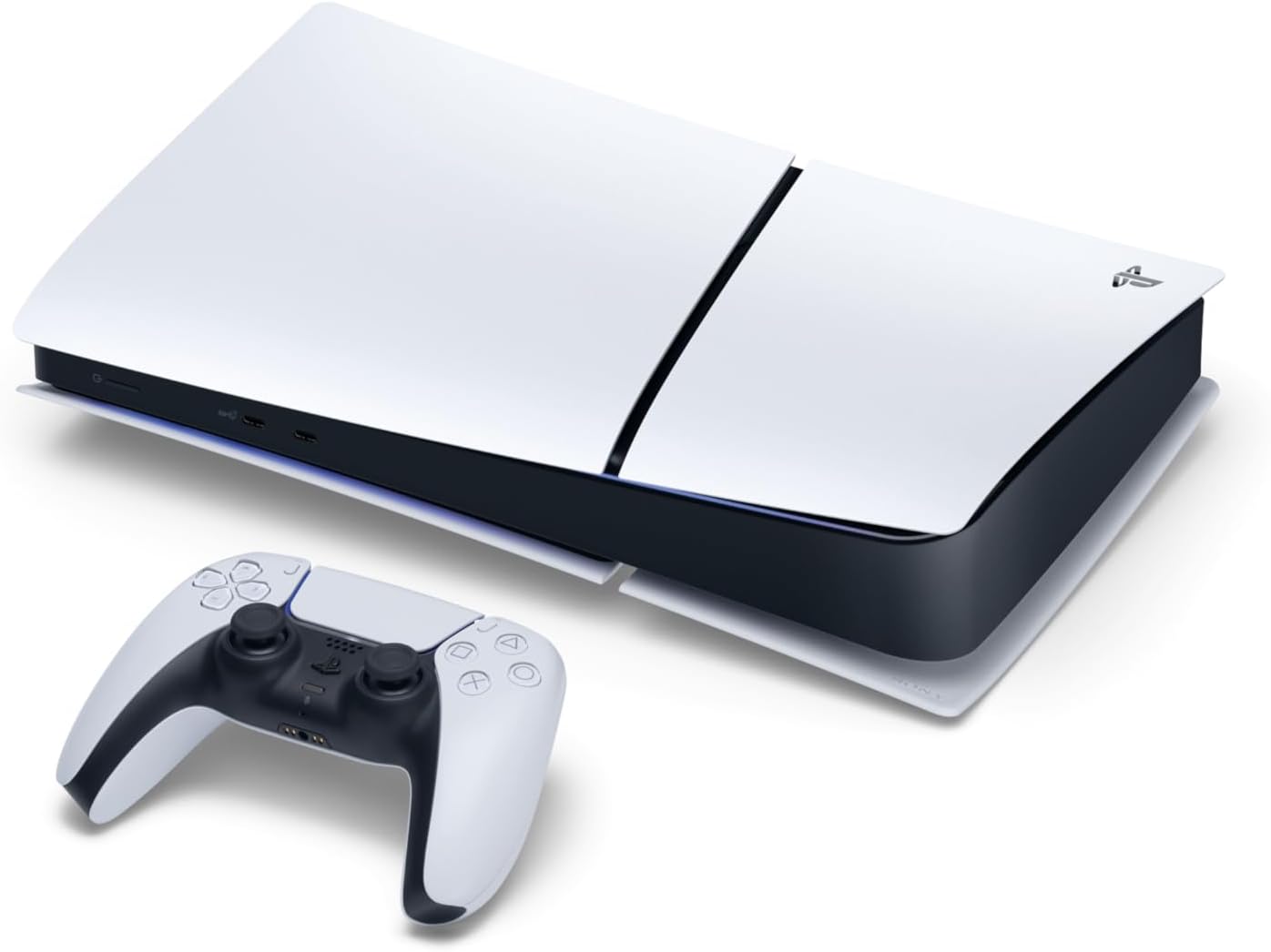
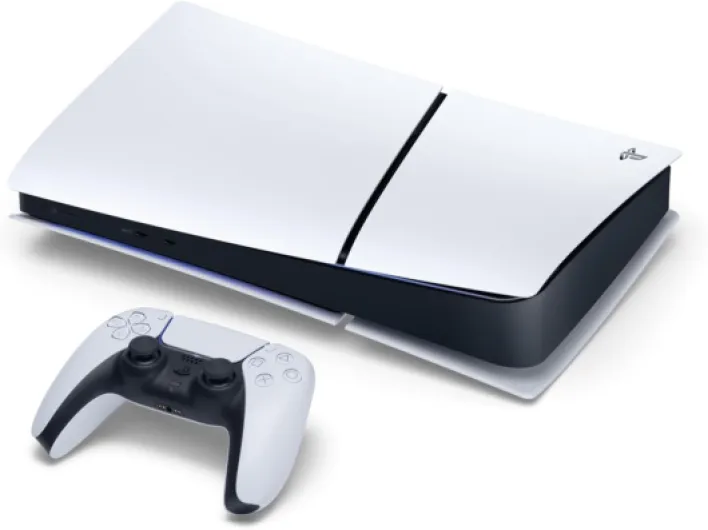
The design of the slim PS5 Digital is a bit more reasonable than the original launch model, but it’s still a chunky console. The dimensions given (35.6 x 42.9 x 12.7 cm) match what I felt when I tried to slide it into my TV cabinet: it fits, but you need to measure your space. It’s lighter than the first version at around 3.8 kg, so moving it to another room isn’t a big deal, but it’s not something you’ll toss in a backpack every weekend either.
Looks-wise, it keeps the PS5 “futuristic” vibe: white covers, black core, and that slightly curved shell. Personally, I don’t love or hate it. It’s fine, it looks like a console trying to look modern. The good thing is that because it’s compatible with PS5 console covers, you can swap the colour if the white clashes with your setup. I didn’t bother, but it’s nice to know you’re not stuck with the default look if it annoys you.
In day-to-day use, what I noticed most was the footprint and how it handles heat and noise. The ventilation seems decent; I haven’t had any overheating issues and the fan noise stays low in most games. When a game is really pushing it, you hear a bit of whoosh, but nothing close to the crazy PS4 Pro noise level. The front ports are easy enough to reach, though the all-digital version obviously doesn’t have a disc slot, so the front looks cleaner and simpler.
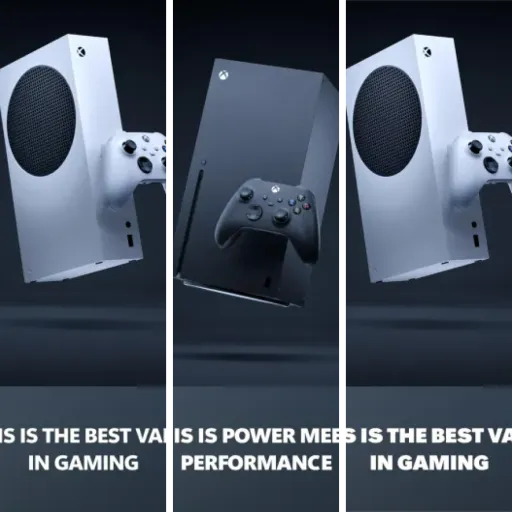
So, design verdict: it’s a slimmer, more practical take on the PS5 look, but still on the large side compared to something like an Xbox Series S. If you want a tiny, discreet box, this isn’t it. If you just want something that sits under your TV, looks modern enough, and doesn’t sound like a vacuum cleaner, it gets the job done.
Controller battery life and day-to-day charging reality
The console itself obviously plugs into the wall, so the “battery” part here is really about the DualSense controller that comes in the box. Sony lists that it uses a built‑in rechargeable battery (lithium‑ion, included), and after using it regularly, I’d say the battery life is decent but not great. With haptic feedback and adaptive triggers on, I usually get around one long evening plus part of the next before I feel like I should plug it in. If I play something less intense or turn down some features, it lasts a bit longer.
In practical terms, that means if you game a couple of hours each night, you’ll probably charge it every 2–3 days. If you do a big weekend marathon, expect to either play wired via USB‑C or have a second controller ready. The haptics and adaptive triggers are cool and do add some immersion, but they clearly eat into the battery. I noticed that games that go heavy on vibration drain the pad faster. It’s not a deal breaker, but it’s something you notice after a few sessions.
Charging itself is straightforward: you connect the controller via the included USB cable to the console or use a separate charging dock if you buy one. From low battery to full takes a couple of hours. I ended up getting into the habit of plugging the controller in when I’m done for the night, which mostly avoids running out mid‑session. Still, compared to some older controllers that seemed to last forever, this one feels a bit short on endurance.
So for battery, I’d say: it’s okay, not great. It absolutely works, and if you manage your charging it’s fine, but heavy users or people who hate cables will probably want a second controller or a charging station. It’s one of those small quality‑of‑life things that doesn’t ruin the console, but could be better for the price.
Build quality and how solid it feels in real life
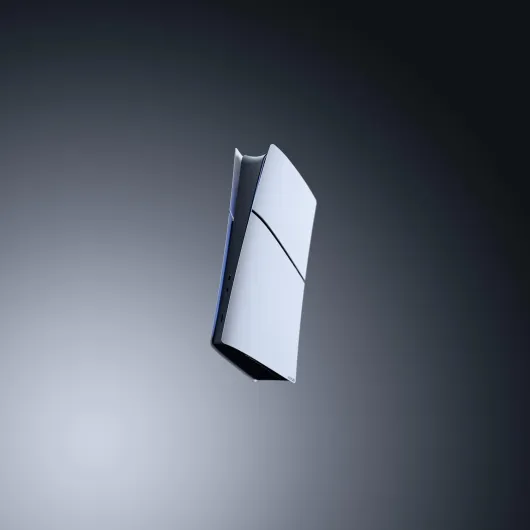
In terms of durability, the PS5 Digital Edition gives off a solid, plastic‑but‑sturdy vibe. It’s not metal or premium materials, but nothing feels flimsy. The outer shell has a bit of flex if you really push on it, but that’s normal for this kind of device. After moving it around a couple of times and plugging/unplugging cables, I didn’t notice any creaks or worrying noises. The weight (around 3.83 kg) helps it feel planted and not like a cheap toy.
The vents and fan seem well designed for long sessions. I’ve played for several hours straight on weekends and the console got warm but not scorching. No shutdowns, no thermal warnings, no weird smells. That’s reassuring if you plan to keep it running for a few years. Obviously, dust will be the long‑term enemy here, so if you shove it into a tight, unventilated cabinet, you’re asking for trouble. But treated normally, it looks like it can handle regular use without drama.
The DualSense controller feels more complex than the old DualShock, which always makes me wonder about long‑term durability. You’ve got haptics, adaptive triggers, touchpad, built‑in mic – more parts that can potentially fail. So far, the sticks are tight, buttons are responsive, and nothing rattles, but I can see heavy users maybe wearing out triggers or sticks over a couple of years. That said, that’s pretty standard for controllers now; nothing about this one feels especially fragile.
Because this is a relatively slim redesign, long‑term durability is always a bit of a question mark until a couple of years pass. But judging from build quality, thermals, and general feel, it doesn’t come across as cheap or rushed. I’d still treat it with basic care – no stacking heavy stuff on it, no blocking vents – but under normal living room conditions, it should hold up fine for a full console generation.
Real-world performance: fast loads, smooth gameplay, a few limits
Performance is where this PS5 Digital Edition actually feels like a step up from older consoles. The ultra‑high‑speed SSD and Sony’s integrated I/O stuff translate into noticeably shorter load times. In practice, going from the home screen into a big AAA game usually takes just a handful of seconds. Fast travel in open‑world games that used to be coffee‑break long on PS4 now feels more like a quick pause. It’s not zero, but it’s quick enough that you don’t think about it much.
In terms of graphics, games that support ray tracing do look better – more realistic lighting and reflections – but let’s be honest, you mainly notice it when you pay attention. What matters more for me is that games stay smooth. Most PS5 titles I tried either go for higher resolution or higher frame rate modes, and the console handles both in a stable way. It’s not a PC with a top-end GPU, but for a living room console plugged into a 4K TV, it’s pretty solid. The 3D audio is a nice bonus if you use headphones; positional audio in shooters and horror games feels more precise.
Backwards compatibility has been good too. My digital PS4 games ran without weird issues, and many of them benefit from the stronger hardware with better frame rates or higher resolutions. One user review mentioned that their old PS4 games run well and that matches what I saw. So if you already bought a bunch of PS4 games digitally, they don’t go to waste on this machine.
The only thing to keep in mind is that performance also depends on how developers optimise their games. The console has the power, but you’ll still see occasional frame drops or bugs in some titles – that’s on the game, not the hardware. Overall, for the price bracket and for someone who just wants smooth console gaming in 4K with quick loading, the performance is more than good enough, with no major red flags.

What you actually get with the PS5 Digital Edition (slim CFI‑2100)
To keep it simple: this is the PS5, just without the disc drive. Same general power, same games, same interface, but all your stuff is digital. You sign into your PlayStation Network account, go to the PlayStation Store, and download everything – games, apps, media. If you’re already used to PS4 digital purchases or PS Plus, the transition is pretty painless. If your shelf is full of PS4 discs, those become useless on this machine, so keep that in mind.
On the performance side, it runs PS5 games at up to 4K with ray tracing support when games use it, and it also handles most of your PS4 digital library. In practice, older PS4 titles I tried loaded much faster and often ran smoother. The description talks about the ultra‑high‑speed SSD and integrated I/O, and that’s not just buzzwords – you feel it when fast traveling in open‑world games or jumping between levels. It’s not instant every time, but it’s quick enough that I don’t grab my phone during every loading screen anymore.
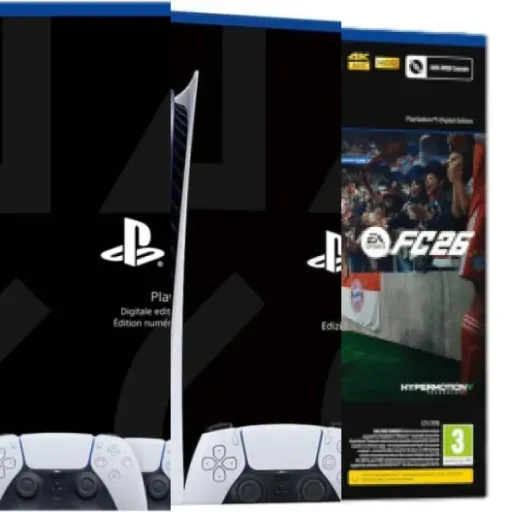
This model is listed as compatible with PS5 accessories for the CFI‑2000 products, including the optional disc drive and console covers (sold separately). So technically, if you really change your mind later, you can add a disc drive, but that’s extra money and hassle. Out of the box you get the console, a DualSense controller, HDMI cable, power cable, and a USB cable to charge the pad. No fancy extras, just the basics to start playing.
Overall, the presentation is straightforward: it’s a digital‑only PS5 with a slimmer body, strong performance, and all the usual PlayStation services. No gimmicks, just Sony nudging you fully into the digital store. If that fits how you play, it makes sense. If you like hunting for used games or lending discs to friends, this version will feel limiting.
Pros
- Fast loading times and smooth performance for both PS5 and most PS4 digital games
- Quieter and slimmer than the original PS5 while keeping the same power level
- Strong feature set with 4K output, ray tracing support, 3D audio, and DualSense haptics
Cons
- Digital-only: no support for physical discs, locking you into PlayStation Store pricing
- 825GB storage fills up quickly, forcing frequent game management or extra SSD purchase
- Controller battery life is only average, requiring regular charging or a second pad
Conclusion
Editor's rating
The PlayStation®5 Digital Edition – 825GB does what a modern console should: strong performance, quick loading, quiet operation, and a clean, straightforward user experience. If you’re coming from a PS4, the jump in speed and general smoothness is very noticeable. Games look good, run well, and PS4 digital titles carry over nicely. The slim design is still on the large side, but it’s easier to fit into a normal TV setup than the original launch PS5.
Where you really need to think is the digital‑only angle and the limited storage. With no disc drive, every purchase goes through the PlayStation Store, and 825GB fills up faster than you’d like, especially with big AAA games. You can expand storage, but that adds cost. The controller’s battery life is okay but not great, so heavy players will probably want a second pad or a charging dock. None of these are deal breakers, but they’re practical points you feel after a few weeks, not just on day one.
So, who is this for? It’s a good fit if you already buy games digitally, have a solid internet connection, and just want a powerful, hassle‑free console for 4K gaming. It’s less ideal if you like collecting physical games, trading them, or squeezing every euro out of used copies. In short: solid next‑gen console, good overall experience, but make sure you’re genuinely okay living in a 100% digital world before you pick this specific version.