Summary
Editor's rating
Value: who should actually spend money on this thing
Design: still a big white spaceship under your TV
Storage and everyday use: 2TB finally feels reasonable
Durability, heat and noise over longer sessions
Performance: where the PS5 Pro actually earns its name
What the PS5 Pro actually brings to the table
Pros
- Noticeably smoother performance and more stable frame rates in supported PS5 and PS4 games
- 2TB SSD makes managing big modern games much easier
- Better use of ray tracing and 4K output without tanking performance on compatible TVs
Cons
- Upgrade from a base PS5 feels modest if you’re not picky about visuals and frame rates
- Still a large, slightly awkward design that takes up a lot of space
- Real benefits depend on how many games actually get proper PS5 Pro enhancements

Specifications
View full product page →| Brand | PlayStation |
PS5 Pro: worth upgrading or just hype?
I’ve been using the PlayStation 5 Pro for a few weeks now, coming from a launch PS5 and before that a PS4 Pro. So I’m not reading spec sheets, I’ve actually swapped the boxes under my TV a few times to see if it really changes much. Short version: there is a difference, but it depends a lot on your TV, the games you play, and how sensitive you are to frame rate and image quality.
First thing I noticed after setting it up was how familiar everything felt. Same interface, same controller, same general experience. If you expect a whole new generation feeling like going from PS4 to PS5, that’s not what this is. It’s more like a stronger PS5 that lets certain games run cleaner and sharper, especially on a decent 4K screen with 120Hz.
Where it starts to justify itself is in those moments where the base PS5 struggled a bit: busy scenes, ray tracing modes that dipped in frame rate, or games where you had to choose between performance and fidelity. On the Pro, those choices feel less painful. You can actually keep the nicer visuals more often without the game turning into a slideshow. It’s not night and day, but it’s noticeable.
So overall, my first impression is: good upgrade for people who care about performance and visuals, kind of pointless for casual players who already have a PS5 and don’t stare at frame counters. If you’re still on PS4 or PS4 Pro though, this feels like a big jump, both in speed and how clean games look.
Value: who should actually spend money on this thing
In terms of value, the PS5 Pro sits in a bit of a grey area. If you already own a standard PS5 and you’re not obsessed with higher frame rates or ray tracing, the upgrade is nice but not essential. You’re paying a fair chunk of money for cleaner performance, more stable visuals, and extra storage. That’s good, but it’s not life-changing for everyone. For casual players who mostly play a couple of big games a year, the base PS5 is still fine.
Where the Pro makes more sense is for a few specific groups: people still on PS4/PS4 Pro, people with a good 4K 120Hz TV, and those who are picky about image quality and smoothness. In those cases, you’re getting a console that should age a bit better over the next few years, especially with PS6 apparently pushed back. The machine learning and extra power mean devs can squeeze more out of it later, so you’re not stuck at the limit as quickly as with the base model.
Compared to buying a gaming PC that can push similar visuals, the PS5 Pro is still cheaper overall, especially if you just want to sit on the couch and play without tweaking settings for an hour. You also get access to the PlayStation exclusives library, which is still a big part of the appeal. On the other hand, if you already invested in a strong PC, the Pro doesn’t bring anything unique except those exclusives and the console convenience factor.
So, value-wise, I’d call it pretty solid but not a no-brainer. It’s a smart purchase if you’re upgrading from much older hardware or if you’re the kind of person who notices and cares about performance details. If you’re happy with your base PS5 and don’t sit there counting frames, you can easily skip this and wait for the next full generation.
Design: still a big white spaceship under your TV
Physically, the PS5 Pro is very much in the same family as the normal PS5. You still have that big, slightly awkward white shell that looks like a router on steroids. If you already thought the original PS5 was too big, this one isn’t suddenly compact. It still takes up a decent chunk of space in a TV unit, and you still have to think about airflow because it needs room to breathe. It’s not the ugliest thing in the world, but it’s not exactly discreet either.
In terms of ports and layout, it’s pretty straightforward. You’ve got your USB ports up front for charging the controller or plugging in a drive, and the usual set of ports in the back. Nothing weird or clever, just what you’d expect from a modern console. Setting it up physically is easy: plug in power, HDMI, optional Ethernet, and you’re done. The stand and orientation stuff is the same kind of slightly annoying dance as on the PS5. It works, but you do have to fiddle a bit if you want it vertical or horizontal.
One thing I appreciated is that the console runs fairly quiet, even when pushing more demanding games. My launch PS5 sometimes sounded like it was working hard in certain titles. The Pro isn’t silent, but in normal play with sound on, I barely noticed it. During long sessions, the fan noise stayed at a stable level, which is nice if your console is close to where you sit. Heat is there, obviously, but the outer shell doesn’t get crazy hot to the touch.
I wouldn’t buy or skip this console based on the design alone. It’s basically the same style you already know from the PS5: big, slightly odd-looking, but functional. If you hated the look before, this won’t change your mind. If you were fine with it, the Pro just blends into the same spot and does its job.
Storage and everyday use: 2TB finally feels reasonable
The 2TB SSD is honestly one of the most practical things about the PS5 Pro. On my old 1TB PS5, I was constantly juggling installs. Big games are often 80–120GB each, plus patches, plus DLC. After a while, it felt like every time I wanted to try something new, I had to delete two other games and then wait for a download. With 2TB, that stress is a lot lower. I can keep a bunch of big AAA games installed, plus some smaller stuff, without hitting the limit every week.
In real use, 2TB doesn’t feel huge, but it feels like the minimum that should have been there from the start. You still have to manage storage a bit if you install absolutely everything, but it’s not as tight as before. For example, I had several large titles, a couple of service games, and some PS4 backwards compatible stuff installed at the same time, and I still had room. That simply wasn’t happening on my old console without an external SSD.
Load times are basically in the same ballpark as the base PS5: fast enough that you don’t think about it much. Games boot quickly, fast travel is snappy, and going back to PS4 feels slow by comparison. I didn’t notice any meaningful difference in load time between PS5 and PS5 Pro on the same game, which is fine. The point here isn’t speed, it’s capacity and the convenience of not always having to uninstall things.
You can still expand storage with an extra NVMe SSD if you want, so if you’re a real hoarder you can go beyond 2TB. But for most people, this built-in size is a good sweet spot. It doesn’t feel luxurious, just sensible. For me, this is one of the reasons the Pro makes more sense than just buying another SSD for the base PS5, especially if you also care about the performance gains.
Durability, heat and noise over longer sessions
I haven’t had the PS5 Pro for years obviously, but I did push it through long sessions to see how it behaves. We’re talking 4–6 hour gaming stretches on demanding titles with ray tracing on. The console got warm, as you’d expect, but not to the point where I was worried. The fan ramps up a bit when things get heavy, but overall it stayed consistent and didn’t suddenly start roaring like some older consoles I’ve had.
Compared to my launch PS5, the Pro feels a bit more controlled in terms of noise. The old one sometimes had these random louder phases depending on the game. The Pro, at least for now, has been more stable. Sitting about two meters away, with the TV at normal volume, I barely noticed it. Only when I muted everything could I hear the fan clearly, and even then it was just a soft whoosh, not a high-pitched whine.
Build quality seems decent. The plastic is the same general feel as the original PS5: not premium, not cheap, just standard console plastic. The ports feel solid, nothing loose or wobbly on my unit. The only thing I’d keep an eye on long term is dust. Just like the PS5, the Pro has vents that will suck in dust over time, so if you live in a dusty place, you’ll want to clean around it every so often and avoid closing it in a tiny, sealed cabinet.
Battery-wise, it’s the same DualSense story. The controller battery life is okay but not great, and that’s not really the Pro’s fault. If you play a lot, you’ll still be charging regularly or using a dock. As for the console itself, power usage will obviously be higher under load than the base PS5, but in day-to-day use it’s nothing crazy. Overall, it feels like a solid, reliable box that should last, as long as you give it enough space and don’t treat it like a heater stand.
Performance: where the PS5 Pro actually earns its name
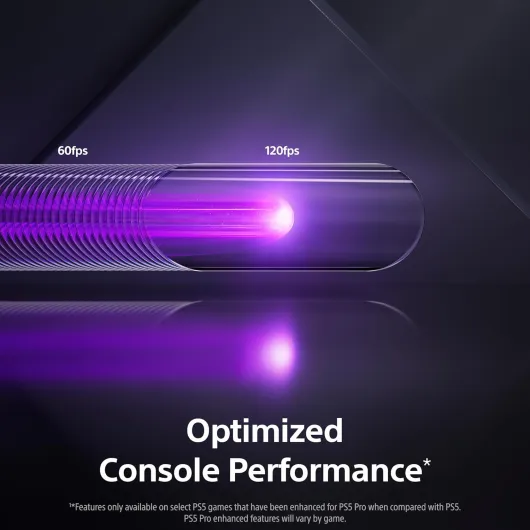
This is the main reason to care about the PS5 Pro. Compared to the base PS5, the boost is not just marketing talk, you can feel it in certain games. On titles that have been patched or designed for PS5 Pro, you can run ray tracing, higher resolutions, and still hit 60fps or even up to 120fps on compatible TVs. In practice, this means you don’t have to sacrifice smoothness just to get nicer lighting and reflections. For someone like me who notices frame dips, that’s a big plus.
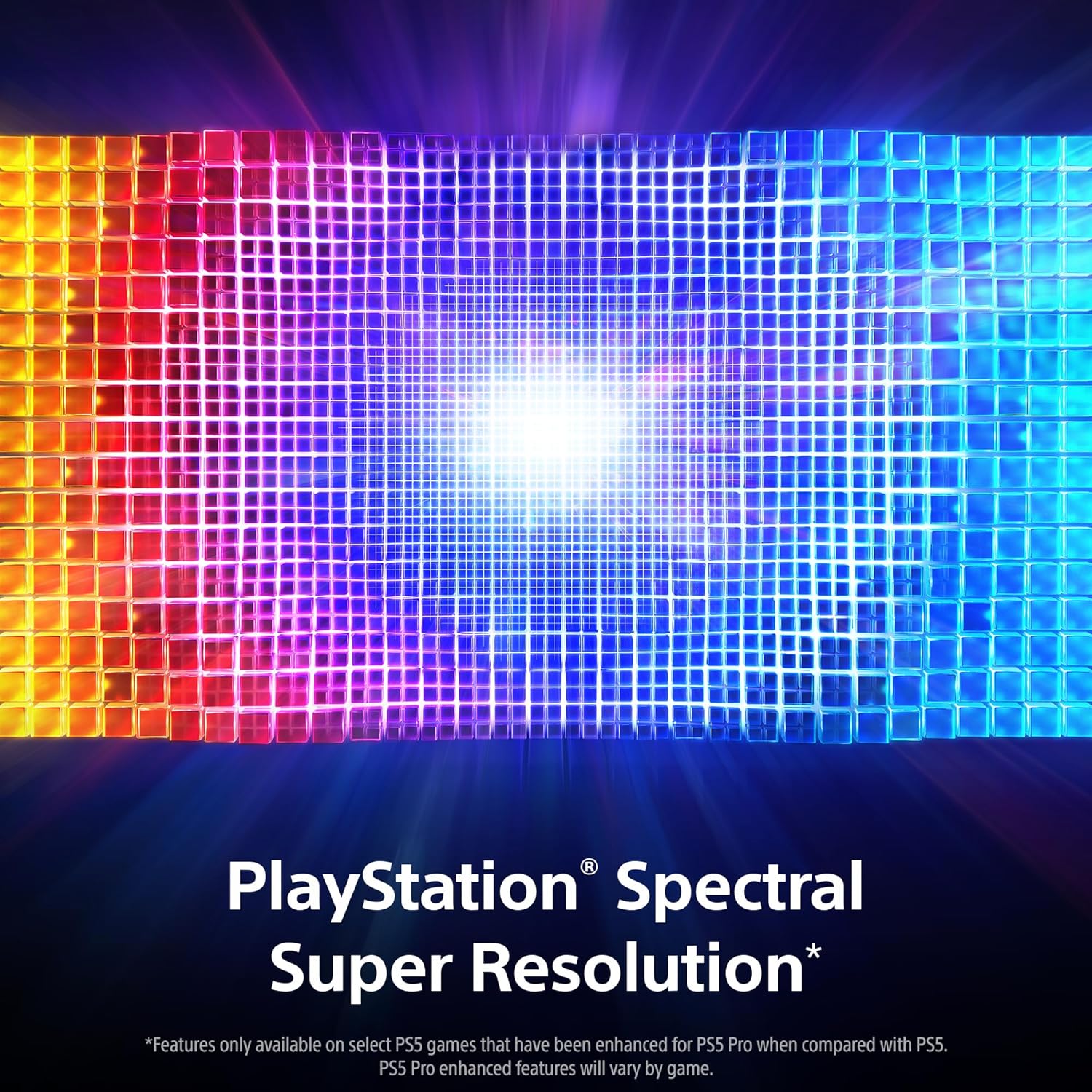
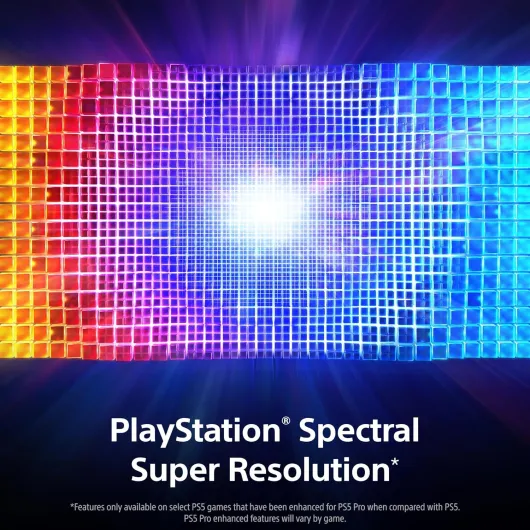
The AI upscaling (PSSR) is basically Sony’s answer to DLSS/FSR on PC. You’re not getting pure native 4K all the time, but the image still looks sharp on a 4K TV. When I switched back to the base PS5 on the same screen, some games looked slightly softer or had more visible drops in busy scenes. On the Pro, those scenes felt more stable. It’s not that everything suddenly looks like a high-end PC, but the overall experience feels tighter and more consistent.
For PS4 games, the story is a bit mixed. The Enhanced Image Quality toggle helps some titles more than others. A few games do look cleaner, with less shimmering and a bit more clarity, but don’t expect miracles. Where I saw the most benefit was in frame rate. Older games that already had a performance mode or PS4 Pro support tend to run more steadily here, with fewer random stutters. If you have a big PS4 library, this is a nice bonus, but it shouldn’t be your only reason to upgrade.
Online play with Wi‑Fi 7 is decent. I had fewer spikes when downloading in the background while playing, and matchmaking and updates felt a bit snappier. Still, if you’re a competitive player, you should be on wired Ethernet anyway. Overall, performance is the main strength of this console: not mind-blowing, but a clear step up from the base PS5 if you have the right TV and play the right games.
What the PS5 Pro actually brings to the table
On paper, the PS5 Pro is basically the PS5 that went to the gym. You get more power for graphics, support for higher frame rates, and some AI upscaling stuff that Sony calls PSSR. In normal words: it tries to push 4K more often, with better ray tracing and smoother gameplay, without your console melting. It also comes with a 2TB SSD, which, in daily use, is honestly one of the most practical upgrades. Games are huge now, so going from 1TB to 2TB means fewer annoying decisions about what to delete.
The console supports Wi‑Fi 7, which sounds fancy, but in practice it just means downloads and online play are a bit more stable if you have a modern router. I tested it on Wi‑Fi 6 and then on a Wi‑Fi 7 router at a friend’s place. The difference isn’t mind-blowing, but I got more consistent download speeds and slightly less stutter when the network was busy. If you’re wired with Ethernet already, this part won’t matter much to you.
One thing that’s pretty useful is how it handles older games. PS4 titles and PS5 games that support Game Boost run a bit smoother, with fewer drops. There’s also this Enhanced Image Quality option for PS4 games. It doesn’t magically remaster them, but some titles do look a bit sharper and cleaner, especially on a big 4K TV where PS4 usually shows its age. You still see old textures, but edges and overall clarity are slightly better.
In everyday use, boot times, menu navigation, and loading are fast and about what you’d expect from a PS5, sometimes a hair quicker but not enough to brag about. The real difference shows up in demanding games and modes that use ray tracing and high frame rates. So if you mostly play indie games or lighter titles, the Pro doesn’t change your life. If you’re into big AAA stuff with fancy graphics, the upgrade feels more justified.
Pros
- Noticeably smoother performance and more stable frame rates in supported PS5 and PS4 games
- 2TB SSD makes managing big modern games much easier
- Better use of ray tracing and 4K output without tanking performance on compatible TVs
Cons
- Upgrade from a base PS5 feels modest if you’re not picky about visuals and frame rates
- Still a large, slightly awkward design that takes up a lot of space
- Real benefits depend on how many games actually get proper PS5 Pro enhancements
Conclusion
Editor's rating
The PlayStation 5 Pro is basically the PS5 that fixes a bunch of small annoyances rather than a whole new experience. You get better performance in supported games, more consistent frame rates with ray tracing, sharper image quality thanks to the AI upscaling, and a very welcome bump to 2TB of storage. Day to day, it feels like a smoother, less compromised version of the console you already know. If you’re coming from a PS4 or PS4 Pro, the jump in loading times, visuals, and overall responsiveness is big enough that it feels like a proper step into current-gen gaming.
But it’s not perfect, and it’s not for everyone. If you already have a standard PS5 and you mostly play casually on a regular 60Hz TV, the upgrade is nice but not essential. The console is still bulky, the design hasn’t really improved, and the benefits depend heavily on developers actually supporting PS5 Pro features. For people with a good 4K 120Hz TV, a big game library, and an eye for frame rates and image quality, it’s a pretty solid buy that should age well until the PS6 shows up. For everyone else, the base PS5 still gets the job done just fine.