Summary
Editor's rating
Is the PS5 Digital worth the money?
Big, white, and not exactly discreet
Controller battery and real-life autonomy
Build quality, heat, and how it holds up
4K, fast loading, and how it actually runs games
What you actually get with the PS5 Digital
Pros
- Fast SSD and strong performance with short loading times and smooth 4K gaming
- Quieter and more comfortable to use than an older PS4, with solid build quality
- Perfect if you already buy everything digitally and don’t care about discs
Cons
- No disc drive, so no used games, no cheap disc promos, and no reselling
- 825 GB storage fills up quickly with big games, extra SSD is an added cost
- Controller battery life is average and needs frequent charging for long sessions

Specifications
View full product page →| Brand | PlayStation |
PS5 Digital after a few weeks: the honest version
I’ve been using the PlayStation 5 Digital Edition as my main console for a while now, and I’ll be straight: it’s a pretty solid machine, but it’s not perfect. I came from a PS4 (standard, not Pro), so the jump was quite clear in terms of loading times and graphics. At the same time, I ran into a couple of annoyances that you don’t really see in the glossy product pages. If you’re hesitating between this and the disc version, or even an Xbox, the differences are more practical than you might think.
Day one, what struck me most was how fast it boots and loads games. On PS4, I had time to check my phone between menu and gameplay; here, it’s basically instant on most recent titles. The console is also quieter than my dusty PS4 that used to sound like a jet engine. With the PS5 Digital, the fan is audible when a game pushes it, but it stays at a reasonable level, more like background noise than something that annoys you.
On the downside, going all-digital has a real impact on the wallet and on how you manage your storage. You’re stuck with the PlayStation Store prices most of the time, and unless you wait for sales, some games are clearly more expensive than buying them second-hand on disc. Also, the 825 GB of storage fills up faster than you’d expect, especially with big AAA games that each take 80–100 GB. After a few installs, I found myself already deleting stuff to make room.
So overall, my first impression is: strong console, very comfortable to use, but you have to accept a few compromises. If you like to collect physical games, lend them to friends, or resell them, this version is not for you. If you know you’re fully into digital and you just want fast loading, 4K, and a clean setup under the TV, then it’s a good fit. In the rest of the review I’ll go through the design, performance, noise, storage, and whether the price feels fair in real life use.
Is the PS5 Digital worth the money?
On value, the PS5 Digital Edition is in a bit of a tricky spot. The hardware itself is strong for the price: 4K output, fast SSD, solid controller, and access to the PlayStation ecosystem and exclusives. In that sense, you get a powerful console that will last several years. If you mainly buy digital games anyway, the lack of disc drive doesn’t feel like a big sacrifice and you basically save some money compared to the disc version (depending on local pricing and promos).
Where it gets less attractive is on long-term game costs. With no disc drive, you lose access to second-hand games, cheap retail promos, and lending/swapping with friends. Over a few years, that can easily eat up the initial saving on the console itself. I noticed that some big titles stay expensive for a long time on the PlayStation Store, while their disc versions drop faster in physical shops. If you’re patient and only buy during digital sales, you can compensate a bit, but you have to be disciplined.
Storage is another part of the value equation. The 825 GB (actually less available) fills up quickly. After installing a handful of heavy games, I was already down to juggling what stays and what goes. You can add an internal NVMe SSD, but that’s an extra cost that isn’t exactly cheap. If you know you’ll play a lot of big titles at the same time, factor that in when you compare prices with other consoles or with the disc PS5.
In short, the PS5 Digital is good value if: you’re 100% okay with digital, you buy games mostly during sales, and you don’t mind managing storage or maybe upgrading later. If you like to resell your games, buy used, or grab physical bargains, the disc version will likely be better financially in the long run. For my use (mostly digital, not a huge collector), the value is decent but not mind-blowing. It does the job and I don’t regret it, but I’m aware I pay more per game than friends on disc-based setups.
Big, white, and not exactly discreet
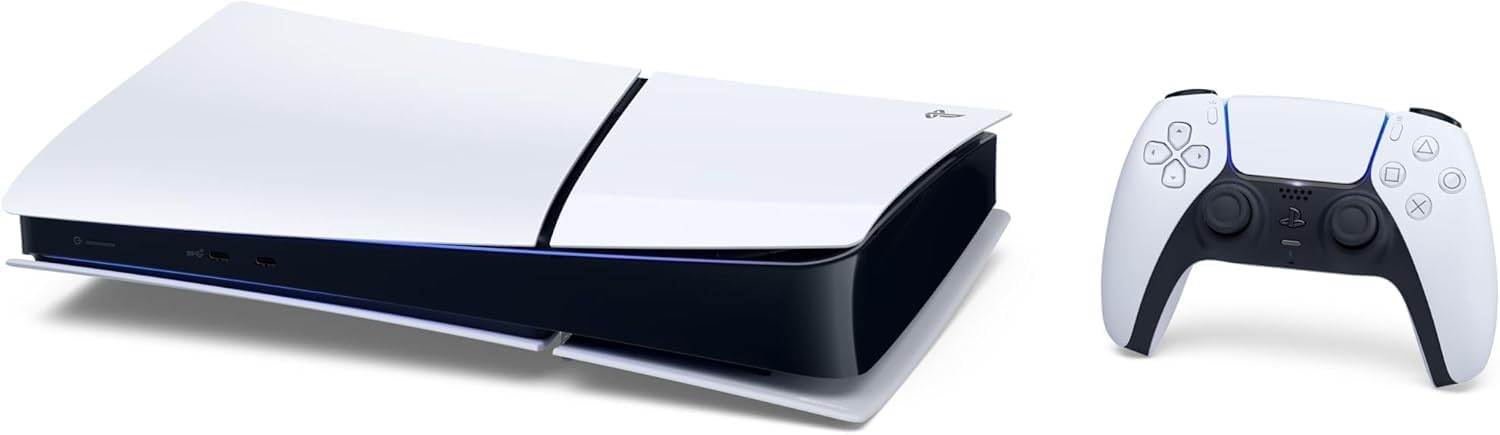
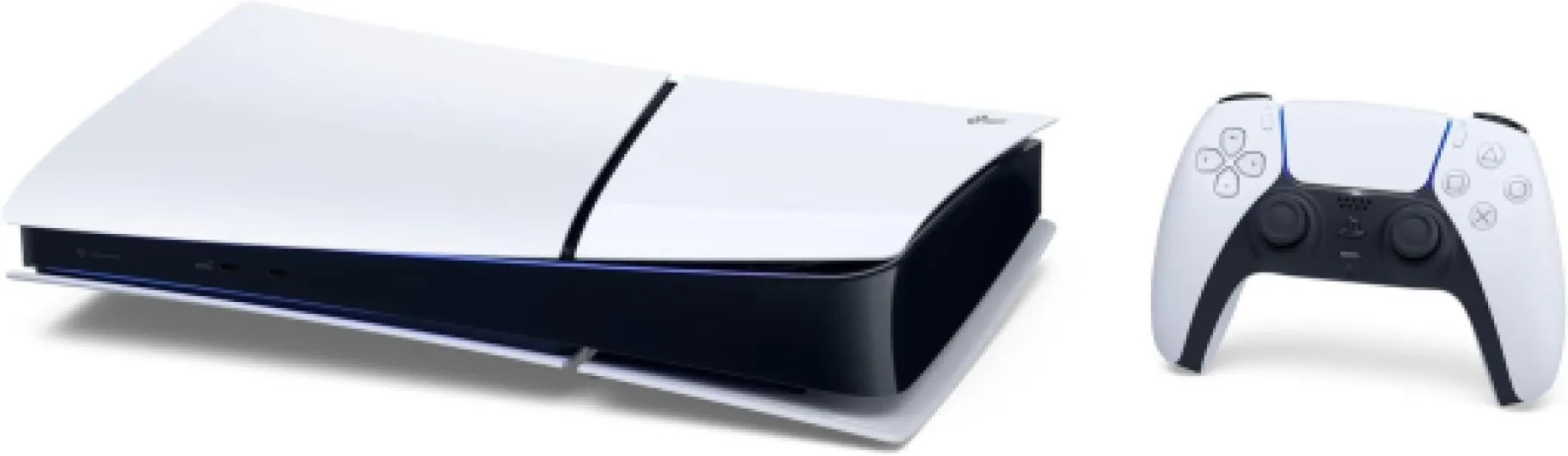
Physically, the PS5 Digital is still huge. Even without the disc drive, it’s a big chunk of plastic under the TV. Compared to my old PS4, it feels almost like a small PC tower. If you have a tight TV cabinet, measure before buying, because it doesn’t fit everywhere, especially in vertical mode. I ended up laying it horizontally because vertically it looked a bit ridiculous next to my TV and didn’t fit the shelf height.
The overall look is pretty polarizing: white side panels, black center, and blue light strip. Personally, I think it’s okay but not exactly pretty. It looks like a tech object that wants to be noticed, not something that blends into the living room. Dust also shows quite easily on the white parts. After a couple of weeks, I had to wipe it down because it started to look a bit dirty, especially near the vents.
That said, there are some practical points I liked. The front ports (USB-A and USB-C) are easy to reach for charging the controller or plugging in a drive. The power and eject (well, no eject here, so only power) buttons are clear, not like some older consoles where you had to guess. The stand system is a bit annoying at first: you have to screw/clip it differently depending on whether you go vertical or horizontal. It’s not rocket science, but it’s the sort of fiddly thing you do once and then never touch again.
Overall, design-wise it’s functional but not subtle. It cools itself properly, it has the ports you need, but if you’re looking for something minimal and compact, this isn’t it. The Digital Edition is slightly cleaner visually because there’s no disc slot breaking the line on one side, so if that matters to you, it’s a small plus. For me, once it was in place, I stopped caring about the look and just focused on how it runs games, which is what really matters here.
Controller battery and real-life autonomy
Since the console itself is plugged in, the “battery” topic is really about the DualSense controller. And here, it’s a bit of a mixed bag. The haptic feedback and adaptive triggers are cool in some games, but they clearly eat into battery life. In my experience, with all features on and playing PS5 titles that use them a lot, I get roughly 6–8 hours of play before I feel the need to recharge. If I play older PS4 games that don’t hammer the features, it lasts a bit longer, but it’s still not huge.
Practically speaking, that means if you play a lot in long sessions, you’ll either want a second controller or plan to plug it in regularly. The included USB-C cable is long enough for couch distance, but having a cable running across the living room is not ideal. I ended up buying a cheap charging dock so I can drop the controller on it when I’m done. That small habit makes a big difference: if you always leave it charging between sessions, you almost never run out mid-game.
One thing I noticed: after a couple of weeks, the battery doesn’t get better or worse, it just stays in that same range. It’s fine for casual use (a few hours at night, some gaming on weekends), but heavy players will feel the limit. There’s also no easy way to swap the battery like on some older controllers; it’s internal, so when it ages, you’re basically stuck or you have to open it up, which most people won’t do.
Overall, the controller battery is acceptable but nothing more. It’s clearly the price to pay for all the fancy vibrations and trigger resistance. If you’re okay with plugging in regularly or investing in a dock and maybe a second controller, it’s manageable. If you hate dealing with charging and just want a pad that runs for days, this will annoy you over time.

Build quality, heat, and how it holds up
On the durability side, my PS5 Digital gives a decent impression of solidity. The plastic doesn’t feel premium, but it doesn’t feel cheap either. The console is heavy enough to feel stable, and once it’s on its stand correctly, it doesn’t wobble. I’ve moved it a couple of times between rooms and it handled that without any creaks or weird noises. The controller also feels solid in the hands; the textured grip on the back is nice and hasn’t worn off so far.
The main long-term concern with any console is heat and dust. The PS5 pulls a fair bit of warm air from the back, especially during demanding games, but the shell never got burning hot for me. I made sure it had some breathing room around it, which I recommend strongly. Shove it in a small closed cabinet and you’re asking for trouble. After a few weeks, I already saw some dust buildup around the vents. The good point is that Sony designed removable side panels, so cleaning in the future should be easier than on older consoles.
In terms of reliability, I haven’t had the “keeps turning off” problem one of the reviews mentioned, so it’s either a faulty unit in their case or a power/ventilation problem. Mine has gone through long gaming sessions (3–4 hours) without shutdowns or thermal warnings. Software-wise, apart from one random crash back to the main menu, it’s been pretty stable. Updates are regular but not intrusive; you download them, install, and move on.
So, from what I’ve seen, durability looks decent, but it’s still a fairly new generation, so we’ll only know for sure in a few years. For now, if you keep it ventilated, dust it from time to time, and don’t yank the cables around, there’s nothing that screams “fragile” about it. Just keep in mind the controller battery will wear over time, like any lithium battery, which is another reason why I’d avoid leaving it at 0% or 100% for days.
4K, fast loading, and how it actually runs games
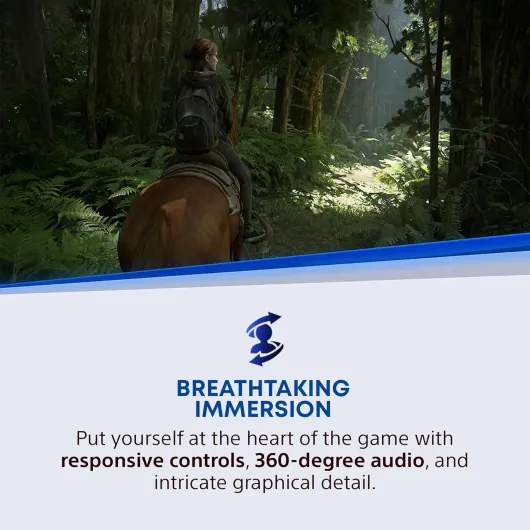
On performance, the PS5 Digital does what you’d expect from a current-gen console. The 4K output with HDR looks very good on a decent TV. I tested a mix of titles: some PS5-native games with ray tracing options and some PS4 games running through backward compatibility. On PS5 titles, you usually get two main modes: Performance (higher fps, often 60) and Quality (better graphics, sometimes 30 fps). I mostly stuck to Performance mode because smoother gameplay feels better, and even then the graphics are still a clear step up from PS4.
The biggest improvement for me is the SSD. Load times are much shorter than on PS4. Fast travel in open world games takes a few seconds instead of half a minute. Booting into a game from the home screen is quick, and rest mode resume is also very fast. That changes how you play in practice: jumping into a quick session before work or during a break feels realistic now, whereas before I sometimes didn’t bother because of the waiting time.
In terms of stability, my unit has been mostly solid. No random shutdowns like the one-star review mentioned, at least not in my case. I had one crash to the dashboard in several weeks, which is annoying but not a disaster. The fan ramps up in more demanding games but stays at a level that’s audible without being aggressive. Compared to my old PS4 that sounded like it was about to take off during some games, this is clearly better. If you’re very sensitive to noise, you’ll still hear it, but it’s not dramatic.
Online performance depends heavily on your connection, but Wi‑Fi has been stable for me for downloads and multiplayer. If you want the best speeds, use an Ethernet cable, because the internal SSD is fast enough that the bottleneck is your internet, not the console. Overall, in day-to-day use, performance is strong and consistent. It runs modern games well, loads them quickly, and doesn’t struggle with 4K output on a normal living room setup. Nothing mind-blowing, but it gets the job done and feels like a proper generational step over PS4.
What you actually get with the PS5 Digital
The PS5 Digital Edition is basically the same console as the standard PS5, just without the disc drive. Same CPU, same GPU, same 825 GB SSD, same 4K output, same DualSense controller in the box. The main differences in practice: you can’t use physical games or Blu-ray movies, and the console is a bit slimmer on one side because there’s no drive bump. Mine came with the console, one DualSense, power cable, HDMI cable, and a stand. No game included in my case, so factor that into the price if you’re just starting on PlayStation.
Setup is simple: plug in HDMI and power, pair the controller with the USB cable once, connect to Wi‑Fi, and then you go through the usual account and update steps. Be warned: the first update and game downloads are long if your connection isn’t great. The console being digital-only means you’ll be staring at download bars more often than someone who can just pop in a disc and install from there. With a decent connection it’s fine, but if your internet is slow or capped, that’s a real drawback.
One key point: you need a PSN account and you will live in the PlayStation Store. Every game, DLC, and most content goes through there. No impulse buy from a bargain bin, no borrowing a disc from a friend. I personally buy a lot during digital sales, so it didn’t shock me too much, but when I compared prices on a few big titles, there were moments where the disc version in a store was 20–30% cheaper than the digital price at the same time.
In terms of usage, it supports all the usual stuff: 4K on compatible TVs, HDR, Bluetooth for the controller, Wi‑Fi for online play and downloads, and USB ports for charging and external storage. It’s clearly built as a living room box for both gaming and streaming. If you mostly want to play the latest PS5 exclusives in good conditions and don’t care about discs, it covers the basics very well. Just don’t expect any surprises in the box or extra accessories; it’s the strict minimum to get started.
Pros
- Fast SSD and strong performance with short loading times and smooth 4K gaming
- Quieter and more comfortable to use than an older PS4, with solid build quality
- Perfect if you already buy everything digitally and don’t care about discs
Cons
- No disc drive, so no used games, no cheap disc promos, and no reselling
- 825 GB storage fills up quickly with big games, extra SSD is an added cost
- Controller battery life is average and needs frequent charging for long sessions
Conclusion
Editor's rating
The PlayStation 5 Digital Edition is a solid console if you’re already living in the all-digital world. Performance is strong, loading times are short, 4K output looks good, and the machine runs quieter than an old PS4. The controller brings some nice features, even if the battery life is just okay. In daily use, it feels like a proper next step from PS4: games launch faster, menus are snappier, and the overall experience is smoother.
But it’s not for everyone. Losing the disc drive means higher long-term game costs for many people, no second-hand bargains, and no lending games to friends. Storage fills up quickly, and you’ll probably end up deleting and reinstalling titles more often than you’d like unless you pay for extra SSD space. Design is bulky and not very discreet, and the controller battery requires regular charging or a second pad to stay comfortable.
If you buy most of your games digitally already, don’t care about physical collections, and just want a powerful 4K console that runs modern games well, the PS5 Digital Edition is a good fit. If you like hunting for cheap disc deals, reselling your games, or you have poor internet, you should probably skip this version and look at the disc PS5 or even another platform. Overall, it’s a good machine with a few clear trade-offs you need to accept before hitting the buy button.