Summary
Editor's rating
Is the Mega Drive Mini good value in 2026?
Tiny console, big nostalgia: design and build
Controllers, ergonomics and everyday use
Packaging and first impression out of the box
Emulation, input lag and overall performance
What you actually get in the box (and what you don’t)
Pros
- Faithful emulation with good sound and stable 720p HDMI output
- Nice physical design and build, very close to the original Mega Drive in mini form
- Strong game selection with many well-known classics and two controllers included
Cons
- No menu button on controllers; you must reach the console for resets and save states
- Locked library (no way to add games) and missing modern features like parental controls, screenshots, and save backups
- 3-button controllers are not ideal for fighting games like Street Fighter II

Specifications
View full product page →| Brand | SEGA |
Back to 16‑bit: why I bought the Mega Drive Mini in 2026
I picked up the SEGA Mega Drive Mini mainly for nostalgia. I grew up swapping cartridges with friends, so when I saw a tiny version with 40+ games built in, I wanted that old living-room vibe back without hunting down old hardware and fiddling with RF cables. I’ve used it on a 55'' 4K TV for a few weeks, mostly evenings and some weekend sessions with friends and kids.
Right away, it’s important to be clear: this is not a modern console. It’s a plug-and-play box for people who either had a Mega Drive back in the day or are curious about older games. If you expect PS5 graphics or super smooth 120 Hz stuff, you’re in the wrong place. If you want Sonic, Streets of Rage 2, and a bunch of other classics in one box, then it starts to make sense.
During my time with it, I focused on how it feels compared to the original hardware and to other mini consoles I own (NES, SNES, PlayStation Classic). I paid attention to picture quality, input lag, controller feel, and how easy it is to just sit down and play for 30 minutes without messing with settings. I also tested it with kids to see if the fun holds up for someone who never touched a 16‑bit console.
Overall, the short version is this: the emulation and build are pretty solid, the game selection is mostly good, but some modern comfort features are missing. If you already like SEGA, that might be fine. If you’re just retro‑curious and don’t have nostalgia for these exact games, you might bounce off it quite fast.
Is the Mega Drive Mini good value in 2026?
Value really depends on who you are. At around the original launch price (roughly £60, though it fluctuates now), you’re paying a bit over £1 per game for 40+ titles, plus the hardware and two controllers. If you compare that to buying original cartridges, consoles, and cables, it’s obviously way cheaper and far less hassle. For a quick nostalgia fix that works on a modern TV, the price felt fair to me.
However, you have to compare it to other options. You can get official Mega Drive collections on modern consoles or PC quite often on sale, sometimes for less money, with more games and extra features like rewind and filters. You can also go the emulator route with a Raspberry Pi or a cheap mini PC and load hundreds of ROMs. Those options require more setup and are less “legal and simple”, but from a pure value and features perspective, they beat the Mega Drive Mini pretty hard.
Where the Mega Drive Mini justifies its price is in the physical feel and simplicity. No tinkering, no downloads, no menus full of unknown ROM dumps. Just a nice little console under the TV with a curated selection and official hardware. If that matters to you, the value is decent. If you only care about playing the games in any form, and you’re a bit tech‑savvy, this is not the cheapest or most flexible way to do it.
One more thing: the lack of extras hurts the long‑term value. No way to back up save states, no screenshots, no parental controls, no way to add games. What you buy is frozen in time. For some, that’s fine, for others it feels limiting. Personally, I’d rate the value as good for nostalgic SEGA fans, average for general retro gamers who might be better off with a broader multi‑system setup.
Tiny console, big nostalgia: design and build
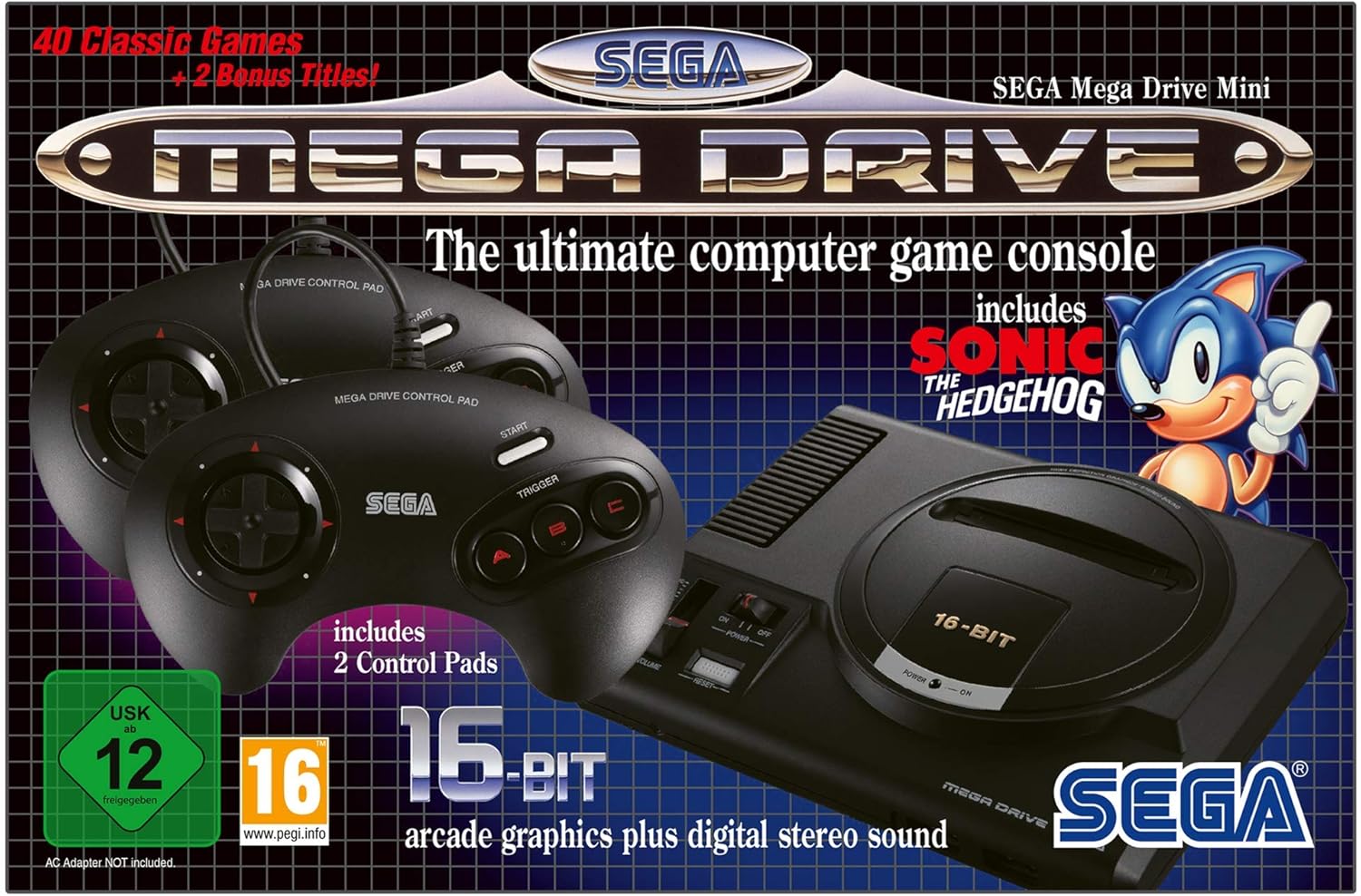
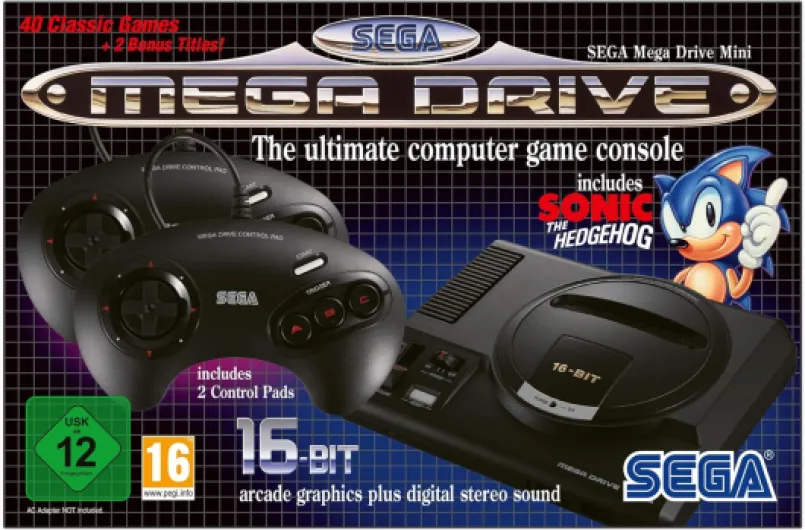
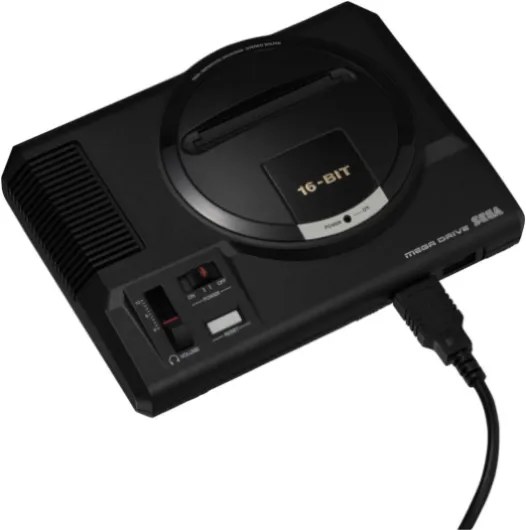
Design-wise, SEGA clearly aimed at people who had the original. The Mega Drive Mini looks like someone shrunk the old console in the wash. The proportions are right, the logos are there, even the cartridge flap opens and closes, even though it serves no purpose. Same with the fake volume slider. None of that changes gameplay, but if you had the original machine, these details are fun and make it feel like more than just a generic box.
The unit is very light (around 100 g) but doesn’t feel like a flimsy toy. The plastic is basic, not premium, but nothing creaks or bends in normal use. It just sits under the TV and does its job. The front has two USB ports for the controllers, the back has HDMI and power. No SD slot, no Ethernet, no extras. Again, it’s a simple device and the design reflects that. From a practical point of view, it’s small enough to leave permanently plugged in without cluttering your TV area.
One thing to note is there’s no dedicated menu button on the controllers, so if you want to go back to the main menu, change games, or access save states, you have to physically reach for the console and press the Reset button. That was fine for me when I was alone, but when you’re sitting comfortably with people on a couch, it gets a bit annoying. The console is light enough that you can accidentally move it when you press the button, which feels a bit cheap and old-school in a bad way.
Visually, it’s faithful, but functionally, SEGA didn’t really think about modern living rooms. A small dedicated menu button on the pad would have solved a lot. As it stands, the design is nice to look at, but slightly annoying to use if your console is not right in front of you on a low unit. Still, for a retro toy, I’d say the external design is one of its strong points, especially if you like having it on a shelf as a display piece.
Controllers, ergonomics and everyday use
The controllers are where I have mixed feelings. SEGA stuck with the original 3‑button pad design, which is nice for authenticity but not always great in practice. On the positive side, the build feels solid, the plastic doesn’t feel like cheap knock‑offs, and the D‑pad is genuinely good. Directional inputs feel precise, which matters a lot for platformers and fighting games. For long sessions of Sonic or Shinobi 3, my hands were fine.
The downside is size and layout. The pads are large and quite wide, bigger than most modern controllers but with way fewer buttons. If you have small hands, these can feel a bit awkward. Also, for games like Street Fighter II or Eternal Champions, the 3‑button layout is just not ideal. You have to press Start to toggle between punches and kicks, which is exactly how it was back then, but now it just feels clunky. You can buy 6‑button pads separately, but out of the box, fighters are clearly compromised.
Comfort of use overall is decent but not perfect. The cables are long enough for a normal living room, but this is still wired, so no lounging across the room. And as mentioned earlier, having to reach the console to access the menu or save states is annoying. When I played with kids, that meant constant up‑and‑down just to change games or save their progress. Not a deal‑breaker, but it feels like a missed opportunity considering how much empty space there is on the pad for an extra button.
Day to day, after a few evenings, I got used to the quirks. For platformers, beat ’em ups like Streets of Rage 2, and shooters like Thunder Force 3, the setup is comfortable enough. For fighters, I’d say it’s borderline. If you’re serious about those, factor in the cost of at least one 6‑button controller. Comfort score from me: good for casual retro sessions, a bit annoying for frequent game swapping and serious fighting game play.
Packaging and first impression out of the box
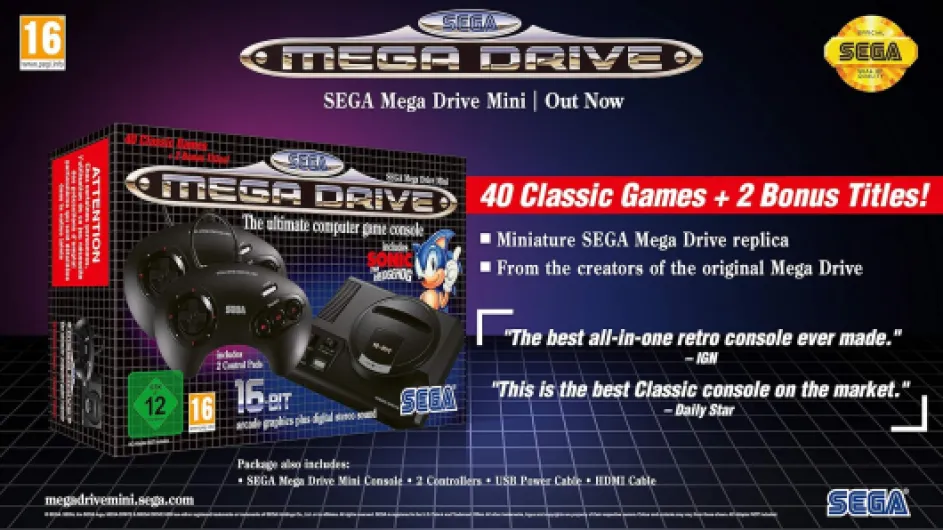
The packaging is clearly designed to poke your nostalgia. The box has that old school SEGA style, with the console art on the front and the original game covers on the back. As soon as you see it, you kind of want to flip it over and go “oh yeah, I remember that one”. For a product that leans heavily on memories, that’s smart. It also makes it a decent gift because just the box already sets the mood.
Inside, things are packed properly. My unit arrived without any scuffs or marks, even though there’s no outer plastic wrap. The console and controllers are held in cardboard inserts, not fancy, but it works and avoids too much plastic. Cables are just in basic plastic bags. It’s not premium packaging, but it feels tidy and functional, a bit like unboxing a mid‑range controller or accessory rather than a high‑end console.
One thing some people might care about: there’s no big manual with game art or history. You get a basic quick start guide, that’s it. So if you like the SNES Mini style booklet vibe, you won’t find that here. The interface also doesn’t give you deep info on each game, just a short description. Personally, I’d have liked a small printed booklet going over the game lineup, even in a simple format. It would have matched the retro theme nicely.
Overall, the first impression is positive, mostly because of the nostalgic outer box and the faithful look of the mini console when you pull it out. It doesn’t scream luxury, but it feels like a real SEGA product, not a random third‑party clone, and that already sets expectations in a good way. For a gift, I’d say the presentation is decent enough without feeling cheap.
Emulation, input lag and overall performance
On the performance side, I was honestly a bit cautious at first because previous third‑party Mega Drive clones (AT Games etc.) were pretty bad, especially on sound. Here, SEGA did a much better job. The games boot fast, the sound is faithful, and I didn’t notice obvious audio glitches in normal play. Music in Sonic, Streets of Rage 2, and Castlevania all sounded like I remember, not slowed down or scratchy like on some cheap clones.
Video output at 720p/60 Hz is stable. The picture is clean and sharp enough, and you can choose between 4:3 with borders or stretched to fill the screen. There’s a basic CRT filter, but to me it just makes things a bit blurry without really recreating the old TV look. I left it off most of the time. Lag-wise, on my 4K TV in Game Mode, I didn’t feel anything that ruined gameplay. Sonic felt responsive, platforming in Earthworm Jim and Gunstar Heroes was fine. One Amazon reviewer mentioned input lag; I suspect that depends heavily on your TV settings. If you play with a lot of processing on, you might feel it.
Where it shows its age is in flexibility. You’re locked to 60 Hz, no option to tweak resolution or use custom shaders. Also, there’s no overclock or anything like that for problem games, but to be fair, most of the included titles run as they should. I didn’t have crashes or freezes in my sessions; stability seems solid. Load times are almost instant compared to disc‑based retro compilations, which is nice when you just want a quick 15‑minute nostalgia hit.
Overall, for what it is, the performance is good. It’s not as flexible as a PC emulator setup, but in exchange you get something that just boots and works. If you’re sensitive to input lag, just make sure your TV is in Game Mode and you’re not going through a weird HDMI splitter. After that, it feels close enough to the original hardware for casual and even semi‑serious play.
What you actually get in the box (and what you don’t)
Out of the box, the package is pretty straightforward. You get the mini console, two wired 3‑button controllers, an HDMI cable, and a USB power cable. No power adapter, which is a bit cheap in 2026, but any old phone charger with a USB port will do the job. Setup is simple: HDMI to the TV, USB to a charger, switch it on, and that’s it. No internet, no updates, no account creation, nothing. In that sense, it’s plug and play in the best way.
The console comes with 40+ preinstalled games (42 depending on region), including Sonic 1 & 2, Streets of Rage 2, Gunstar Heroes, Earthworm Jim, Castlevania, Golden Axe, Shinobi 3, Phantasy Star 4, and a few oddballs like Dr. Robotnik’s Mean Bean Machine and Tetris. There’s no way, officially, to add more games or use cartridges. What you see is what you get. If you’re expecting some kind of store or SD card support, forget it, this is locked down.
The interface is clean and basic. You scroll through cover art, pick a game, press start, done. There are save states, so you can suspend a game and come back later, which is handy for longer titles like RPGs. But there’s no fancy filter options, no achievements, no online features, nothing beyond a basic settings menu (language, aspect ratio, a simple CRT filter). For some people that’s perfect, for others it feels a bit bare.
Important detail: everything outputs in 720p at 60 Hz only. So whether you’re on a 1080p or 4K TV, your TV will do the scaling. It still looks fine, but don’t expect razor‑sharp modern UI or anything. In practice, after 5 minutes you forget about it and just play, but if you’re picky about image settings and custom shaders, this is very limited compared to running an emulator on a PC or something like a Raspberry Pi.
Pros
- Faithful emulation with good sound and stable 720p HDMI output
- Nice physical design and build, very close to the original Mega Drive in mini form
- Strong game selection with many well-known classics and two controllers included
Cons
- No menu button on controllers; you must reach the console for resets and save states
- Locked library (no way to add games) and missing modern features like parental controls, screenshots, and save backups
- 3-button controllers are not ideal for fighting games like Street Fighter II
Conclusion
Editor's rating
After a few weeks with the SEGA Mega Drive Mini, my feeling is pretty clear: it’s a solid little nostalgia machine with some annoying limitations. The emulation is good, the sound finally does the old games justice, and the game lineup hits most of the big names: Sonic, Streets of Rage 2, Gunstar Heroes, Earthworm Jim, Castlevania, Golden Axe, Phantasy Star 4, and more. You also get two decent controllers in the box and a console that looks great on a shelf or under the TV.
On the downside, SEGA played it very safe. No power adapter, no menu button on the controller, no way to add games, no parental controls, no save backups, and only basic display options. The 3‑button pads are fine for most games but not ideal for fighters, and needing to get up to hit Reset every time you want to change game or save gets old quickly. If you don’t have any nostalgia for Mega Drive specifically, some of the games will feel dated or just plain rough compared to Nintendo’s old titles.
So who is this for? If you grew up with a Mega Drive or always wanted one and just want an easy, legit way to replay the classics on a modern TV, this is a pretty solid and hassle‑free option. If you’re more of a general retro fan, or you want maximum features and flexibility for your money, you might be better off with a multi‑system mini PC or a different collection. I’d give it a 4/5 overall: not perfect, but it gets the job done for what it aims to be.