Summary
Editor's rating
Value for money: strong console, but the bill climbs fast
Design: a powerful console in a huge shell
Controller battery life: decent, but you’ll recharge often
Comfort and DualSense: fun, but not always fully used
Packaging and unboxing: protective, but nothing exciting
Build quality and durability: solid, but watch the dust and storage
Performance: finally smooth 4K and almost no loading screens
What you actually get with this PS5
Pros
- Very fast loading times thanks to the SSD and 16 GB memory
- Quiet operation compared to PS4/PS4 Pro, even in long sessions
- Good 4K performance with solid framerates and strong backwards compatibility
Cons
- Very bulky design that doesn’t fit well in small TV units
- Limited internal storage that fills up fast with big games
- DualSense battery life is only average, frequent recharging needed

Specifications
View full product page →| Brand | PlayStation |
PS5 Standard: is it still worth it in 2026?
I’ve been using this standard white PS5 for a few weeks now, after years on a PS4 Pro. I didn’t buy it on day one, I grabbed it once prices and stock calmed down a bit. So this isn’t the hype talking, it’s just how it feels to live with the console day to day: setup, noise, loading times, and what it’s like if you already have a decent PS4.
First thing, it’s clearly a step up from the PS4 in terms of raw power and comfort. Games load much faster, and 4K on a good TV actually looks clean and stable, not like the noisy upscaled stuff we had before. On the other hand, it’s not magic either: if you only play casual games or you’re stuck on a 1080p TV, the difference is less brutal than what the marketing suggests.
I bought the standard edition with disc drive, partly because I still have a pile of PS4 games on Blu‑ray and I like buying used games. In daily use, that was a good call: I can mix digital and physical games and hunt for deals. The flip side is that the console is a bit bulkier and louder when the disc spins, even if it’s still much quieter than my old PS4 Pro jet engine.
Overall, my first weeks with the PS5 have been positive: it’s a strong, modern console that finally gets rid of long loading screens and random fan noise. But it’s not perfect: the storage is tight, the console takes a lot of space, and some games are just PS4 versions with a light upgrade. If you expect your gaming life to be totally different overnight, you might find it good, but less mind‑blowing than the ads make it sound.
Value for money: strong console, but the bill climbs fast
On value, it really depends on your situation. If you’re coming from a standard PS4 or you don’t have any recent console, the PS5 brings a clear improvement: faster loading, better graphics, quieter operation, and a more modern ecosystem. In that case, the price is easier to swallow, especially if you manage to grab it on promotion like some Amazon buyers mention. You feel that you’re getting a real upgrade in daily use.
If you already have a PS4 Pro and you only play occasionally, the equation is less obvious. Yes, the PS5 is better, but some cross‑gen games don’t take full advantage of it yet, and you might not feel a huge difference on every title, especially on a 1080p TV. Add to that the extra costs: second controller, maybe a charging dock, maybe an extra SSD, PS Plus subscription for online and some games… the total bill climbs quickly. The console alone is one thing, the ecosystem around it is another.
On the other hand, the catalogue is starting to be solid, with good exclusives and a lot of PS4 games that run better. Backwards compatibility helps a lot with value: you don’t lose your old library, you improve it a bit. If you buy physical games on sale or second‑hand thanks to the disc drive, you can also save money over time compared to going full digital. That’s one of the reasons I chose this standard edition instead of the digital one.
To sum it up, I’d say the PS5 offers good value if you really use its strengths: 4K TV, big games, long sessions, and a mix of PS4 and PS5 titles. If you’re more of a casual gamer who plays one game per year, it still works, but it’s a lot of money for something you don’t fully exploit. There are better deals out there for light use, but for someone who plays regularly and wants a stable, powerful console for several years, the investment makes sense.
Design: a powerful console in a huge shell
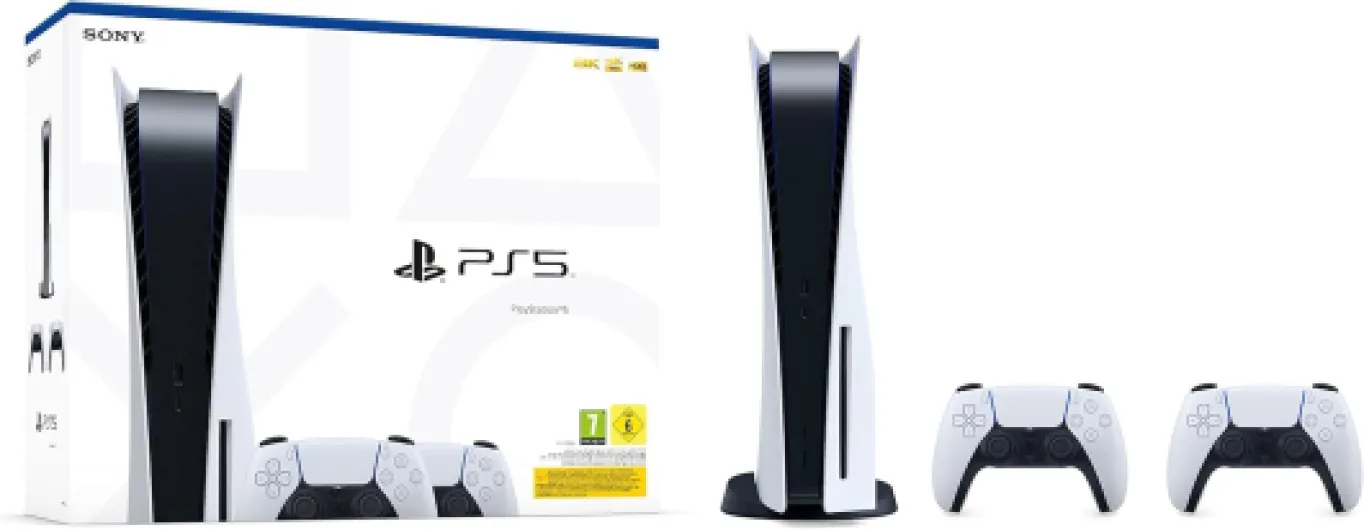
The design is probably the first thing you react to when you unbox the PS5. It’s big. Like, really big compared to a PS4 or an Xbox One. The dimensions listed (around 50 x 50 x 28 cm in the product info) are basically the shipping box, but the console itself is still a tall and wide tower. If you have a small TV unit, you’ll need to plan where it goes; I had to move my router and a speaker to make space. So if you’re short on room, this is something to think about before buying.
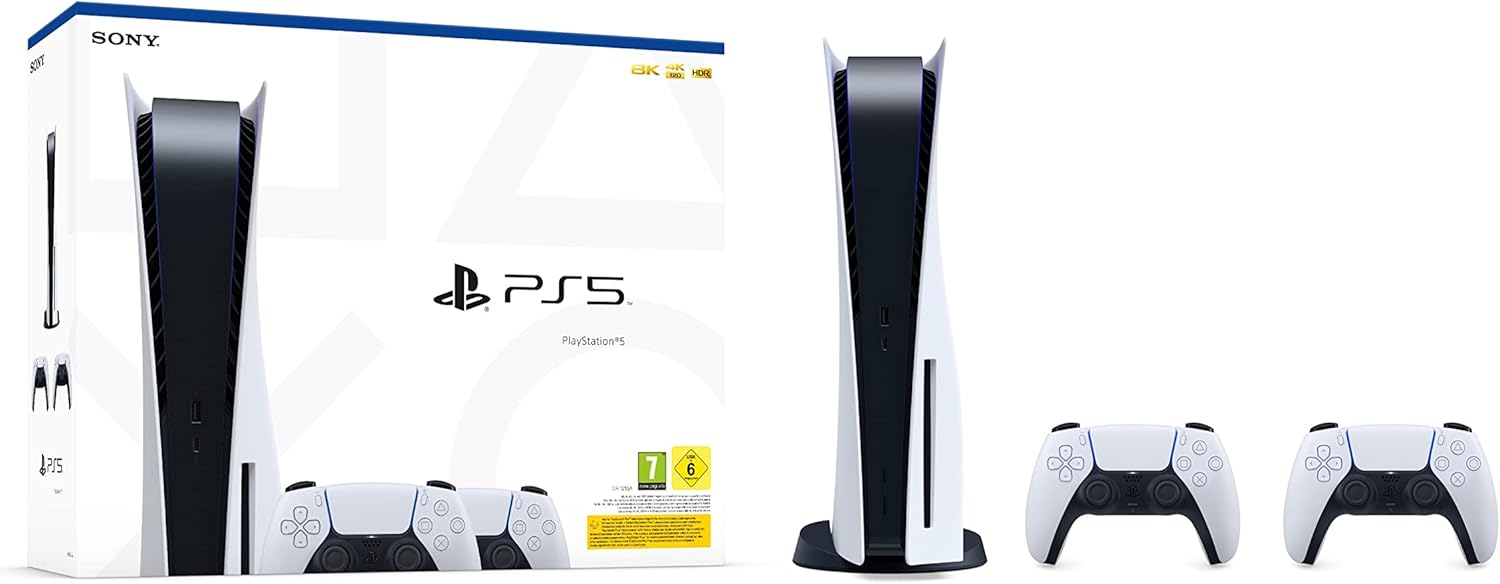
Visually, it’s the classic white PS5 look: white plastic plates on each side and a black glossy centre. I’m not a design snob, but it’s a bit flashy. In a dark living room it stands out, especially if everything else is black. Personally, I got used to it after a week, but my first reaction was more "this thing is a spaceship" than "discreet box under the TV". If you like simple, square consoles, this one is a bit over the top.
Functionally, the design isn’t just for show. The airflow is decent, with big vents that help keep noise under control. In vertical position, it breathes well and stays cool even during long sessions. Horizontally, you have to be careful not to block the vents with random stuff (game boxes, cables, dust). The stand is a bit fiddly to install the first time, but after that you forget about it. The glossy black part around the USB ports picks up fingerprints and dust easily, which is annoying if you’re picky about that.
In daily use, the design is a mix of good and annoying: good cooling and a modern look, but a very bulky footprint and a shape that doesn’t fit every piece of furniture. Compared to my old PS4 Pro, I prefer the PS5 for noise and thermals, but I still find the size excessive. If you have a big TV stand and you like the futuristic look, it’s fine. If you live in a small flat and already struggle with cables and boxes, you’ll probably swear a bit while trying to fit it in.
Controller battery life: decent, but you’ll recharge often
There’s no battery in the console itself of course, but the DualSense controller’s battery life is important because you feel it very quickly in daily use. On my side, with vibration and adaptive triggers activated, I get around 8 to 10 hours of play per charge. That’s fine for a few evenings of gaming, but if you’re doing long weekend sessions, you’ll end up plugging it in quite often. It’s clearly better than some older pads, but it’s not endless either.
The controller charges via USB‑C, which is practical. You can plug it directly into the console or use a charger or dock if you buy one separately. I usually play with the cable when the battery is low; the cable in the box is a bit short if your sofa is far from the TV, so I bought a longer USB‑C cable. That’s a small extra cost, but in practice it makes a big difference in comfort if you don’t want to stop playing when the battery icon turns red.
Over a few weeks, I noticed the same pattern: I charge the controller about twice a week with moderate use (1–2 hours per evening) and more often when I binge‑play. If you disable some haptic or trigger options, you can stretch the battery a bit, but you lose part of the interest of the DualSense. So I leave everything on and accept that it’s something to manage. It’s not a disaster, but it’s not a point where the PS5 shines either.
To be clear: the battery life is okay, but not more than that. It gets the job done, you don’t spend your life charging it, but you always need to keep the cable nearby. Compared to Xbox controllers on AA batteries or with battery packs, I prefer the built‑in battery for simplicity, but I would have liked a few extra hours of autonomy. If you’re a heavy gamer, a second controller or a charging station is almost mandatory to avoid downtime.
Comfort and DualSense: fun, but not always fully used
On the comfort side, Sony did a decent job. Noise first: compared to my PS4 Pro, it’s night and day. The PS5 is much quieter in most games. You hear a soft hum and sometimes the disc spinning when you launch a game, but once you’re in, it’s mostly background noise, even during long sessions. I’ve done 4–5 hour runs in the evening and the console stayed at a reasonable temperature and noise level. For a living room shared with other people, that’s a big plus.
The DualSense controller is one of the best parts of the experience. The shape is comfortable, the grips are solid, and the triggers with adaptive resistance add something to some games (like tension when drawing a bow or pressure on the accelerator in racing games). The haptic feedback is more precise than on PS4; you feel different types of vibrations depending on the surface or the situation. When a game is well coded for it, it’s really nice and adds immersion without being a gimmick.
On the downside, not every game uses the DualSense properly. Many third‑party titles do the bare minimum: a bit of vibration, a slight trigger resistance, and that’s it. After the first few big exclusives, you notice that a lot of studios don’t bother going very far with it. Also, the speaker on the controller is still a bit annoying for me; some games use it for sound effects that feel more distracting than useful. Thankfully, you can tweak or disable most of that in the settings.
In daily comfort, the interface is easy to navigate with the pad, sleep mode works fine (you can suspend a game and resume it quickly), and media apps are integrated cleanly. The only real annoyance is the amount of updates (system and games) that sometimes stack up when you only have an hour to play. Overall, comfort is solid: quiet console, good controller, simple interface. It’s not perfect, but for long gaming evenings on the sofa, it does the job well.
Packaging and unboxing: protective, but nothing exciting
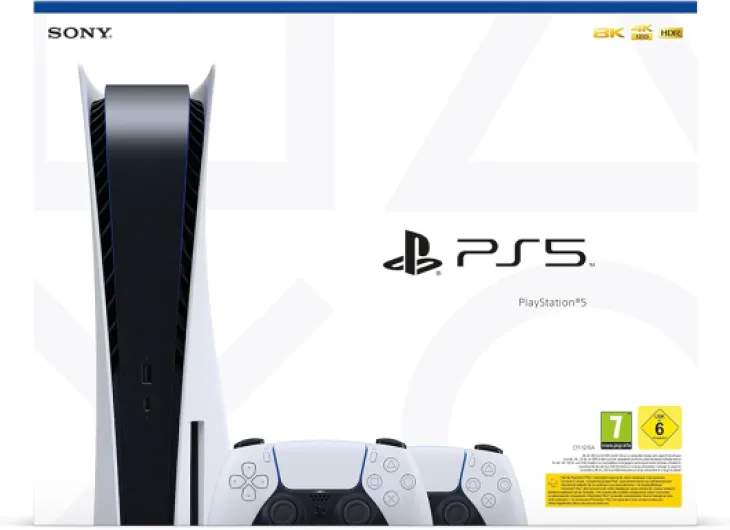
The packaging on this PS5 is pretty standard for a big console. The box is large and fairly heavy, with foam and cardboard inserts inside to hold the console in place. In my case, it arrived in good condition, well protected, with no dents or traces of shock. That matches several user reviews that mention good packaging and secure delivery. For a product of this price, that’s the minimum, but it’s still worth noting.
Inside, everything is arranged in a functional way: console in the middle, accessories in a separate cardboard section (cables, controller, documentation). No wasted space, no useless plastic. It’s not fancy, but it’s practical. You take everything out in a few minutes and you’re ready to plug it in. The quick start guide is basic but clear enough; if you’ve already owned a console, you probably won’t even read it.
There’s no extra: no headset, no game, no HDMI 2.1 cable with premium look, nothing like that. Just the essentials. Personally, I prefer that to fake goodies that end up in a drawer, but if you were hoping for a small bonus, you’ll be disappointed. At least the included HDMI cable is good enough for 4K use; I haven’t had any image or sound issues with it on my TV.
In short, the packaging does its job: it protects the console and keeps everything clear, but it stops there. No special effort on presentation, no accessories beyond the minimum. It’s fine, because what matters is the console, but it’s not the kind of unboxing that leaves a big impression. For a practical buyer, that’s perfectly acceptable.
Build quality and durability: solid, but watch the dust and storage
On build quality, the PS5 feels sturdy enough. The plastic doesn’t creak, the console has some weight (around 6.4 kg in the product info), and nothing feels flimsy when you move it. I’ve moved it a couple of times between rooms, and as long as you hold it properly and don’t pull on the plates, it’s fine. The DualSense also feels solid; I’ve dropped it from sofa height once (my fault) and it survived without any issue.
The main long‑term concern is dust and ventilation. With its large vents and its white shell, dust shows up quickly. After a few weeks, I already had a fine layer on the edges. You really need to dust around it regularly and avoid stuffing it in a closed cabinet. If you block the airflow, you can be sure the console will heat up and the fans will ramp up more. I haven’t had thermal problems yet, but I’m careful with its placement and I clean it roughly once a week.
Another durability point is internal storage. The base PS5 doesn’t have a huge usable SSD once the system is installed. With current game sizes, you hit the limit fast. In my case, with 5–6 big titles installed plus a few smaller ones, I already had to uninstall games to make room. You can add an NVMe SSD, but that’s an extra cost and a small install job. It’s not complicated if you’re a bit handy, but for some people it’s a hassle. For a console at this price, I would have liked more native storage.
With a 2‑year manufacturer warranty mentioned in the product info, you have a bit of peace of mind. I haven’t had any hardware problems so far: no crashes, no weird noises, no reading issues with discs. So for now, durability seems fine, but it’s clearly a product that likes clean air and a bit of maintenance. If you’re the type who throws the console into a dusty TV unit and forgets it, you might run into trouble sooner.
Performance: finally smooth 4K and almost no loading screens
This is clearly where the PS5 justifies itself. Coming from a PS4 Pro, the jump in performance is noticeable as soon as you launch the first game. The SSD changes the pace: games that used to take a minute to load now pop up in 10–20 seconds. Fast travel in big open worlds is almost instant; you press the button and you’re in the new area in a couple of seconds. After a few days of this, it’s hard to go back to the old loading bars.
On the graphics side, 4K resolution with performance or quality modes is the norm on recent titles. In practice, I mostly use performance mode (60 fps) when possible, because the smoothness is more important to me than a bit of extra sharpness. On my 4K TV, games like action RPGs and shooters feel much more responsive than on PS4, and the image is cleaner, with fewer drops and less blur. It’s not perfect in every game (some still drop frames), but overall it’s a clear step up.
The console’s 16 GB of unified memory helps a lot with multitasking and heavy games. You can jump between a game and apps like YouTube or Netflix without the system choking. The interface stays responsive even with downloads running in the background. Wi‑Fi downloads are decent; I get roughly the same speeds as on my laptop on the same network. The main bottleneck now is the game sizes: 80–100 GB per big title is common, so you end up downloading for a while even with a good connection.
One thing to mention: the PS5 handles backwards compatibility with PS4 games pretty well. Many titles run better and smoother without you doing anything, just by installing them on the PS5’s SSD. For someone with a big PS4 library like me, that adds real value. To sum it up, in pure performance, the console does the job very well. It’s not a miracle machine that turns every game into a PC ultra preset, but for living‑room gaming in 4K or 1440p with solid framerates, it’s more than enough and feels like a proper upgrade.
What you actually get with this PS5
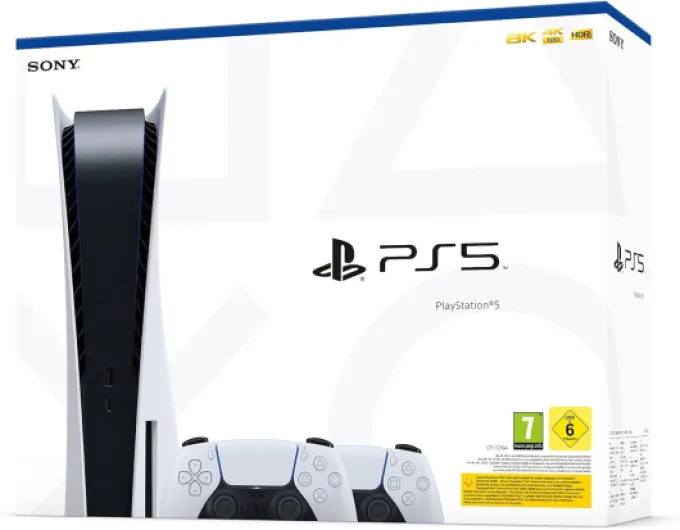
This is the standard PS5 with a disc drive, white shell, and a black central section. In the box, you get the console, one DualSense controller, an HDMI cable, a power cable, and a USB‑C to USB‑A cable to charge the controller. No game included in my case, so don’t expect a bundle unless it’s clearly written on the product page. The product sheet is a bit barebones, but in practice you get the classic PS5 package, nothing fancy.
Setup is straightforward: plug in HDMI and power, connect the controller with the cable the first time, and follow the on‑screen steps. It updates itself (plan 20–30 minutes depending on your connection), logs into your PSN account, and you’re good. I transferred my PS4 saves and games over the network and by external drive; that part is a bit slow and clunky, but it works. If you’re coming from PS4, the interface will feel familiar: same logic, just a bit cleaner and faster.
Technically, Sony lists 4K support, Wi‑Fi, 16 GB of RAM, and HDMI connectivity. What matters in real life is this: games boot in a few seconds, fast travel in open‑world titles is almost instant, and the console handles 4K60 on a lot of recent games (with performance modes). On my 4K TV with HDMI 2.1, I get smooth gameplay with less tearing and fewer drops than on PS4 Pro. It’s not PC‑level with a top GPU, but for a living‑room box it’s pretty solid.
The console also doubles as a Blu‑ray player for movies, which I still use. Playback is clean, and the interface is simple enough for family members who aren’t into tech. To sum up: in terms of what’s in the box and what it can do, it’s exactly what you expect from a modern console. No surprise gift, no hidden trap, just a capable machine focused on games and media, with a few small annoyances I’ll get into later.
Pros
- Very fast loading times thanks to the SSD and 16 GB memory
- Quiet operation compared to PS4/PS4 Pro, even in long sessions
- Good 4K performance with solid framerates and strong backwards compatibility
Cons
- Very bulky design that doesn’t fit well in small TV units
- Limited internal storage that fills up fast with big games
- DualSense battery life is only average, frequent recharging needed
Conclusion
Editor's rating
After several weeks with the standard white PS5, my feeling is pretty clear: it’s a strong, modern console that finally fixes the main problems of the PS4 era (noise, loading times, and performance in 4K). The gains are real in everyday use: games launch fast, 4K with performance modes is comfortable, the console stays relatively quiet, and the DualSense controller adds a bit of fun when games use it properly. Backwards compatibility and the disc drive also make it easier to keep your old library and hunt for cheaper physical games.
It’s not perfect though. The console is huge and not very discreet, the internal storage fills up quickly, and the controller battery is just okay. Some games don’t take full advantage of the hardware yet, and the initial price of the console plus all the extras (second pad, SSD, subscriptions) can sting. So I’d say this PS5 is best suited for players who actually spend time gaming, have a decent TV (ideally 4K), and want a machine that will last several years. If you play rarely, are short on space, or are happy with a PS4 on a 1080p TV, you can probably wait or look for a cheaper option.