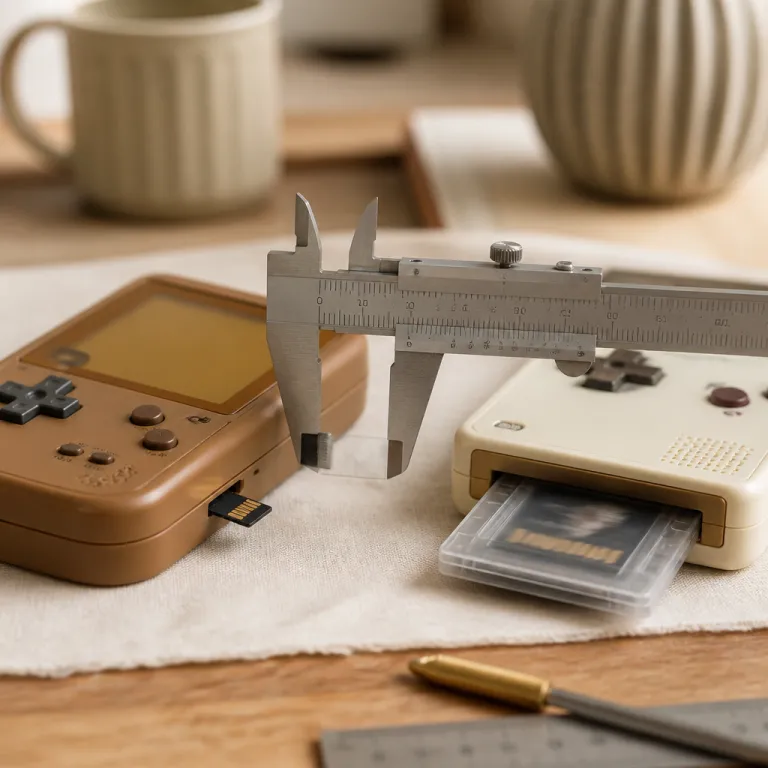
Retroid Pocket 5 vs Analogue Pocket: what this choice really means
The match between the Retroid Pocket 5 vs Analogue Pocket is not just about specifications. It is a decision between a digital library of retro games on a powerful android handheld and a purist cartridge experience on an elegant FPGA pocket that treats every Game Boy cart like original hardware. When you compare these handhelds, you are really choosing how you want to play games for the next decade.
The Analogue Pocket focuses on physical media and an FPGA core that reproduces original consoles at the hardware level, so each cartridge behaves as it did on a classic Game Boy or Game Boy Advance. In contrast, the Retroid Pocket 5 relies on emulation and a Snapdragon 865 chip with 8 GB of RAM to run a wide range of systems, from 8 bit handheld retro machines up to some PlayStation 2 and GameCube titles. Both devices are small enough to fit in a pocket, yet their form factor, controls and daily usability feel radically different in practice.
Analogue’s vertical design echoes the original Game Boy, with a 3.5 inch display that offers a sharp ppi count and a crisp screen for pixel art. The Retroid Pocket 5 uses a horizontal form that resembles a Nintendo Switch Lite, pairing a larger touch screen with modern face buttons and dual analog sticks for 3D games. When you weigh the Retroid Pocket against the Analogue Pocket, you are balancing cartridge authenticity, emulation flexibility, internal storage needs and how you want your handhelds to feel in hand during long sessions.
Hardware, screen and ergonomics: how each handheld feels to use
The Analogue Pocket is built like a premium music player, with tight seams, a dense chassis and a glass front that makes the screen pop. Its 3.5 inch LCD has a very high ppi, so Game Boy and Game Boy Advance games look razor sharp, and the display can simulate original handheld retro grids or clean integer scaling. The vertical form factor keeps the weight centered in your palms, which helps during long Tetris or Pokémon sessions where you mostly use the D pad and face buttons.
By comparison, the Retroid Pocket 5 leans into a more modern console layout, with a wide body, offset sticks and triggers that suit 3D games. The larger touch screen gives you more room for android navigation, screen play controls and on screen keyboards when you configure emulators or tweak performance profiles. This horizontal form is closer to a Switch or an Anbernic RG series handheld, which many players find more natural for action heavy titles and shooters.
Battery capacity also shapes the experience, because both handhelds must balance size and endurance in milliampere hours, usually written as mAh. The Analogue Pocket typically delivers around a full day of light cartridge play on a single charge, while the Retroid Pocket 5 draws more power when you push higher end emulation or cloud streaming. If you plan to commute with these handhelds or use them for cloud gaming on the go, you might also want to compare them with dedicated streaming devices, as explained in this guide on cloud gaming for commuters.
Performance, emulation and what you actually play on each device
When you look at performance, the Analogue Pocket and the Retroid Pocket 5 live in different worlds. Analogue’s FPGA approach does not rely on traditional emulation, so Game Boy, Game Boy Color and Game Boy Advance cartridges run with cycle accurate timing and no typical software lag. That makes the Analogue Pocket feel like a refined original console, where retro games behave exactly as they did on the hardware you grew up with.
The Retroid Pocket 5 instead uses its Snapdragon 865 processor, generous RAM and android operating system to emulate dozens of systems through software. With tuned settings and good ROM dumps, you can play games from 8 bit consoles up to some PlayStation 2 and GameCube titles, plus handhelds like PSP and Nintendo DS. Internal storage becomes crucial here, because large libraries of disc based games quickly fill the built in storage, so you will likely rely on microSD cards to expand your pocket sized archive.
This difference also affects how you manage your library, because the Analogue Pocket expects real cartridges while the Retroid Pocket expects ROM files and BIOS images. If you want to approach ROM management safely and understand the legal nuances around downloads, a detailed guide on safe ROM handling on modern and retro consoles can help you avoid common mistakes. For players who care about raw performance and future proof android handhelds, it is also worth reading in depth tests of other devices such as the Pocket Evo, which is covered in this analysis of an advanced android gaming handheld that shares some design ideas with the Retroid Pocket line.
Controls, operating systems and connectivity for everyday play
Controls can make or break a handheld, because even the best screen and ppi mean little if your thumbs hurt. The Analogue Pocket keeps a classic layout with a D pad, four face buttons and shoulder buttons, tuned for 2D retro games and precise platforming. Its buttons feel crisp and short travel, which suits Game Boy style titles but can feel limited if you want to play games that expect dual analog sticks or extra triggers.
The Retroid Pocket 5, running android, offers a more flexible control scheme with modern sticks, stacked shoulder buttons and a layout that mirrors contemporary controllers. That makes it easier to play games from newer systems, map complex controls in emulators and even use the device as a mini console when docked to a TV. The touch screen also matters here, because it simplifies navigating android menus, adjusting performance settings and using on screen controls in mobile titles that were never designed for physical handhelds.
Connectivity is another dividing line, since the Analogue Pocket focuses on cartridge play and optional docking, while the Retroid Pocket emphasizes Wi Fi, Bluetooth and broader connectivity for streaming. With the Retroid handheld, you can stream PC games, use cloud services or pair controllers, which turns this pocket device into a flexible hub for modern and retro games alike. Some players refer to this as connectivity Retroid strength, because the combination of android, wireless options and emulation gives the Retroid Pocket family a very different role from the more self contained Analogue Pocket.
Legal, ethical and practical questions: which handheld suits your retro identity
The philosophical split between the Retroid Pocket 5 vs Analogue Pocket becomes clearest when you think about legality and ethics. Analogue’s device is built around original cartridges, so you buy or use physical games and insert them into the pocket just like you would on a classic handheld. That approach appeals to collectors who value ownership, preservation and the ritual of choosing a cart from a shelf before they play games.
Emulation on the Retroid Pocket 5 sits in a more complex space, because running your own ROM dumps is generally accepted, while downloading copyrighted games you do not own is often illegal. Many retro enthusiasts use tools to dump their own cartridges, then store those ROMs on the internal storage or microSD cards of their handhelds, treating the Retroid as a digital archive. This method lets them protect fragile carts, enjoy better performance and keep their entire library in a single pocket sized device, but it demands more technical setup and personal responsibility.
In practical terms, the Analogue Pocket suits players who want a premium, focused handheld retro machine with minimal configuration, while the Retroid Pocket 5 suits tinkerers who enjoy tweaking emulators, adjusting performance and exploring multiple systems. If you see yourself as a cartridge first collector, the Analogue Pocket’s form factor, display and FPGA accuracy will likely feel worth the price. If you identify more as a digital archivist who wants one device to play games from many eras, the Retroid Pocket, with its android flexibility, connectivity Retroid options and strong performance, will probably become your daily carry.
FAQ
Is the Analogue Pocket better than the Retroid Pocket 5 for pure Game Boy play
For pure Game Boy, Game Boy Color and Game Boy Advance cartridges, the Analogue Pocket is generally the better choice. Its FPGA hardware reproduces original console behavior very accurately, and the 3.5 inch high ppi screen makes pixel art look exceptionally clean. If your focus is physical carts and minimal setup, Analogue’s handheld is the more authentic option.
Can the Retroid Pocket 5 replace multiple retro consoles
The Retroid Pocket 5 can emulate many systems, so it can replace several older consoles in daily use. With its Snapdragon 865 processor, 8 GB of RAM and android software, it handles 8 bit and 16 bit systems easily and can reach into some PlayStation 2 and GameCube titles. Performance still depends on emulator configuration and game choice, but for most players it covers a very wide retro range.
Which handheld is easier to set up for a non technical player
The Analogue Pocket is easier to set up if you are not comfortable with software configuration. You insert a cartridge, adjust a few display options and start playing, with no need to manage ROM files or emulator cores. The Retroid Pocket 5 requires more work to configure emulators, map controls and organize internal storage, although many community guides help simplify the process.
How do battery life and charging differ between these handhelds
Both handhelds use rechargeable batteries measured in mAh, but their usage patterns differ. The Analogue Pocket tends to last longer when running original cartridges, because FPGA workloads are predictable and the screen is smaller. The Retroid Pocket 5 can drain faster under heavy 3D emulation or streaming, though lighter 2D retro games and careful brightness settings can extend its runtime.
Is it legal to use ROMs on the Retroid Pocket 5
Using ROMs you have dumped yourself from cartridges you own is generally considered acceptable in many regions, though laws vary. Downloading copyrighted ROMs you do not own is often illegal, regardless of the handheld you use. If you plan to use ROMs on the Retroid Pocket 5, focus on backing up your own games and consult local regulations for clarity.