Summary
Editor's rating
Value for money: depends a lot on which Switch you already own
Design and Joy-Con 2: familiar, but nicer in the hand
Battery life: the weak point if you travel a lot
Comfort and everyday use: nicer to hold, still not perfect for long sessions
Performance and graphics: solid bump, but don’t expect PC-level visuals
What you actually get with the Switch 2 + Mario Kart World bundle
Pros
- Noticeably better performance and faster loading than the original Switch
- Larger 1080p screen and sturdier build with a much improved kickstand
- Mario Kart World is fun, makes good use of online features and 24-player races
Cons
- Battery life is fairly short (around 2–4 hours depending on the game)
- Screen is not OLED, which feels like a step back for Switch OLED owners
- Price is high enough that the upgrade is hard to justify if you already own a recent Switch

Specifications
View full product page →| Brand | Nintendo |
A real upgrade, but not the miracle machine
I’ve been using the Nintendo Switch 2 with Mario Kart World for a bit over three weeks now. I play mostly in the evenings, mix of handheld on the couch and docked to a 55'' 4K TV. Before this, I had the original Switch (non‑OLED) since launch, so my opinion is very much “old Switch owner upgrading”, not someone coming in fresh. I also own a PS5, so I’m not shocked by good graphics anymore.
Right away, the thing that stood out was how much more comfortable it is to use and how much faster everything feels. Menus load faster, games boot quicker, and Mario Kart World runs very smoothly, even with 24 racers on screen. Compared to my old Switch, it’s night and day in terms of speed. It finally feels like a current machine instead of something that’s always struggling.
On the other hand, if you’ve read the product page, you might think you’re getting a perfect 4K console with insane graphics. That’s not really what you get. Yes, it can output up to 4K and support HDR and high frame rates, but in practice, it’s still a Nintendo system first: more about fun and portability than raw power. Some expectations on Amazon are clearly way too high, which is probably why you see reviews calling the graphics poor or complaining about the screen not being OLED.
So overall, the Switch 2 with Mario Kart World is pretty solid, especially if you skipped the Switch OLED. But it’s not magic. There are clear pros (performance, screen size, Mario Kart World itself) and a few downsides (battery, screen tech, price). If you go in with realistic expectations, you’ll likely like it. If you expect a portable PS5 in a Nintendo shell, you’ll probably grumble.
Value for money: depends a lot on which Switch you already own
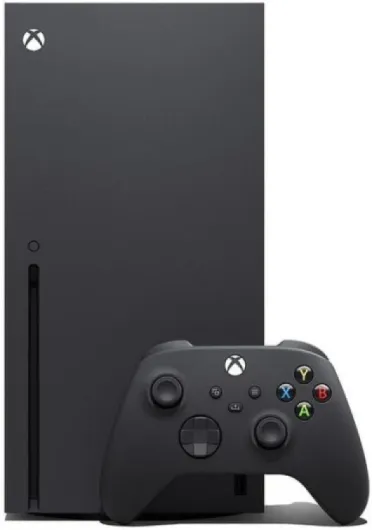
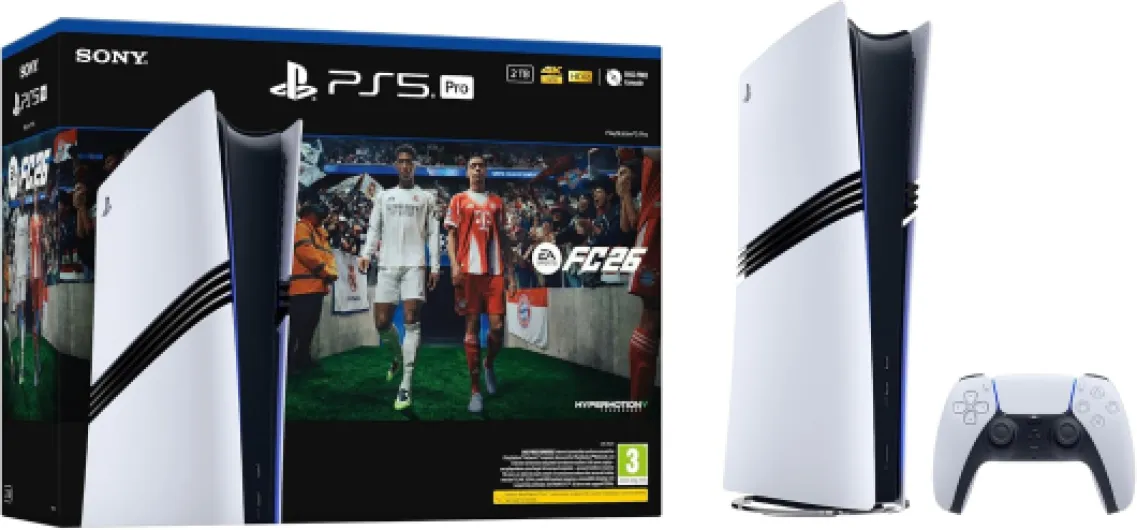
Price-wise, the Switch 2 bundle sits in a slightly awkward spot. Around $450 (depending on where you buy), it’s not cheap, especially if you’re coming from a Switch OLED that you bought fairly recently. For that money, you’re in the same ballpark as a PS5 Digital or Xbox Series X deals, which obviously beat it on raw power. So the value really depends on how much you care about Nintendo exclusives and portability versus graphics and sheer performance.
If you’re upgrading from a launch Switch or Switch Lite, the value feels much better. You get a bigger, sharper screen, better performance, better build quality, and a fresh Mario Kart on top. The fact that your existing library mostly works and often runs better is a big plus. In that case, you can justify the cost as a proper generational jump, especially if your old unit’s battery is tired or your Joy-Cons are drifting constantly.
If you already own a Switch OLED, it’s tougher. You gain performance and features like 4K output and GameChat, but you lose the OLED screen’s deeper blacks and more vivid look. For someone who mostly plays handheld and doesn’t care much about 4K TVs, the upgrade feels more like a sidegrade with some pros and cons. That’s probably why some people on Amazon feel let down: they read “4K, HDR, 120 fps” and expect a big visual leap even in handheld, and that’s not what you actually get.
Bundling Mario Kart World does help the value a bit because it’s the kind of game you’ll actually play a lot, especially with friends or family. The online features, 24-player races, and open-world style map give it more legs than just a basic racing game. Still, I’d sum it up like this: good value if you’re new to Switch or on a very old model, decent but not amazing value if you’re coming from an OLED. It’s not a rip-off, but it’s also not a bargain.
Design and Joy-Con 2: familiar, but nicer in the hand
Design-wise, the Switch 2 is clearly an evolution of the original, not a total redesign. You still have a tablet-style main unit with detachable controllers, but everything feels a bit more grown-up. The bezels around the screen are slimmer, the body feels less toy-like, and the new kickstand is actually usable. On my old Switch, the stand was a joke; this one actually holds the console steady on a table without feeling like it’s going to snap if you breathe on it.
The Joy-Con 2 controllers are probably the biggest design change you’ll notice day to day. They snap in with magnetic connectors instead of that slide-and-click rail from the first model. It sounds like a small detail, but it’s nicer in practice: faster to attach, and they don’t feel wobbly when docked to the sides. I was a bit skeptical about magnets at first, but after a couple of weeks they’ve stayed firmly in place during normal play. I don’t feel like they’re going to fall off if I shake the console lightly.
The controllers also have this extra feature where each can be used as a mouse in compatible games. Right now it feels more like a bonus than a core feature. It worked fine in the menus of some apps and in a couple of indie titles that support pointer-style controls, but it’s not something that changes how you play Mario Kart World. For racing, they’re just regular Joy-Cons, which is totally fine. The buttons and sticks feel more solid than the old model, and I haven’t seen any drift yet, but it’s also still early days.
Visually, it’s still very much a Nintendo gadget: a bit playful, not super sleek like a PS5 or a gaming laptop. If you expected a complete aesthetic overhaul, you might be disappointed. But as someone who used the first Switch for years, I’d say this design is more practical and more solid, even if it’s not jaw-dropping. It’s an upgrade that you notice when you hold it, not something that will impress you just from pictures.
Battery life: the weak point if you travel a lot
Battery life is where the Switch 2 feels the most compromised. With Mario Kart World in handheld mode at around 70–80% brightness and Wi‑Fi on, I’ve been getting roughly 2.5 to 3 hours before I start to worry about the battery icon. If I lower brightness a bit and play something less demanding (like an indie platformer), I can stretch it closer to 4 hours. But if you crank the brightness and stay online with voice chat, you’re definitely in that 2–3 hour window most of the time.
For context, my old launch Switch gave me similar or slightly worse times on newer games, but the expectations are higher here because we’re in 2025+ territory and the console is marketed as more powerful with a bigger screen. So yes, the performance jump and brighter, larger display come at a cost. If you mostly play docked, it’s a non-issue. But if you commute, travel, or like to play in bed without a charger nearby, you’ll feel it. I ended up doing what one of the Amazon reviewers mentioned: I just keep a power bank in my bag now when I know I’ll be out for a while.
Charging via USB‑C is straightforward and not too slow. Plugged into the included adapter, I was able to go from around 10% to 80% in roughly an hour and some change. That’s fine, but it doesn’t magically fix the short sessions if you’re away from sockets. You basically have to plan around it a bit, which isn’t ideal for a “play anywhere” device.
So overall, battery life is acceptable but nothing more. It gets the job done if you play in bursts or mostly at home, but it’s not impressive. If your main use case is long flights or road trips, expect to either drop settings (brightness, Wi‑Fi) or carry extra power. For a console sold as the “next evolution” of the Switch, I would have liked a better jump here. It’s usable, just not a strong point.
Comfort and everyday use: nicer to hold, still not perfect for long sessions
In the hand, the Switch 2 feels more comfortable than the original model, but it’s still basically a flat tablet with small controllers on the sides. The slightly larger size and weight are noticeable, but not in a bad way. It feels more solid and less toy-like. The rounded edges help a bit, and the new Joy-Con 2 shape is a tiny bit more ergonomic, though it’s not night-and-day different from the old ones.
I mostly play in handheld on the couch, and after about 1.5–2 hours, my hands start to feel a bit cramped, especially in Mario Kart World where you’re constantly holding down acceleration and steering. That’s pretty similar to my experience with the first Switch. If you have bigger hands, you’ll probably want a grip case or to use a Pro Controller when docked. Docked mode with a proper controller is obviously much more comfortable for longer sessions; nothing new there.
One area where comfort really improved for me is tabletop mode. The new kickstand is wide and stable, so you can actually play with the screen propped up on a table or tray without worrying it will collapse if someone bumps it. I used it on a train once, and it stayed put even with a bit of vibration. That was almost impossible with the old Switch stand, which always felt like a piece of cheap plastic about to snap.
As for GameChat, talking into the built-in mic is convenient enough, but don’t expect high-end audio. It’s perfectly fine for casual voice chat with friends in Mario Kart World. Being able to start a chat using the C Button is handy; you don’t have to fumble through menus too much. It’s not as slick as party chat on PlayStation or Xbox, but at least you don’t need a separate app on your phone anymore. Overall, comfort is pretty solid but not amazing: better than the original in a few smart ways, still limited by the basic tablet-with-controllers form factor.
Performance and graphics: solid bump, but don’t expect PC-level visuals
In terms of raw performance, the Switch 2 is a clear step up from the original. Boot times are shorter, menus are snappier, and games just feel less sluggish overall. Mario Kart World loads into races quickly, even with 24 AI drivers and online players mixed in. I didn’t run into big frame drops during normal play, even when the screen was full of items, boosts, and chaos. Compared to Mario Kart 8 Deluxe on the old Switch, it feels more stable and more responsive.
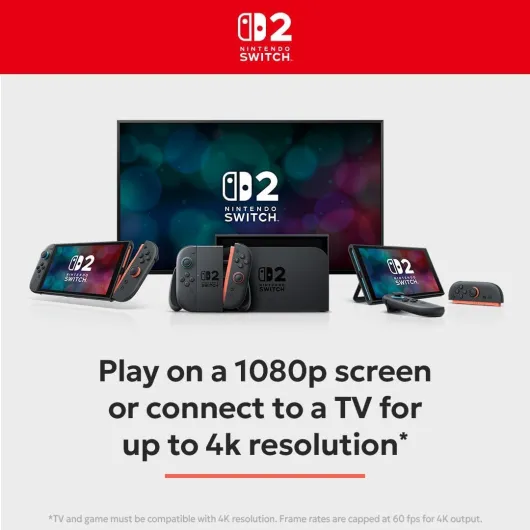
Now, about the graphics. The box and description talk about 4K output, HDR, VRR, and up to 120 fps. Technically, yes, the system can handle those features, but that doesn’t mean every game will run at native 4K or 120 fps. On my 4K TV, Mario Kart World looks sharp and colourful, and HDR helps with contrast, but you can still tell it’s not pushing as many effects or as high fidelity as a PS5 or a high-end PC. It’s a nice bump over the old Switch, not some massive jump to next-gen visuals across the board.
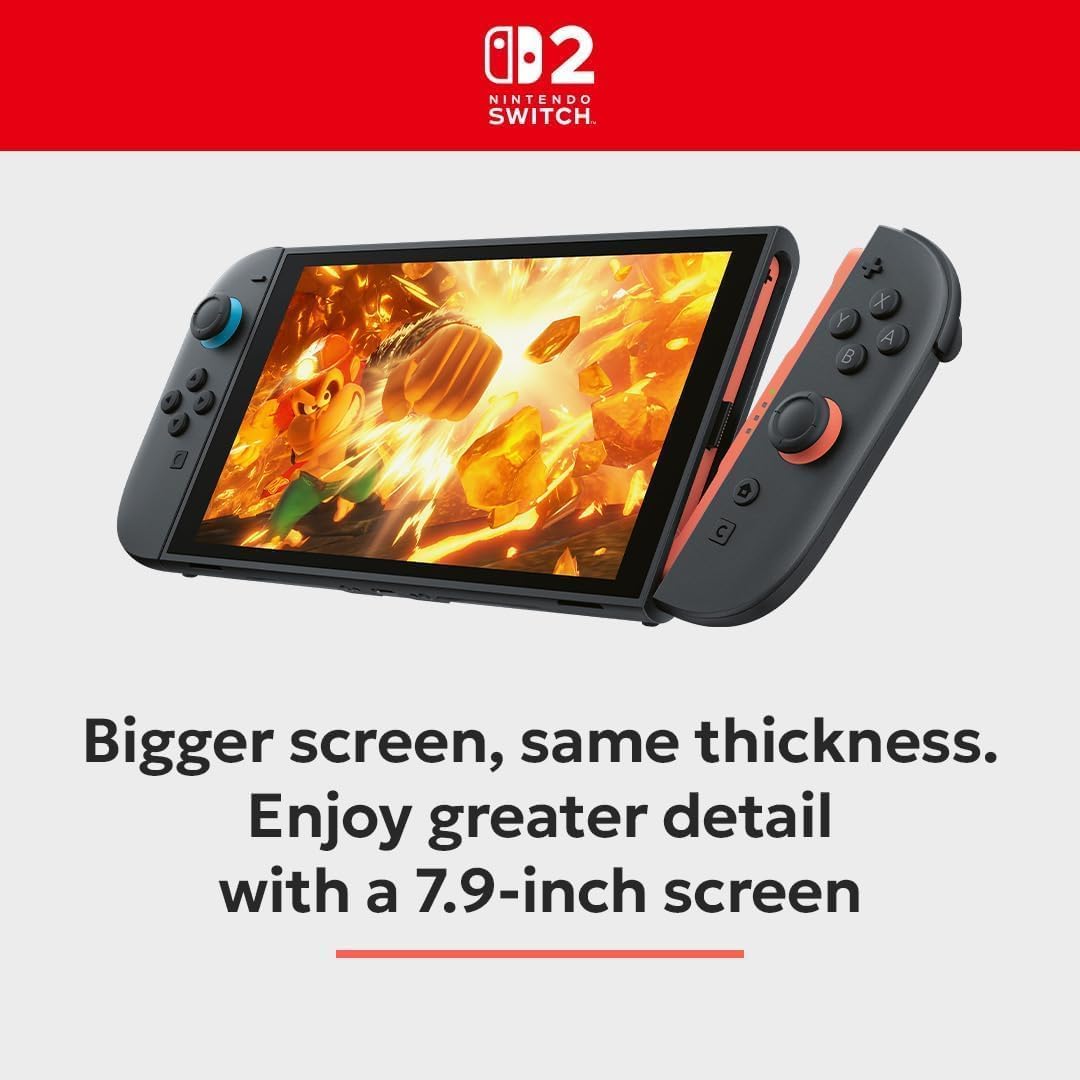
In handheld mode, the 1080p screen is a big upgrade from the original 720p one. Text is clearer, textures look less muddy, and everything feels more detailed. But this is where the Amazon 3/5 review has a point: it’s not an OLED display. So if you’re coming from a Switch OLED, you will lose those deep blacks and more intense colours. I came from the launch Switch (LCD), so to me this screen looks much better overall thanks to the higher resolution and HDR support, even if the contrast isn’t as deep as OLED.
Backwards compatible games also benefit from the extra power. I tested a handful (Zelda: BOTW, Mario Odyssey, some indie titles), and they all ran at least as well as before, often better. Faster loading is the main thing you feel. But again, not every game magically becomes a 4K HDR showcase. Some are clearly limited by how they were coded originally. So in practice, performance is strong for a portable console, but if you expect PS5-level graphics in your hands, you’re going to call it “average” like that one Amazon review. It depends what you’re comparing it to.
What you actually get with the Switch 2 + Mario Kart World bundle
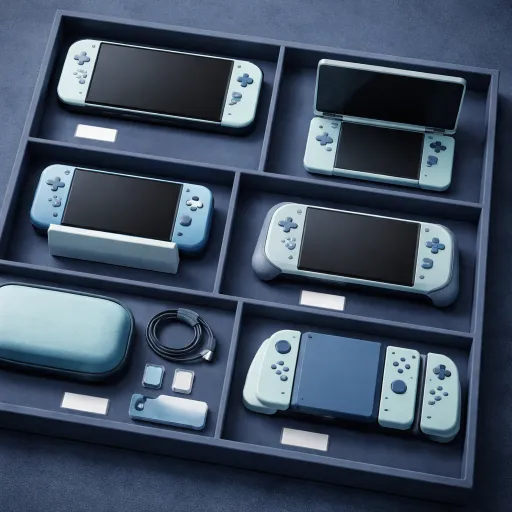
Out of the box, you get the Nintendo Switch 2 console, the new Joy-Con 2 controllers, a dock, HDMI cable, power adapter, and a copy (or code, depending on seller) of Mario Kart World. It’s basically the same idea as the old Switch bundles, just with the upgraded hardware and this new Mario Kart. The console itself looks familiar: tablet in the middle, detachable controllers on the sides, and the dock for TV play. If you’ve used a Switch before, you’ll feel right at home in about 30 seconds.
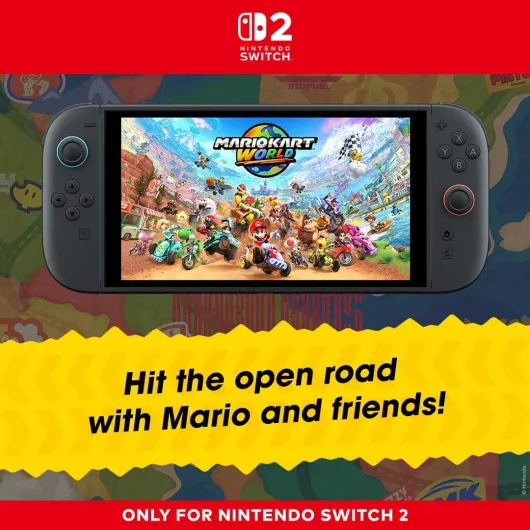
The big marketing bits here are: larger 1080p screen on the console, support for up to 4K output when docked, GameChat with the built-in mic, magnetic Joy-Con 2, and the promise of better performance plus compatibility with your old Switch games. Mario Kart World is the main showcase game: 24-player races, connected open-world style map, and online play with chat and screen sharing. It’s clearly positioned as the “this is why you upgrade” title.
In practice, what I noticed first was that old games do run better. Things that stuttered on the first Switch feel smoother here, and loading times are shorter. Mario Kart 8 Deluxe, for example, loads into races faster and feels more stable in handheld. Mario Kart World itself feels built to show off the new hardware—big environments, more racers on track, and the GameChat stuff actually integrated instead of needing that clunky phone app.
However, there is a catch: not all old games are fully supported or optimized, as the description hints. A couple of niche titles I had behave a bit weirdly (longer initial setup, odd resolution scaling). Nothing broke, but it’s not as plug-and-play perfect as the marketing would like you to think. Overall, the bundle is straightforward: if you want the newest Nintendo machine plus the new Mario Kart, this pack gets you started, but don’t expect every old game to suddenly look like a high-end PC title.
Pros
- Noticeably better performance and faster loading than the original Switch
- Larger 1080p screen and sturdier build with a much improved kickstand
- Mario Kart World is fun, makes good use of online features and 24-player races
Cons
- Battery life is fairly short (around 2–4 hours depending on the game)
- Screen is not OLED, which feels like a step back for Switch OLED owners
- Price is high enough that the upgrade is hard to justify if you already own a recent Switch
Conclusion
Editor's rating
After a few solid weeks with the Nintendo Switch 2 + Mario Kart World, my take is simple: it’s a strong, practical upgrade if you’re coming from an older Switch or jumping into the Nintendo world for the first time, but it’s not some miracle device that replaces a high-end console or PC. The performance bump, sharper 1080p screen, better build quality, and built-in GameChat make everyday use nicer. Mario Kart World itself is fun, makes good use of the hardware, and is the kind of game you actually keep coming back to.
On the flip side, the battery life is just okay, not great, and the screen is not OLED, which will bother anyone used to those deeper blacks and punchier colours. The 4K/HDR/120 fps support is real on paper, but in practice you’re still dealing with a portable Nintendo system, not a PS5 in disguise. If you keep that in mind, the 4.6/5 average rating on Amazon makes sense to me: most people will like it, some will feel it doesn’t match the hype.
Who is it for? People with a launch Switch or Switch Lite who want a more solid, faster, nicer-feeling version, and newcomers who want a flexible console they can use on the TV and on the go. Who should skip or wait? Anyone with a Switch OLED who mainly plays handheld and is happy with current performance, and people who care more about top-tier graphics than Nintendo exclusives. Overall, I’d call it a good but not perfect evolution of the Switch, worth it if you fit the right profile and keep your expectations grounded.