Summary
Editor's rating
Value: good deal if you accept the TV trade‑off
Design: compact, simple, and clearly aimed at handheld use
Battery life: decent, but varies a lot by game and brightness
Comfort: great for kids and short sessions, decent for longer play
Durability: surprisingly tough, but still needs some care
Performance: same as a regular Switch in handheld, for better or worse
What you actually get with the Switch Lite Blue
Pros
- Compact and lightweight, much more comfortable for handheld use than a regular Switch
- Integrated controls with a proper D‑pad, great for platformers and 2D games
- Lower price than standard Switch models while keeping the same handheld performance and game library
Cons
- No TV output at all, so completely locked to handheld use
- Limited internal storage (32 GB), microSD card is basically mandatory
- Potential stick drift over time with no easy Joy-Con replacement option

Specifications
View full product page →| Brand | Nintendo |
A Switch that finally behaves like a real handheld
I’ve been using the Nintendo Switch Lite Blue as my “throw-in-the-bag” console for a while now, alongside a regular dockable Switch. To be clear: this thing is 100% handheld only. No TV output, no detachable Joy-Cons, none of that. If you want something to plug into the TV, this is not it. If you want something for the sofa, bed, train, or to keep kids busy on long car rides, it fits that role pretty well.
What pushed me to try the Lite was my regular Switch feeling a bit too bulky for quick sessions and travel. With the big one, I always baby it a bit more: case, stand, Joy-Cons that can wiggle, dock, cables… the whole setup. With the Lite, it’s closer to how I used to use a 3DS or a PSP: pick it up, play 20 minutes, chuck it in the bag. The integrated controls help a lot with that “single solid device” feeling.
From the first days, the main thing I noticed is how comfortable the size is. It’s smaller than the original Switch but not tiny. For adult hands, it’s fine for a couple of hours; for kids around 4–10 years old, it’s actually easier to hold than the regular model. I let a nephew (4) and a friend’s kid (8) use it, and both handled it without issue. No complaints about weight or buttons being too far apart.
It’s not perfect. The screen is still only 720p, it’s an LCD (no OLED contrast), and you obviously lose the flexibility of TV play and detachable controllers. But in day-to-day use as a pure handheld, the Lite makes more sense than I expected. If you go in with the right expectations – basically, a portable Nintendo machine that lives in your hands and nowhere else – it does the job in a pretty solid way.
Value: good deal if you accept the TV trade‑off
On the value side, the Switch Lite Blue sits in a sweet spot if you’re clear on what you want. It’s cheaper than a standard Switch or Switch OLED, and you still get access to the same huge game library in handheld mode. For someone who doesn’t care about playing on a TV – or already has another Switch docked to the TV at home – the Lite makes financial sense. You save money on the console, and you’re not paying for a dock and features you won’t use.
Where it shines in value is for kids and secondary consoles. As a first console for a 4–10 year old, it’s a solid pick: good game library, parental controls, portable, and cheaper to replace if something goes wrong. As a second system in a house that already has a main Switch, it’s also handy: one person can use the TV with the main Switch, another can play on the Lite. Local multiplayer is possible if you add extra controllers, though that adds to the cost.
On the downside, if you only want one console and you sometimes like playing on a big screen, the price difference might not be worth losing TV output forever. You’d probably be better off hunting a deal on a regular Switch or OLED. Also, factor in that you almost certainly need a microSD card and ideally a case and screen protector. Those extra bits add up.
Overall, I’d say the Switch Lite Blue offers good value for money if your goal is strictly handheld gaming and you’re not chasing the newest hardware. In 2025, even with the Switch 2 around, it still holds up as a compact, budget‑friendly way into Nintendo’s ecosystem, especially for platformers, indies, and family games.
Design: compact, simple, and clearly aimed at handheld use
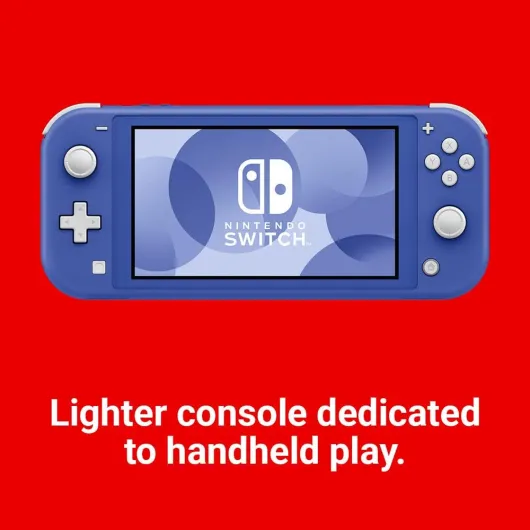
Design-wise, the Switch Lite Blue is pretty straightforward: one solid slab, integrated controls, and a 5.5" screen in the middle. Compared to the original Switch’s 6.2" screen, it’s a bit smaller, but in practice it doesn’t feel cramped. The bezels are still there, but after a day or two, you stop noticing. What you do notice is how much more compact the whole device is in a backpack, handbag, or even a jacket pocket.
The blue colour is actually nicer in real life than in promo images. It’s a matte, slightly muted blue, not super bright and not too dark. It hides fingerprints pretty well, which I appreciate because glossy plastic drives me nuts. After a few weeks of daily use, the colour hasn’t faded and it doesn’t show small scratches as badly as a glossy finish would. It looks like a “fun gadget” without screaming “kids’ toy” too much, so I’m fine using it in public transport.
Button layout is classic Nintendo: sticks on top left and bottom right, proper D‑pad on the left (which is a big plus over the separate buttons on the regular Switch), face buttons on the right, and the usual shoulder buttons. The D-pad alone is a strong point for platformers and 2D games. Playing Celeste, retro collections, or Hollow Knight on this feels more natural than on the Joy-Con buttons. Nothing fancy here, just a layout that works.
The downside is there’s no kickstand at all. So tabletop mode is basically dead unless you buy a separate stand. Also, the integrated nature means if you ever get stick drift (which can still happen), you can’t just swap Joy-Cons; you either send the whole console for repair or open it up yourself. The design is clean and practical for handheld use, but it sacrifices flexibility. If you accept that trade‑off, it’s a solid little unit.
Battery life: decent, but varies a lot by game and brightness
Battery life on the Switch Lite is pretty much in the 3 to 7 hour range, which matches what other users report. In my own use: playing something light like Stardew Valley or indie platformers at around 50–60% brightness, airplane mode on, I was getting around 6 hours before hitting low battery. With bigger games like Zelda or Mario Kart at higher brightness and Wi‑Fi on, more like 3–4 hours. So yeah, it swings a lot depending on what you’re doing.
For kids, that’s usually enough for a long car journey or a lazy afternoon without needing a charger. For commuting, it’s more than enough: 30–60 minutes a day barely makes a dent. I only really noticed the battery limitation when I tried to use it for long couch sessions instead of the TV. If you’re planning multi‑hour marathons, having a USB‑C cable nearby is smart. The good news is it charges over standard USB‑C, so you can use phone chargers or power banks, as long as they’re halfway decent.
Standby drain is acceptable. I left it in sleep mode for a couple of days and the battery had only dropped a bit, not half gone. So you can safely close it mid‑game and come back later without worrying that it’ll be dead. That sleep mode is honestly one of the best parts of the whole Switch ecosystem: pause anywhere, close it, open and you’re right back in.
Overall, the battery is good enough but not impressive. It’s on par with the revised regular Switch model, not as power‑hungry as some handheld PCs, and fine for its target use: portable gaming, not all‑day marathons. If you pair it with a small power bank for trips, you’re covered. If you expect full‑day unplugged play on heavy games, you’ll be charging in between sessions.
Comfort: great for kids and short sessions, decent for longer play
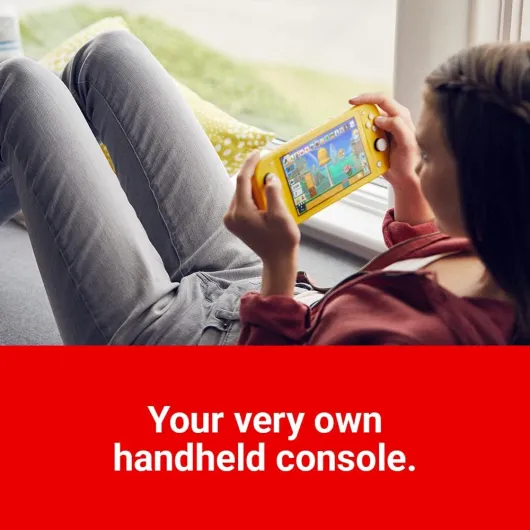
In the hand, the Switch Lite is noticeably more comfortable than the standard Switch for pure handheld play. The lighter weight and smaller size make a real difference. With the regular Switch, my wrists start to feel it after an hour or so, especially lying down. With the Lite, I can push closer to two hours before I feel the same strain. The shape is still just a flat slab, though, so it’s not like a controller with proper grips. It’s okay, not miracle ergonomics.
For kids, it’s basically the better choice. I’ve seen an 8‑year‑old absolutely hammer this thing for two years (friend’s kid), and he still prefers the Lite over their newer Switch 2 when he’s lying on the sofa or in the car. Smaller hands seem to fit the controls more naturally. A 4‑year‑old nephew also handled it fine: he could reach all the buttons and didn’t complain about weight at all. If you’re buying for younger children, I’d pick the Lite over the big Switch without hesitating, purely for comfort and ease of holding.
The buttons and sticks feel solid enough. The travel on the buttons is a bit shallow but responsive, and the sticks are the usual Switch style. They’re not high-end, but they get the job done. I didn’t have any drift during my test period, but that can show up over time like on any Switch. Shoulder buttons are easy to press without stretching too much, even for smaller hands, which helps in games like Mario Kart or platformers where you’re holding them down a lot.
The only thing I’d flag is that long sessions of something intense (Monster Hunter, action games, etc.) will still make your hands a bit tired because the console is flat. If you’re a heavy handheld gamer, you might want a cheap grip case to add some bulk to the sides. But straight out of the box, comfort is pretty solid for what it is, especially compared to the original Switch without any accessories.
Durability: surprisingly tough, but still needs some care
In terms of durability, the Switch Lite feels more solid than the regular Switch for handheld use, mainly because it’s one single piece with integrated controls. There are no wobbly Joy-Cons, no rails, no kickstand to snap. The plastic shell is rigid and doesn’t flex much when you twist it slightly. One friend’s kid has had a Lite for about two years, and it’s been knocked off sofas, used in cars, and generally abused. The shell has a few scuffs, but nothing cracked, and the screen is still intact (they did add a screen protector early on, which I’d strongly recommend).
The blue matte finish also helps hide small scratches. Shiny plastics show every mark; this one doesn’t. After a few weeks of going in and out of a bag without a case (not the smartest move, but I wanted to see), I had some minor marks, but nothing you notice unless you look closely in good light. Corners and edges held up fine. The only real weak point long-term is the analog sticks, which is true for all Switch models. Drift is always a risk over time, especially with kids hammering the sticks in games like Fortnite or Mario Kart.
The buttons and triggers still felt firm after extended use. No mushiness, no weird squeaks. The USB‑C port also feels solid; it doesn’t wobble with the cable in. As for the battery, after a year or two you can expect some capacity loss like with any lithium-ion battery, but that’s normal. It’s not easily user‑replaceable, so if you keep it for many years, at some point you may have to choose between a professional battery swap or moving on.
Overall, I’d call durability pretty solid for a portable console, especially for kids. It’s not indestructible, but with a simple case and a cheap screen protector, it should survive normal family use and travel without drama. If you treat your stuff reasonably, this is not the kind of device you’ll baby every day.
Performance: same as a regular Switch in handheld, for better or worse
Performance on the Switch Lite is basically the same as a standard Switch in handheld mode. Same CPU/GPU class, same RAM, same 720p target on the screen. So if you’ve used any regular Switch in handheld, you know exactly what to expect. Games like Mario Odyssey, Mario Kart 8, Animal Crossing, Pokémon, Kirby, and most indie titles run smoothly enough for casual play. I didn’t notice any difference in loading times or frame rate compared to my old Switch when running the same games.
The screen being 5.5" instead of 6.2" actually helps a bit with perceived sharpness. The resolution is the same, but on a smaller panel, pixels are slightly more dense. Text in RPGs and menus is still readable, and I didn’t find myself squinting unless the game UI was already badly designed. Brightness is enough for indoor use and okay outdoors in the shade, but in direct sunlight it struggles, like most LCD screens. It’s not OLED, so blacks are more like dark grey, and colours don’t pop as much, but for the price bracket it’s acceptable.
Audio is fine. The speakers are front-facing enough that you don’t have to cup your hands around them. Volume is decent for a quiet room or a car, but on a noisy train you’ll probably want headphones. You do at least get a 3.5mm headphone jack plus Bluetooth audio support, so any standard wired or wireless headset works. I’ve used cheap wired earbuds and Bluetooth headphones without any pairing issues.
Where performance shows its limits is in heavier third‑party titles or ports that already struggle on Switch (some big open‑world games, certain shooters). But that’s a Switch problem in general, not specifically the Lite. If your main interest is Nintendo’s first‑party catalogue and indie games, the Lite keeps up just fine. Just don’t expect miracles compared to newer hardware like the Switch 2 or other more powerful handheld PCs.
What you actually get with the Switch Lite Blue
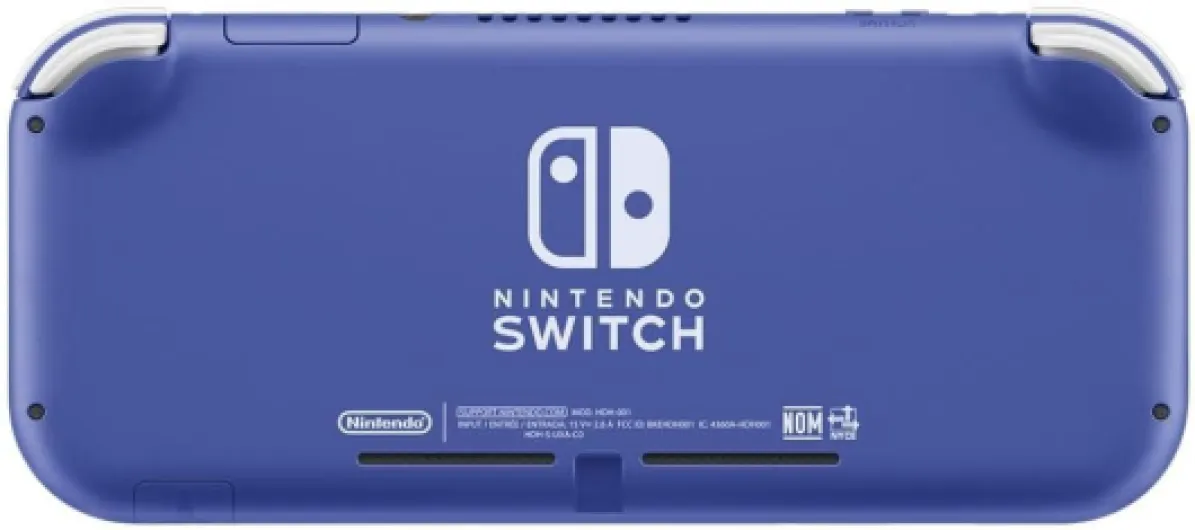
The Switch Lite Blue is basically the “stripped down” member of the Switch family. No dock, no HDMI output, no Joy-Cons, just the console and a charger (depending on the seller, you might get an EU plug with a UK adapter, which is a bit annoying but workable). The model number on mine matches what’s listed online (10004543), and the box is very minimal: console, charger, paperwork. Don’t expect a case, screen protector, or extras.
In terms of hardware, you’re getting the same internal guts as a regular Switch (not the OLED one), so performance in games is basically the same. Anything that runs in handheld mode on a normal Switch runs here. The only catch is with games that rely heavily on Joy-Con features (motion, IR camera, detachable controllers). Those will either be limited or will need extra controllers paired wirelessly. For most big titles like Mario, Zelda, Pokémon, Kirby, Hollow Knight, etc., it’s just plug and play.
The console weighs around 275–300 g (my kitchen scale showed just under 280 g with a cheap screen protector on), which is lighter than the full Switch with Joy-Cons. It feels closer to a beefy smartphone with grips than a full-blown console. That weight and the smaller footprint make it much easier to use one‑handed for menus or short sessions lying in bed. I’ve used it a lot for quick runs in Slay the Spire or a few races in Mario Kart before sleeping, and it just feels less clumsy than the regular Switch.
Out of the box, storage is the usual 32 GB, which fills up fast. You will need a microSD card if you plan to go digital with more than 3–4 decent‑sized games. That’s not unique to the Lite, but it’s something to budget for. Overall, the package is pretty barebones, but if you just want a straightforward handheld machine and you’re okay buying a case and SD card separately, it’s fine. Nothing fancy, just the essentials.
Pros
- Compact and lightweight, much more comfortable for handheld use than a regular Switch
- Integrated controls with a proper D‑pad, great for platformers and 2D games
- Lower price than standard Switch models while keeping the same handheld performance and game library
Cons
- No TV output at all, so completely locked to handheld use
- Limited internal storage (32 GB), microSD card is basically mandatory
- Potential stick drift over time with no easy Joy-Con replacement option
Conclusion
Editor's rating
The Nintendo Switch Lite Blue is a straightforward product: a compact, handheld‑only Switch that focuses on being easy to carry and simple to use. No TV output, no detachable Joy-Cons, no gimmicks. In daily use, that focus actually pays off. It’s lighter, feels more solid as a single piece, and is easier for kids and commuters to handle than the standard model. Performance is the same as a regular Switch in handheld mode, battery life is decent (3–7 hours depending on the game), and the D‑pad makes 2D and platformer games more pleasant.
It’s not perfect. You lose any option to play on a TV, the screen is still just a basic LCD, and storage is limited so you’ll need a microSD card. Long sessions can still get a bit tiring without a grip, and stick drift is always a possibility over time. But for the price, and for the use cases it targets – kids, travel, second console in a Nintendo household, or people who just want a no‑nonsense handheld – it gets the job done well.
If you want a single console to do everything, including couch gaming on a big screen, skip this and look at a regular Switch or Switch OLED. If you already have a main console or you only care about portable gaming, the Switch Lite Blue is a pretty solid, budget‑friendly option that still makes sense in 2025.