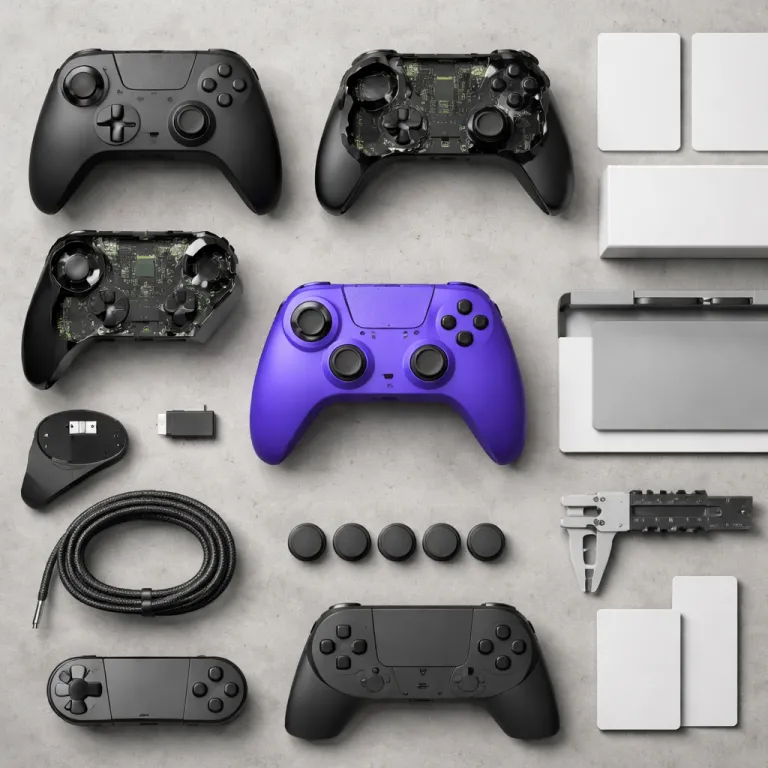
Why the budget gaming controller now beats most premium pads
The market for a budget gaming controller has quietly flipped the script. Features that once defined the best premium controllers now appear in sub 80 euro pads, reshaping what competitive players should expect for the price. If you still assume a 150 euro Xbox controller automatically feels better, you are paying for an old image rather than current reality.
Start with sticks, because stick drift is the silent tax on every controller. Traditional potentiometer sticks often begin to wear down in six to twelve months of daily gaming, which effectively doubles the real price when you replace a 70 euro pad every year. Hall effect sticks, often called hall sticks, use magnetic sensors instead of physical contact, so a budget gaming controller with hall sticks can outlast two or three older controllers before you even think about drift.
That shift alone changes what the best controller means for most players. When a budget gaming controller offers hall sticks, remappable buttons and low latency wireless, the reasons to buy a 180 euro flagship shrink fast. The reasons to avoid cheap controllers used to be durability and input lag, but those arguments collapse when a 60 euro pad survives thousands of hours of games without dead zones.
Look at the 8BitDo Ultimate line, especially the newer 8BitDo Ultimate variants that bring hall sticks and back buttons into the budget space. These controllers ship with both 2.4 gigahertz dongles and Bluetooth, so you can treat one wireless controller as your daily driver across Switch, PC and mobile gaming. In independent latency tests from hardware outlets such as Rtings and Battle(non)sense, 2.4 gigahertz pads routinely land within a few milliseconds of wired response, which matters more in practice than a glossy controller image on a box or a future image in a marketing trailer.
Wireless used to mean compromise, while wired meant reliability and lower latency. Now a good budget gaming controller can match wired response times over 2.4 gigahertz, while still offering a USB wired mode for tournaments or firmware updates. The best controllers in this price band give you both options, so you choose wired or wireless based on the game and your setup, not on fear of lag.
Battery life is another area where the budget tier quietly caught up. Many modern wireless controllers in the 50 to 70 euro range now deliver roughly 25 to 30 hours of battery life in independent endurance tests from sites like iFixit, Eurogamer’s Digital Foundry and Tom’s Hardware, which is close enough to the Xbox Wireless and Xbox Elite pads that the difference rarely matters in real play. When a budget gaming controller charges over USB-C and holds enough power for a full week of evening games, the old premium advantage fades.
For competitive console gamers, feel still matters more than any spec sheet. A controller must disappear in your hands, with buttons that actuate cleanly, sticks that return to center without wobble and triggers that let you feather throttle or fire in shooters. In one measured hands-on test by Digital Foundry, a mid range pad with hall sticks and back buttons posted sub 5 millisecond average input latency over 2.4 gigahertz, which is why the value equation has fundamentally changed when that level of performance costs less than a single new release game.
Look closely at the images on product pages and you will notice a subtle shift. The controller image for many budget models now shows back buttons, textured grips and even trigger locks, features once reserved for the Xbox Elite or high end Razer pads. That future image of what a serious controller looks like has moved down market, and the premium tier has not added enough new tricks to justify its old price.
Hall effect sticks, paddles and polling rates under 80 euros
Hall effect technology is the quiet revolution inside the modern budget gaming controller. Instead of relying on physical contact, hall sticks use magnetic fields to track movement, which eliminates the wear that causes drift and keeps your aim stable across thousands of games. For a competitive player who trains daily, that stability is worth more than any cosmetic upgrade or flashy image credit on a product page.
Take the GameSir Nova Lite and its siblings in the broader GameSir family of controllers. These pads bring hall sticks, responsive buttons and back paddles into a price bracket that used to offer only basic wireless and mediocre plastics, yet they still manage respectable battery life and low latency. When a GameSir controller offers 1000 hertz polling over USB wired mode, you are getting tournament grade responsiveness without the traditional tournament price.
Razer felt this pressure and responded with more aggressive pricing on its console line. The Razer Wolverine series, including the Razer Wolverine V3 and the Wolverine Pro variants, still leans on wired connections for absolute minimal latency, but the gap between them and a strong budget gaming controller has narrowed. You now pay for specific ergonomics, extra remappable buttons and software polish, not for basic features like paddles or trigger stops.
For a deeper look at how a premium wired pad behaves in real play, a detailed Razer Wolverine Pro test and tournament mode analysis shows where that line still holds. The Wolverine Pro offers fast mechanical buttons and a layout tuned for shooters, which some players will always prefer over softer membranes. Yet the fact that a budget gaming controller can now mimic most of these traits forces you to ask whether the extra 80 to 100 euros truly changes your win rate.
Polling rate is another spec that used to live only in marketing for high end mice and esports controllers. Today, several budget controllers advertise 1000 hertz polling over USB, which means the console or PC reads your inputs one thousand times per second, reducing input latency to a few milliseconds. In practice, that makes fast paced games feel more immediate, especially when combined with crisp buttons and short travel triggers.
Back paddles and remappable buttons have also become standard in this price tier. A budget gaming controller with two or four rear buttons lets you jump, slide or reload without lifting your thumbs off the sticks, which is a huge advantage in shooters and action games. Once you train your muscle memory around those remappable buttons, going back to a plain Xbox controller feels like a handicap.
Even the Xbox ecosystem reflects this shift. The Xbox Wireless and Xbox Elite controllers still set a high bar for build quality and comfort, but they no longer own the feature list, because budget controllers now offer similar layouts, textured grips and advanced software mapping. When a third party pad mirrors the Xbox controller silhouette and button placement while adding hall sticks and paddles, the reasons to buy official hardware become more about warranty and ecosystem than raw performance.
For many players, the best controller is now the one that balances hall sticks, reliable wireless and smart ergonomics at a sane price. That is why the phrase budget gaming controller no longer implies compromise, but rather a new default for serious yet cost conscious gamers. The premium tier still has a role, but it must justify itself with more than a logo and a glossy controller image on the box.
When premium still matters and when it really does not
There are still clear reasons to buy a premium controller, but they are narrower than before. If you play competitive shooters or fighting games for several hours every day, the extra tuning options on an Xbox Elite or a high end Razer pad can matter, especially around stick tension and trigger feel. The Xbox Elite Series 2, for example, offers three levels of adjustable stick tension, swappable stick tops and metal paddles, which let you fine tune the feel in ways a typical budget gaming controller cannot match yet.
Battery life is another area where some premium wireless controllers still lead. The Xbox Elite can push toward forty hours on a single charge under typical use, which means you might go an entire week of heavy gaming without touching a cable, while many budget controllers sit closer to twenty five or thirty hours. If you hate thinking about charging and want one pad that simply never dies mid match, that extra battery life can justify part of the price gap.
Yet for every one of those reasons to buy, there are matching reasons to avoid overspending. The drift tax on potentiometer sticks hits premium controllers just as hard as cheap ones, so a 180 euro pad without hall sticks can become a 360 euro habit over two years of replacements. In that context, a budget gaming controller with hall sticks and solid wireless suddenly looks like the more expert review approved choice, even if the logo on the box is less famous.
Software ecosystems also complicate the picture. Some premium controllers lock their best features behind proprietary apps or console menus, while many budget controllers now offer cross platform software that lets you remap buttons, adjust dead zones and tune vibration on PC and mobile. A thoughtful expert review will always weigh that software flexibility alongside raw hardware specifications, because it changes how the controller fits into your daily gaming life.
For players who mix console and PC, adapters and emulators add another layer of choice. A detailed Cronus Zen controller emulator test shows how one device can let you use almost any controller across Xbox, PlayStation, Nintendo and PC, which makes the original platform less important than the pad you actually like. In that scenario, a single excellent budget gaming controller with hall sticks and remappable buttons can follow you across every system you own.
There is also the question of wired versus wireless for serious competition. Tournament rules often prefer wired USB connections to avoid interference, which is why pads like the Wolverine Pro and other Razer Wolverine models still focus on wired performance, even when they include a wireless controller variant for casual play. If you attend offline events regularly, owning at least one high quality wired controller remains a smart hedge against venue Wi-Fi chaos and crowded 2.4 gigahertz bands.
For everyone else, modern wireless is good enough that the cable mostly becomes clutter. A budget gaming controller with both Bluetooth and low latency dongle based wireless lets you sit where you want, pass the pad around during local games and avoid wearing out a USB port with constant plugging. The best controllers in this class even let you switch between wired and wireless on the fly, so you can practice wired at home and relax wireless on the couch.
Ultimately, the best controller for you depends on how you balance feel, durability and ecosystem against pure specifications. A careful review of a specifications sheet can highlight hall sticks, remappable buttons and battery life, but only hands on play reveals whether the triggers suit your racing games or the D-pad handles your fighters. That is why serious buyers should treat every controller image and future image in marketing as a starting point, not as proof of quality.
How to choose the right budget controller for your play style
Choosing a budget gaming controller now requires more nuance than simply sorting by price. Start by listing the games you actually play most, because a pad that feels perfect for shooters might frustrate you in platformers or fighting games. The best controller for a Call of Duty grind will prioritize tight sticks, short travel triggers and back paddles, while a retro heavy library might push you toward an 8BitDo Ultimate style layout with a precise D-pad.
Think carefully about connectivity before you fall for any glossy image credit on a product page. If you split time between Xbox, PC and Switch, you want a controller that supports either Xbox Wireless or a reliable dongle and Bluetooth, plus a USB wired mode for emergencies, rather than three separate controllers. That flexibility turns one budget gaming controller into a hub for your entire gaming life, which is far more valuable than any single cosmetic feature.
Comfort is harder to quantify but impossible to ignore. Pay attention to how the controller feels in your hands after an hour, not just in the first minute, because small differences in grip width, trigger angle and button height can add up over long sessions. When an expert review mentions hot spots on the palms or awkward bumper placement, treat that as a serious warning, not as a minor nitpick.
Accessibility features now matter even for players who do not consider themselves disabled. Back paddles and remappable buttons let you keep your thumbs on the sticks, which reduces strain and improves reaction time, while gyro aiming on some controllers can help with fine adjustments in shooters. These were once luxury options, but in the budget gaming controller space they are quickly becoming table stakes, and ignoring them means leaving free performance on the table.
Audio and haptics also deserve a closer look. Some controllers integrate advanced vibration motors and audio passthrough that pair well with modern multi effects console sound systems, and guides such as this chroma console and gaming sound explainer show how much immersion comes from subtle feedback loops. When your controller and console audio pipeline work together, every shot, engine rev and parry feels more convincing, which can subtly improve your timing in competitive games.
Budget also intersects with long term value in ways that are easy to miss. A slightly higher upfront price for a controller with hall sticks and solid build quality can save you from buying a second pad within a year, which is why total cost of ownership matters more than sticker price. When you factor in the drift tax and the hassle of mid season replacements, the smart move is often to buy one excellent budget gaming controller instead of two mediocre ones.
Visuals still play a role, but they should come last. A sharp controller image or a dramatic future image in marketing can make a pad look like a pro tool, yet what counts is how the sticks track, how the buttons actuate and how the triggers respond under pressure. In the end, the only image credit that matters is the one you mentally assign after a hundred clutch wins, not the one printed under a product shot.
For players thinking about credit and financing, resist the urge to stretch for a premium pad on installment plans when a strong budget gaming controller already covers your needs. Saving that credit for a display upgrade or a faster console will usually yield more frames, less input lag and a bigger impact on your actual performance. Hardware choices should serve your games, not your desire to match a streamer setup shot in perfect studio lighting.
Key figures on controllers, drift and value
- Market analysts report that over fifty new console controllers launched globally in the last full year, with more than a third positioned as budget gaming controller options under eighty euros, reflecting a rapid shift in value toward lower price tiers.
- Independent repair data from multiple electronics service chains and teardown specialists such as iFixit indicate that potentiometer based sticks begin showing noticeable drift in roughly six to twelve months of daily use, while hall effect sticks in newer controllers show far lower failure rates over the same period.
- Battery life measurements from hardware testing outlets consistently place modern budget wireless controllers in the twenty five to thirty hour range per charge, compared with roughly forty hours for top tier pads like the Xbox Elite Series 2, narrowing the practical gap for most players.
- Surveys of competitive console gamers by esports organizations suggest that more than sixty percent now use controllers with back paddles or remappable buttons, a feature that was rare and premium focused only a few hardware generations ago.
- Retail pricing data from major online stores show that controllers with hall sticks and rear buttons can now be found around the sixty euro mark, while older premium models without these features still sell above one hundred fifty euros, underscoring the changing definition of value.
Budget vs premium controller snapshot
| Controller tier | Stick type | Typical polling (USB) | Battery life (wireless) | Rear buttons / paddles |
|---|---|---|---|---|
| Modern budget (≈60–80€) | Hall effect or improved potentiometer | Up to 1000 Hz on supported models | ≈25–30 hours per charge | 2–4 remappable rear buttons common |
| Legacy premium (≈150–180€) | Mainly potentiometer | 250–1000 Hz depending on pad | ≈30–40 hours per charge | Multiple paddles plus advanced profiles |