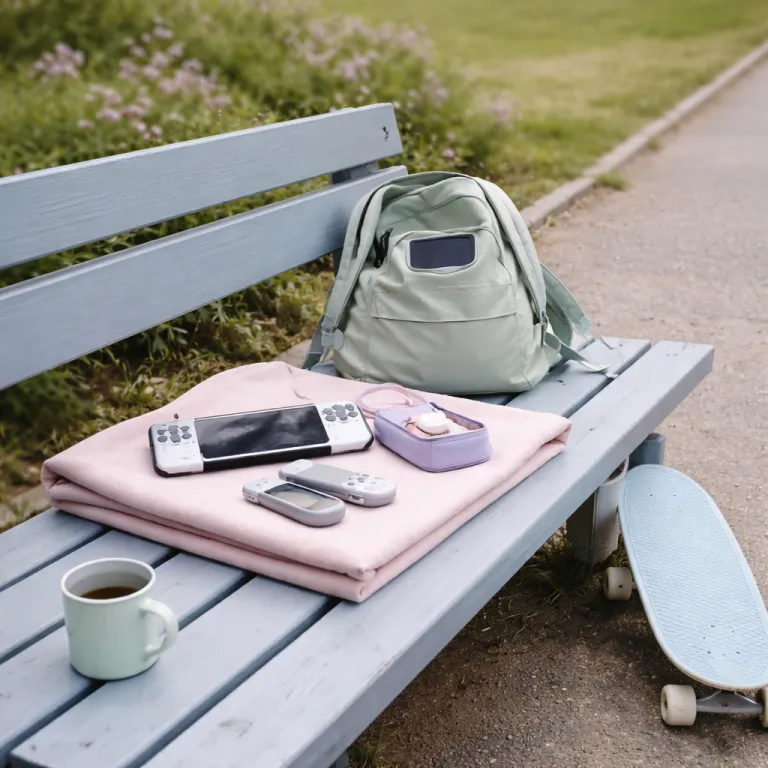
Defining the best handheld gaming console for your everyday reality
The best handheld gaming console is not a single device, it is the portable system that fits how and where you actually play. For a commuter juggling short sessions of games on a crowded train, a lighter gaming handheld with a smaller 7‑inch screen and strong battery life beats raw performance every time. If you mostly game on the sofa while your TV is busy, a heavier console with a sharper 8‑inch display and louder speakers suddenly makes more sense.
Think first about your library of games and ecosystems before you even compare price or performance numbers. Players already deep into Steam, Xbox Game Pass or the Epic Store usually lean toward a Windows based gaming console such as the Asus ROG Ally, Lenovo Legion Go or MSI Claw, because these handheld gaming systems run the same PC game launchers. If your favourite game experiences live on Nintendo Switch or older cartridges, a Switch Lite or a retro handheld like a Retroid Pocket or Ayaneo Flip may quietly be the most suitable handheld for you.
Ergonomics matter more than any spec sheet when you hold a handheld for two hours straight. Curved grips, weight distribution and button travel decide whether a gaming handheld feels comfortable or punishing to your wrists during long games. When you test a console in store, pay attention to how far your thumbs stretch to the sticks, how the 7‑inch IPS or OLED screen looks at an angle, and whether the fan noise drowns out quiet moments in your favourite game.
Steam Deck OLED, LCD and the PC handhelds that feel like tiny gaming laptops
Valve’s Steam Deck reshaped what people expect from a best handheld gaming console by making PC gaming feel console simple. The newer Steam Deck OLED, often called the Deck OLED by enthusiasts, improves the screen, battery life and thermals so much that the older LCD model now feels dated even before you look at performance. In practice, the brighter 7.4‑inch OLED screen and deeper blacks make indie games and big budget titles alike pop in handheld gaming, especially in dim rooms or night trains.
Because the Steam Deck runs a Linux based SteamOS rather than Windows, it behaves more like a console than a tiny PC, yet it still plays most of your Steam games with minimal tweaking. You can dual boot Windows if you want Xbox Game Pass or non Steam launchers, but that adds complexity that some players simply do not want in a gaming handheld. For many, the balance of price, performance and comfort still makes the Steam Deck family one of the strongest options for pure Steam gaming, even as Windows handheld rivals chase higher frame rates.
Battery life on the Deck OLED is better than the original, but heavy 3D games still drain the battery in under three hours if you push performance settings. To get realistic figures, reviewers typically test a demanding game such as Cyberpunk 2077 or Elden Ring at native resolution, medium to high settings and a 60 Hz refresh rate, then log play time from 100 % to around 10 %. Dropping the screen refresh rate, capping frame rates and lowering TDP can stretch a session, yet that constant tweaking is not for everyone who just wants to play a game. If you care more about plug and play comfort than tinkering, you may prefer a more console like device such as Nintendo Switch or a cloud focused handheld that offloads heavy gaming to a home console or PC.
For players who still own a Nintendo DS Lite and care about hardware aesthetics, learning how to choose and replace a shell for your DS Lite can be a gateway into appreciating how much build quality matters on modern handhelds. A well built shell, solid buttons and a precise D pad can turn an average gaming console into a trusted companion for years of games. That same attention to materials and finish separates premium handheld gaming devices like the Steam Deck OLED from cheaper, creaky plastic competitors.
ROG Ally, Lenovo Legion Go, MSI Claw and the Windows handheld power race
Windows based handhelds such as the Asus ROG Ally, Lenovo Legion Go and MSI Claw chase a different vision of the best handheld gaming console. These devices promise full fat PC gaming on the go, with access to Steam, Epic, GOG, Battle.net and Xbox Game Pass on a single gaming handheld. In reality, they feel like ultra compact gaming laptops with controllers attached, which is both their strength and their weakness.
The Asus ROG Ally uses custom AMD hardware and a sharp 7‑inch IPS screen to push high frame rates in modern games, but Windows overhead and driver quirks can still trip up a quick play session. Lenovo Legion Go counters with a larger 8.8‑inch display, detachable controllers and a more flexible kickstand, turning the console into a tiny tabletop gaming screen when you want to share games. MSI Claw leans on Intel silicon and familiar MSI gaming branding, yet its early software showed how fragile performance can be when firmware, drivers and Windows updates do not align.
Battery life is the tax you pay for this level of performance in a handheld gaming device. Running a demanding game at high settings on a ROG Ally or Lenovo Legion Go can drain the battery in around ninety minutes, especially if you push the wattage for maximum performance. To make a Windows handheld your daily portable rig, you must accept power profiles, performance modes and a charger in your bag as part of the game.
Price also swings wildly in this segment, with frequent discounts that can suddenly make one console the best handheld value for a month. When you compare price tags, factor in a fast microSD card, a protective case and maybe a USB C dock for big screen play on an Xbox or PC monitor. If you are tempted by Windows handhelds mainly for retro games, a dedicated retro handheld such as a Retroid Pocket or an R36MAX style device tested in a detailed retro handheld game console review can deliver classic gaming with far better battery life and a lower price.
Nintendo Switch, Switch Lite and the quiet power of frictionless play
For many families and casual players, the best handheld gaming console is still a Nintendo Switch because it simply lets you play games without thinking about drivers, launchers or settings. The hybrid design means you can start a game in handheld mode, then drop the console into a dock and continue on the TV without losing a frame. That frictionless play loop matters more to most people than whether the screen is 6.2‑inch IPS or 7‑inch OLED, or whether the GPU hits a certain teraflop number.
The standard Nintendo Switch and any future successor focus on exclusive games and local multiplayer rather than raw performance, yet they still deliver some of the most memorable gaming experiences. A Switch Lite trims away the dock and detachable Joy Cons to become a pure handheld gaming device, lighter in the hand and easier to slip into a small bag. For a commuter or student who mostly plays indie games, platformers and Nintendo exclusives, the Switch Lite often feels like the most balanced handheld because it blends price, weight and battery life gracefully.
Parents choosing a first gaming console for children should weigh durability and game library above everything else. Nintendo’s ecosystem offers a deep bench of age appropriate games, robust parental controls and a second hand market that keeps the effective price of each game reasonable. While the screen resolution and performance lag behind a Steam Deck or ROG Ally, the overall experience of pick up and play gaming still makes the Nintendo Switch family a strong choice for shared living rooms.
Retro minded players who grew up with Game Boy or DS often pair a modern Switch with a separate retro handheld for classic games. Devices like Retroid Pocket or Ayaneo Flip target that niche, offering compact consoles with 3.5‑ to 4‑inch IPS screens tuned for emulation rather than cutting edge performance. In that setup, the Switch or Switch Lite becomes the primary handheld for new games, while the retro handheld becomes the dedicated console for pixel art comfort food.
Remote play, cloud gaming and when a handheld is just a screen
Not every best handheld gaming console needs to run games locally, and remote play devices prove that point. Sony’s PlayStation Portal, for example, is essentially a DualSense controller wrapped around an 8‑inch screen that streams games from your home PlayStation 5 over Wi Fi. When the connection is stable, the experience feels close to native play, but your performance depends entirely on your network rather than the handheld hardware.
If you already own a powerful console or gaming PC, a remote play handheld can be the best handheld companion rather than a standalone gaming console. Xbox players can stream games from an Xbox Series X or S to a phone, tablet or dedicated handheld, turning almost any screen into a portable extension for quick sessions. Some Windows handhelds like the ROG Ally or Lenovo Legion Go double as both local gaming machines and remote play clients, letting you choose between battery hungry native performance and more efficient streaming.
Cloud gaming services blur the line further by running the game in a data centre and sending only video to your handheld. In that model, the screen quality, controller feel and Wi Fi stability matter more than GPU power, which is why some players happily use a mid range Android retro handheld or even a Switch like device purely as a cloud screen. Before you buy a dedicated cloud or remote play console, read a full test of the PlayStation Portal remote player to understand how latency, compression and Wi Fi interference really affect fast paced games.
Remote play also changes how you think about battery life, because decoding a video stream uses far less power than rendering a modern 3D game locally. A handheld that lasts only two hours in native PC gaming mode might stretch to five or six hours when used purely as a streaming screen. For some players, that trade off makes a remote focused device the most practical handheld option for long trips, provided they can tether to a stable mobile connection.
Retro handhelds, modding culture and long term comfort
Retro handhelds occupy a special corner of the best handheld gaming console debate, because they prioritise nostalgia and feel over cutting edge performance. Devices like Retroid Pocket, Ayaneo Flip and other retro handheld consoles often use modest chips but pair them with crisp 3.5‑ or 4‑inch IPS screens and classic D pads tuned for 2D games. For players who mainly want to revisit older game libraries, these consoles can be the most satisfying handheld choice, especially when price and battery life matter more than ray tracing.
Modding culture also shapes how people evaluate a gaming handheld, from custom shells to replacement sticks and buttons. A console that is easy to open, repair and customise tends to enjoy a longer life, both physically and emotionally, because it becomes your project rather than a sealed black box. Guides on replacing shells, sticks or batteries for older devices show how a bit of care can extend a handheld’s useful gaming life by years and keep favourite games in rotation.
Comfort over time is where many flashy handhelds quietly fail, despite strong performance on paper. Sharp edges, awkward trigger angles or unbalanced weight can turn a promising gaming console into a wrist ache after a single long game session. When you test a potential best handheld in person, hold it as you would during a two hour play session, imagine your thumbs moving through complex games and ask whether this console feels like a long term partner or a short term fling.
Price, of course, still matters, but value is more than the launch price tag. A slightly more expensive handheld with better battery life, a higher quality screen and a stronger repair ecosystem can cost less over five years than a cheaper console that you replace twice. In the end, the best handheld gaming console is the one that still feels good to pick up on a rainy Sunday, long after the marketing noise has faded and the next big game has already moved on.
Key figures and trends in handheld gaming
- Industry estimates from firms such as Newzoo and Ampere Analysis suggest that global handheld and hybrid gaming hardware revenue, including devices like Nintendo Switch, Steam Deck and Windows handhelds, now sits in the mid‑tens of billions of US dollars annually, based on their most recent console and PC market outlooks.
- Surveys of PC players published by Valve in Steam Hardware & Software Survey summaries, along with third party analyst notes, indicate that a significant share of Steam users now access their library through some form of portable gaming device, whether a Steam Deck, ROG Ally or similar console.
- Battery life remains the top complaint in user reviews, with many high performance handhelds averaging between 1.5 and 3 hours of play in demanding games at default settings when tested with modern 3D titles at native resolution and uncapped frame rates.
- Retro handheld sales have grown steadily, with dozens of new models each year targeting classic games and emulation focused players at price points between 40 and 150 euros, according to sales rankings from specialist retailers and manufacturer launch data.
- Cloud and remote play usage on handhelds has increased sharply, as more Xbox and PlayStation owners use portable screens to extend their main consoles rather than buying a second full power gaming console, a trend reflected in platform holder usage reports and network statistics.
| Handheld | Typical battery life (demanding 3D game) | Key strengths | Main trade offs |
|---|---|---|---|
| Steam Deck OLED | 2–3 hours | Excellent OLED screen, strong Steam integration | Heavier than a Switch, Linux limits some launchers |
| Asus ROG Ally | 1.5–2.5 hours | High performance Windows gaming, 1080p display | Shorter battery life, more tweaking and updates |
| Lenovo Legion Go | 1.5–2.5 hours | Large 8.8‑inch screen, detachable controllers | Bulky in handheld mode, Windows complexity |
| Nintendo Switch / Lite | 3.5–7 hours | Frictionless play, strong exclusive library | Lower performance, limited media apps |
| Retro handhelds (e.g. Retroid Pocket) | 5–8 hours | Great for classic games, compact and affordable | Not suited to modern AAA releases |
FAQ about choosing the best handheld gaming console
Is the Steam Deck OLED still worth it if prices are high ?
The Steam Deck OLED remains a strong choice because its improved screen, better battery life and refined thermals significantly upgrade the handheld gaming experience over the original LCD model. Even when new units are scarce, refurbished programs that cut the price by around 15 to 30 % can make the console better value than many Windows handhelds at similar price points. If your games are mostly on Steam and you prefer a console like interface, the Deck OLED is still one of the best handheld options.
How does a ROG Ally compare to a Lenovo Legion Go for everyday use ?
The Asus ROG Ally is lighter and easier to carry, with a sharp 7‑inch IPS screen and strong performance in most modern games at 1080p. Lenovo Legion Go offers a larger 8.8‑inch display, detachable controllers and a more flexible tabletop mode, which can be better for shared play or using the console as a mini PC. For pure handheld comfort and battery life, the ROG Ally usually wins, while the Legion Go suits players who want a more versatile Windows gaming console.
Should I buy a Nintendo Switch Lite or a more powerful handheld ?
A Nintendo Switch Lite is ideal if you mainly want Nintendo exclusives, indie games and a light, durable handheld for commuting or travel. More powerful devices like Steam Deck, ROG Ally or MSI Claw handle demanding PC games better but are heavier, more complex and often have shorter battery life at high performance settings. If simplicity, family friendly games and price matter most, the Switch Lite is often the best handheld choice.
Are retro handhelds like Retroid Pocket good for modern games ?
Retro handhelds such as Retroid Pocket or Ayaneo Flip are designed primarily for classic games and emulation, not for the latest AAA releases. Their chips and GPUs usually struggle with modern 3D games, especially at higher resolutions or frame rates. They shine as secondary consoles for retro gaming, while a more powerful handheld or home console handles new releases.
How important is battery life when choosing a handheld gaming console ?
Battery life directly shapes how and where you can play, especially for commuters and travellers who cannot always plug in. High performance Windows handhelds often last only 1.5 to 3 hours in demanding games, while devices like Nintendo Switch Lite or some retro handhelds can stretch to 5 or more hours. If you value long, uninterrupted sessions away from power, prioritise battery life and efficiency over maximum performance when choosing the best handheld gaming console.
