Summary
Editor's rating
Value for money: worth it if you love handheld, less so if you’re mostly docked
Design: same idea, but finally feels a bit more premium
Battery life: good enough, but depends a lot on what you play
Comfort: good for short hands, just okay for long sessions
Durability: solid console, questionable Joy-Cons (still)
Performance: same old Switch under the nicer screen
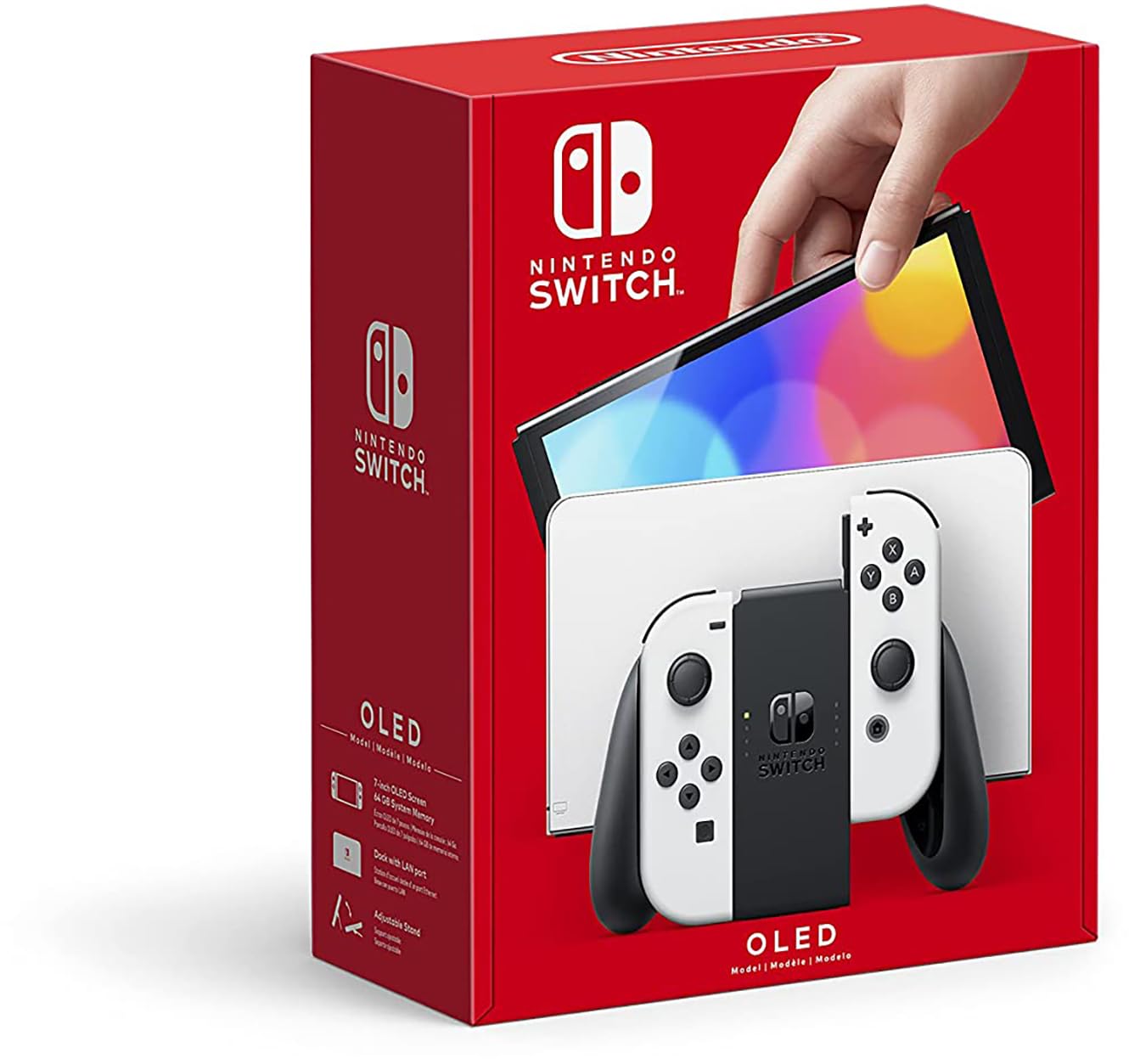
What you actually get with the Switch OLED
Pros
- OLED screen makes handheld gaming look noticeably better than the original Switch
- Wide kickstand and improved audio make tabletop and portable play more practical
- Dock includes a wired LAN port and the system keeps the flexible hybrid concept
Cons
- Same performance as the old Switch, no upgrade in power or frame rates
- Joy-Con drift is still a concern and controllers feel fragile over time

Specifications
View full product page →| Brand | Nintendo |
A handheld that actually made me ignore my TV
I’ve been using the Nintendo Switch – OLED Model with the white Joy-Cons for a few weeks now, and I’ll be honest: I bought it mainly for handheld gaming. I’ve had the original Switch before, and I was curious if this was just a cosmetic refresh or a real upgrade. Short answer: it’s not perfect, but it did make me actually want to play in handheld more than on my TV or even my Steam Deck in some situations.
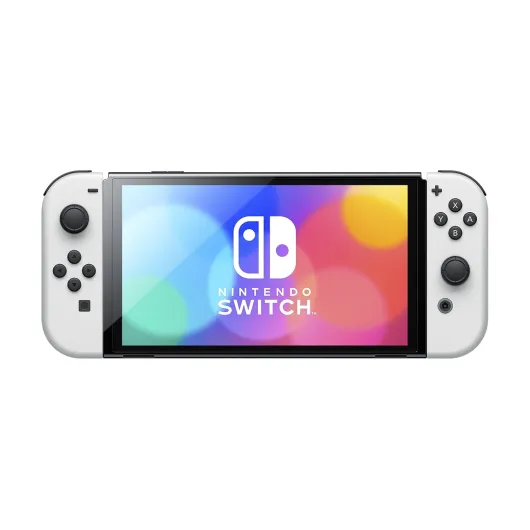
The first thing that hit me was the screen. Going from the old LCD to this 7" OLED feels like going from an old laptop to a decent modern phone. Colors pop more, blacks are deeper, and games like Zelda, Mario Kart, and even 2D stuff like Hollow Knight just look nicer. It’s not 4K, it’s not ultra high-tech compared to current consoles, but in the hand, it’s more than good enough. You notice the difference immediately if you’ve used the original Switch.
In day-to-day use, what stood out is how flexible the whole system still is. I can be on the couch, dock it to the TV for some Mario Kart with friends, then yank it out and keep playing in bed. The OLED model doesn’t change the basic idea of the Switch, it just makes the handheld part feel more premium and less like a compromise. The dock with the built-in LAN port is also handy if you play online a lot and are tired of sketchy Wi‑Fi.
It’s not all perfect. The Joy-Con drift issue is still a risk, the internal storage is better but still fills up fast, and if you mostly play docked, the upgrade is honestly pretty minor. But as someone who plays a lot in handheld, this is the first Switch model that actually feels like it’s built for that use case instead of treating it as a secondary mode. That’s why I kept it and sold my old Switch instead of the other way around.
Value for money: worth it if you love handheld, less so if you’re mostly docked
In terms of value, the Switch OLED sits in a slightly awkward spot. It’s more expensive than the standard Switch and definitely more than the Switch Lite, but it doesn’t bring any performance boost, just quality-of-life upgrades. If you mostly play docked on a TV, you’re basically paying extra for a better screen you’ll barely see, plus a nicer stand and LAN port. In that case, I’d say the value is just okay, not great.
Where it starts to make sense is if you mainly play in handheld or tabletop mode. The OLED screen, better speakers, and improved stand actually change how pleasant it is to use the console. Games simply look nicer, and if you’re staring at that screen for hours, that matters. The jump from 32 GB to 64 GB storage is helpful but not a huge deal; you’ll still want a microSD card if you buy a lot of digital games. But as a whole package, the OLED model feels like the “right” Switch if you’re coming in fresh.
Compared to other options on the market, you’re not getting cutting-edge hardware, but you’re buying into Nintendo’s catalog and the hybrid concept. If you want Mario, Zelda, Pokémon, and all the family-friendly stuff, there’s no real competitor. If you care more about third-party AAA games, performance, and graphics, something like a PS5, Xbox, or a PC/handheld PC is a better use of your money. It really depends what you’re after.
Overall, I’d call the value pretty solid but not mind-blowing. For first-time Switch buyers who like handheld play, it’s the version I’d recommend. For people who already own a working standard Switch and mainly play docked, I’d only upgrade if you find a good deal or if your old unit is on its last legs.
Design: same idea, but finally feels a bit more premium
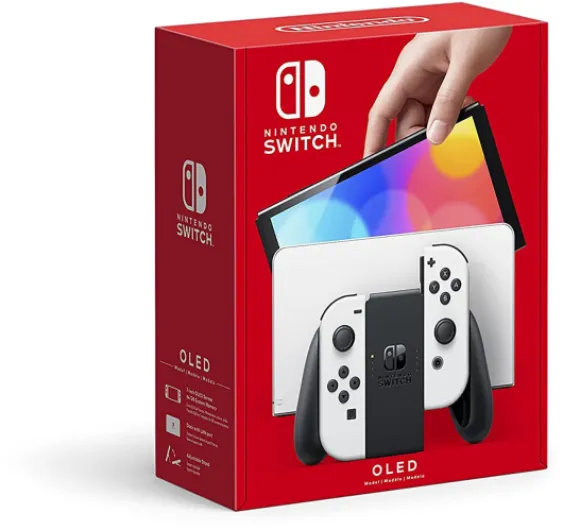
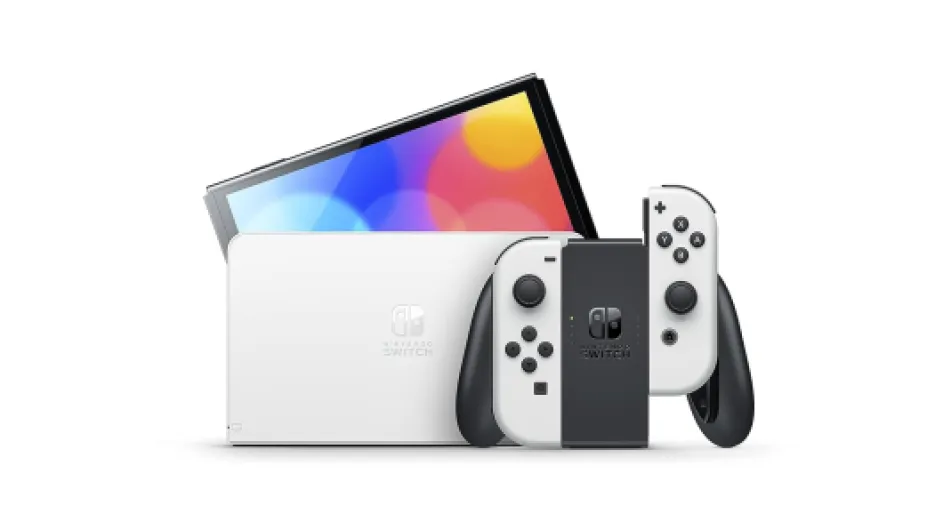
Design-wise, the Switch OLED doesn’t reinvent anything, but the small tweaks add up. The overall shape is the same tablet-with-detachable-controllers layout, but the bezels around the screen are thinner, so the console looks less like a toy and more like a modern gadget. The white dock and Joy-Cons also give it a cleaner look that fits better next to a PS5 or Xbox Series X, if that matters to you.
The biggest design upgrade for me is the kickstand. The original Switch had this flimsy little strip that felt like it would snap off if you looked at it wrong. The OLED model has a wide, full-length stand that’s actually stable. You can adjust it at multiple angles, and it doesn’t topple over when you touch the buttons a bit harder. If you like tabletop multiplayer or playing with a Pro Controller while the console sits on a table, this alone is a big quality-of-life improvement.
The dock has also been slightly redesigned. The front is smoother, the back has a removable panel that hides the ports, and there’s now a built-in LAN port, which means you don’t need a separate USB adapter for wired internet. It still feels like lightweight plastic, but it does the job and doesn’t look too cheap. The console slides in and out easily, and I haven’t had any scratching issues so far, though I still use a screen protector out of habit.
On the downside, the overall build still leans toward “good enough” rather than premium. It’s solid, but if you’ve held something like a Steam Deck or a high-end tablet, you’ll feel that this is lighter and more plasticky. That’s not always bad, since it keeps the weight down for handheld sessions, but it doesn’t scream high-end hardware. For the price and age of the system, I think the design is fine: nothing mind-blowing, but practical and familiar.
Battery life: good enough, but depends a lot on what you play
Battery life on the Switch OLED is decent, but it really depends on the game. Nintendo quotes roughly 4.5 to 9 hours, and in real life I’d say that’s not far off. With lighter games like indie titles, 2D platformers, or turn-based stuff, I usually get around 6–7 hours with medium brightness and Wi‑Fi on. With heavier 3D games like Zelda: Tears of the Kingdom or Mario Kart, that drops closer to 4–5 hours, sometimes less if I crank the brightness.
The OLED screen doesn’t magically save power, but it also doesn’t destroy battery life. It’s roughly in the same ballpark as the improved battery version of the regular Switch (not the very first launch model, which was worse). I never felt like the console died on me too quickly, but it’s also not some long-lasting monster. For flights, commutes, or evenings on the couch, it’s fine. For a full long-haul day of heavy gaming without access to a charger, you’ll probably want a power bank.
Charging is done via USB‑C, which is convenient. You can charge it directly or just dock it and let it top up while you play on the TV. From very low to full, it takes around 3 hours with the included charger. It’s not blazing fast, but it’s acceptable. I usually just plug it in when I’m done and it’s ready the next time I want to play. The good part is that you don’t need some proprietary weird cable; a decent USB‑C charger with enough power also works if you’re traveling.
Overall, I’d say the battery is good enough for normal use, but not something you’ll rave about. It’s a portable console you can trust for a few hours of solid play, not an all-day, nonstop gaming machine. Compared to the original launch Switch, it’s better. Compared to modern handheld PCs, it’s actually not bad at all, especially considering how light it is.
Comfort: good for short hands, just okay for long sessions
In terms of comfort, the Switch OLED is a mixed bag, and that hasn’t really changed from the original model. The console is light enough that you can play for a couple of hours without your wrists screaming, which is nice. The slightly bigger screen doesn’t add much weight, so portability is still one of its strong points. It fits easily in a small bag, and you can play on a plane, train, or couch without needing a ton of space.
The issue is the shape of the Joy-Cons. They’re still small, flat, and not very ergonomic. If you have bigger hands, long handheld sessions can get uncomfortable. After about an hour or two, I start to feel it in my fingers and the base of my thumbs, especially in games that need a lot of precise movement like action titles or competitive stuff. For laid-back games like Animal Crossing or turn-based RPGs, it’s fine, but for fast-paced games, I usually switch to a Pro Controller and either dock the console or use it in tabletop mode.
The detachable nature of the Joy-Cons is still a big plus for quick local multiplayer. Being able to hand one to a friend for Mario Kart or Smash Bros is great, even if the single Joy-Con layout is a bit cramped. It’s playable, but no one will call it comfortable. If you plan a lot of couch co-op, I’d say budget for at least one extra proper controller, because relying only on Joy-Cons gets old fast.
Overall, comfort is pretty solid for what it is, but don’t expect the ergonomics of a dedicated handheld like some bigger gaming devices. If you mostly play shorter sessions or slower games, you’ll be fine. If you grind long hours or play a lot of action-heavy titles, you’ll probably want a grip case or a Pro Controller to really enjoy it without hand fatigue.
Durability: solid console, questionable Joy-Cons (still)
On the durability side, the main tablet part of the Switch OLED feels pretty solid. It doesn’t flex, the new kickstand feels way sturdier than the old one, and after being tossed into a backpack a few times (in a basic sleeve), I haven’t seen any cracks or weird creaks. The plastic isn’t premium, but it’s not flimsy either. With normal use, I can see the console itself lasting several years without major issues.
The big weak point, like on every Switch, is still the Joy-Cons. Drift is the usual problem: over time, the analog sticks can start moving on their own or not registering input correctly. I’ve had this happen on older Joy-Cons, and while I haven’t had the OLED pair long enough to kill them yet, it’s the same design, so I’m not overly confident. Replacement sticks exist and Nintendo sometimes repairs them, but it’s still annoying on a console at this price. If you plan to play a lot, I’d recommend either a Pro Controller for home use or budgeting for Joy-Con repairs or replacements down the line.
The white color looks nice out of the box, but it will show dirt and small scuffs faster than darker models. If you’re picky about looks, get a case or at least wipe it down regularly. The dock holds up fine; it’s just a plastic shell with ports, so unless you drop it hard, it should last. I’d still use a screen protector, even though I haven’t had any scratching issues sliding the console in and out.
In short, durability is okay but not flawless. The core console feels reliable, the stand is finally trustworthy, but the Joy-Cons are still the weak link. If Nintendo had fixed the drift problem for good, I’d rate durability much higher. As it stands, expect the console to last, but be prepared for controller headaches eventually.
Performance: same old Switch under the nicer screen
Performance-wise, the Switch OLED is basically the same machine as the older Switch. Same CPU, same GPU, same RAM. So if you’re expecting faster load times, higher frame rates, or sharper resolution, that’s not happening. Games run the same way they do on the standard model. If a game dipped to 30 FPS before, it still does here. The difference you feel is more about how the games look and sound, not how they run.
The OLED screen does help the perceived quality, though. Because the colors are stronger and the contrast is better, some games feel like they’ve had a mini-remaster even though nothing changed technically. Dark scenes in games like Metroid Dread or Zelda look less washed out, and bright games like Mario Odyssey really benefit from the extra punch. It’s still 720p, but on a 7" screen at typical handheld distance, that’s honestly fine for most people.
Audio is slightly improved too. The speakers are a bit louder and clearer in handheld and tabletop mode. You’re not getting audiophile quality here, but compared to the original Switch, voices and sound effects are easier to hear without cranking the volume to the max. For noisy environments, you’ll still want headphones, but for casual play at home or in bed, the onboard sound is decent.
On the technical side, loading times and general responsiveness are okay, but nothing special by 2024 standards. This is older hardware, and you feel it when you compare it to newer consoles. Big third-party games sometimes look rough or run at lower resolutions, but Nintendo’s first-party titles are well optimized and run smoothly enough. If you care mainly about raw performance, there are better options on the market. If you care about Nintendo’s games and portability, the performance is acceptable and gets the job done.
What you actually get with the Switch OLED
Out of the box, you get the console with the 7" OLED screen, two white Joy-Cons, the dock (with a LAN port), Joy-Con grip, HDMI cable, and power adapter. Nothing fancy, but everything you need to play right away. No games included, so factor that into the price if you’re new to the Nintendo ecosystem. The white version looks pretty clean and a bit more “living room friendly” than the neon red/blue setup, but it will show dirt faster if you’re messy.
The main upgrades compared to the original Switch are pretty straightforward: OLED screen instead of LCD, 64 GB internal storage instead of 32 GB, better speakers, much wider kickstand, and a dock with a wired LAN port. The processor and performance are basically the same, so don’t expect games to suddenly run smoother or at higher resolution. If a game struggled on the old Switch, it’ll behave the same here.
In practice, that means this is still a 1080p docked / 720p handheld machine, with the same library and same overall experience. The difference is how nice it feels to use, especially in handheld and tabletop modes. The bigger screen doesn’t change the resolution, but because it’s OLED and brighter, text is easier to read and dark games don’t look washed out. The 64 GB storage is fine if you buy cartridges, but if you like digital games, you’ll still need a microSD card pretty quickly.
Overall, the package is pretty solid. It’s not a new generation, it’s basically the Switch “done right” for people who prefer handheld. If you already have a working Switch and you mostly play on TV, this is a nice-to-have, not an essential upgrade. If this is your first Switch or you live in handheld mode, this version makes more sense than the older one or the Lite, unless you really need to save money.
Pros
- OLED screen makes handheld gaming look noticeably better than the original Switch
- Wide kickstand and improved audio make tabletop and portable play more practical
- Dock includes a wired LAN port and the system keeps the flexible hybrid concept
Cons
- Same performance as the old Switch, no upgrade in power or frame rates
- Joy-Con drift is still a concern and controllers feel fragile over time
Conclusion
Editor's rating
The Nintendo Switch – OLED Model is basically the Switch idea refined, not reinvented. You get the same games, same performance, and same hybrid concept, but with a much nicer screen, better audio, a proper kickstand, and a slightly more practical dock. If you spend a lot of time playing in handheld or tabletop mode, these upgrades actually matter day to day. Games look better, the console feels less like a compromise, and the whole experience is more pleasant.
It’s not perfect. The hardware is aging, performance is unchanged, and the Joy-Con drift issue still hangs over the whole system. Storage is better but still limited, and if you mostly play docked on a TV, the extra money doesn’t bring that much. In that situation, a regular Switch or even another platform might make more sense. But if you want Nintendo’s library and you know you’ll be using it on the go, on the couch, or in bed a lot, this is the version that finally makes handheld play feel like the main event, not an afterthought.
So, who is it for? Great for new buyers who care about handheld gaming, families who want flexible play at home and on trips, and anyone upgrading from a very old launch Switch that’s beaten up or has weak battery. Who should skip it? People who already have a decent standard Switch and mainly play on TV, or players obsessed with cutting-edge graphics and performance. For what it offers, I’d say it’s a strong but not perfect buy.