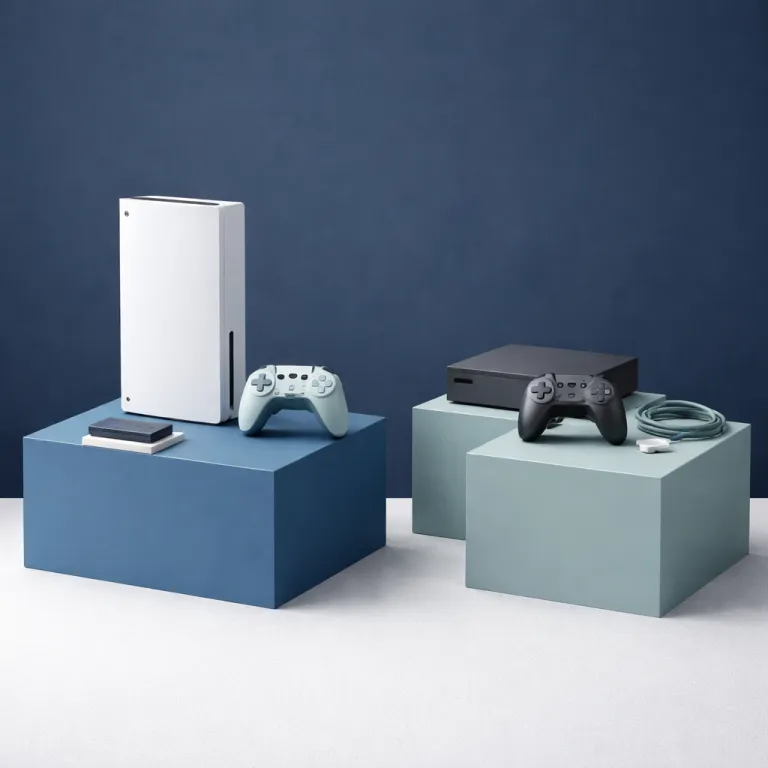
Who actually needs a PS5 Pro and who does not
The blunt answer to whether the PS5 Pro is worth it depends on your screen, your habits, and how sensitive you are to performance. If you own a 55 inch or larger 4K OLED or high end LED television and you care about performance mode in modern games, the console finally has enough power to push higher frame rates before upscaling. For people returning to video game experiences on a smaller 1080p bedroom television, the base console usually delivers good games with similar perceived image quality and makes the expensive PlayStation Pro style upgrade hard to justify.
Think about how you spend your evenings playing rather than the raw Pro performance numbers on a spec sheet, because the value of this console lives in how often you actually notice sharper detail or steadier fps. In performance mode, many Pro enhanced titles now target higher frame rates or more stable 60 fps, while quality mode on the base console often locks you to lower fps with heavier motion blur. If you mostly play slower story driven games like Horizon Forbidden West or the upcoming Silent Hill remakes, the standard PlayStation 5 already offers a good balance of visual quality and responsiveness for most people.
The Pro year pricing complicates the answer because the console now sits roughly 250 dollars above the standard model and edges close to entry level gaming PC territory. When you factor in trade in deals for your base console, the real question becomes whether the net upgrade cost is worth the modest but real Pro enhancements you will see in supported games. For many casual players who dip into a video game a few nights a week, that money might be better saved for more games, a better television, or even a different console entirely.
What the PS5 Pro actually changes on your screen
On paper, the PS5 Pro promises higher native resolution before upscaling, faster ray tracing, and a new PSSR upscaling system that aims to clean up the final image. In practice, that means Pro games can render closer to true 4K internally, then let PSSR reconstruct a sharper picture with fewer shimmering edges and more stable fine detail like foliage or hair. When you switch between versions of the same game on the same television, the Pro version often looks subtly cleaner in motion, especially in performance mode where the base console has to cut resolution more aggressively.
Quality mode on the PlayStation Pro leans into that extra power by combining ray traced reflections or shadows with higher internal resolutions, so cinematic games like Stellar Blade or Horizon Forbidden West can look closer to their marketing trailers. On the base console, the same quality mode usually trades away frame rates and can dip below 60 fps, while the Pro keeps fps steadier and reduces the judder that sensitive people notice immediately. If you care more about a smooth controller feel than pixel peeping, the performance mode on the Pro is where the console quietly earns its name during intense playing sessions.
There is also the question of Blu ray playback and general media use, because many returning players still want a console that doubles as a living room player. Both the base console and the PlayStation Pro handle 4K Blu ray discs, but the Pro can output a slightly cleaner image in some edge cases thanks to its stronger hardware, though this is subtle. If disc movies matter to you, it is worth reading a focused guide on top gaming consoles with Blu ray playback before you decide whether the extra money for the Pro is better spent on a higher quality television instead.
PSSR, PSSR 2 and why upscaling matters more than raw teraflops
The most future leaning part of the PS5 Pro story is PSSR, Sony’s in house upscaling technology that sits between the game and your television. Right now, PSSR already helps Pro games render at a lower internal resolution while outputting a sharp 4K image, which is how the console balances higher frame rates with better quality than the base console. The announced PSSR 2 upgrade, discussed by system architect Mark Cerny in Sony technical briefings, could push this further and bring the PlayStation ecosystem closer to what PC players enjoy with modern upscalers.
For a returning player wondering whether the PS5 Pro is worth it, this PSSR roadmap matters because it means the console’s best years may still be ahead. Developers are only starting to ship Pro enhanced patches that target the hardware directly, and many studios plan separate performance mode and quality mode settings that lean on PSSR to keep fps high while improving the final image. If you are patient and you tend to buy games later at lower prices, the Pro year and the following year Pro could be when the console finally feels like the best version of Sony’s vision.
There is also a broader context in the next generation console market, where both Sony and its rivals are betting heavily on smarter upscaling rather than brute force hardware. If you are comparing the PlayStation Pro to other top next generation gaming consoles, it helps to read a wider overview such as a guide to top next generation gaming consoles before locking yourself into one ecosystem. In that landscape, the PS5 Pro sits as a mid cycle upgrade that leans on PSSR and future Pro enhancements rather than a full generational leap, which is why many people will be fine staying with the base console for now.
Real world performance in flagship games
Numbers on a box mean little until you see how a console handles specific games, and the PS5 Pro finally shows its strengths in demanding titles. In Horizon Forbidden West, the PlayStation Pro can run a performance mode that holds closer to 60 fps with higher internal resolution than the base console, so the image looks cleaner during fast camera pans across dense foliage. The same pattern appears in other Pro games like Stellar Blade, where the Pro enhanced version keeps frame rates steadier in combat while preserving more detail in character models and environments.
Horror titles such as the new Silent Hill projects benefit differently, because their slower pacing lets developers push quality mode harder on the Pro without making the game feel sluggish. On the base console, choosing quality mode often means accepting lower fps and occasional stutter when the screen fills with effects, which some people find distracting during tense scenes. With the PlayStation Pro, you can often play in a quality mode that still feels responsive, making the experience of playing a video game in a dark room more immersive and less technically compromised.
Not every game Pro patch is equal though, and this is where returning players need to manage expectations about performance. Some versions of games only offer minor Pro enhancements such as slightly higher resolution or marginally better shadows, which you will barely notice unless you pause and zoom into a still image. The real value appears in a growing list of good games that treat the PS5 Pro as a genuine target platform, and that list should expand as more studios release late generation patches during the Pro year and the following year Pro.
Price, trade in value and the gaming PC question
With the PS5 Pro now hovering around 900 dollars in many regions, the question of whether the PS5 Pro is worth it becomes a straight budget calculation for most households. If your base console still works well, trade in deals at major retailers often bring its value down to roughly a third or half of the new price, which can shrink the upgrade gap to something closer to a mid range graphics card purchase. For people who only play a handful of games each year, that remaining cost may still feel steep compared with simply buying more good games for the existing console.
The elephant in the room is that 900 dollars also buys a capable entry level gaming PC, especially if you are willing to build or upgrade over time. A desktop in that range can match or beat the PlayStation Pro in raw performance for many titles, while offering cheaper game deals through frequent PC sales and subscription services. On the other hand, a console still wins on simplicity, lower noise, and predictable performance mode or quality mode presets that just work without driver tweaking, which many returning players quietly prefer.
If you are torn between staying with Sony or jumping elsewhere, it is worth reading a broader comparison such as a guide on which console fits your life before spending that much money. The PS5 Pro remains a strong choice for people already invested in the PlayStation ecosystem who value plug and play convenience and consistent frame rates. For others who enjoy tinkering, chasing the absolute best performance, or mixing work and play on one machine, a gaming PC may offer better long term value than another console box under the television.
Who should actually buy the PS5 Pro right now
After testing the console across a wide range of games, the clearest pattern is that the PS5 Pro is a specialist upgrade rather than a universal recommendation. If you own a large 4K OLED, you care about performance mode in fast action titles, and you plan to buy most major PlayStation exclusives like Horizon Forbidden West, Stellar Blade, and future Silent Hill entries, the Pro enhancements will be visible and satisfying. For people who mainly play slower narrative games, sports titles, or older back catalogue releases, the base console already offers a good balance of image quality and performance without the extra cost.
Returning players who skipped an entire generation often ask whether they should jump straight to the PlayStation Pro or save money with the base console, and the answer usually comes down to how sensitive they are to frame rates. If you notice when a video game drops from 60 fps to 40 fps, or you care about cleaner motion in performance mode, the Pro year hardware will feel like a safer long term bet as more demanding games arrive. If you barely notice such shifts and you mostly care that the game loads quickly and looks sharp enough from the sofa, the base console remains the best value in the PlayStation family.
There is also a psychological angle that matters more than people admit, because buying a premium console can subtly push you to play Pro level titles more often and explore new genres. Some players find that owning the higher end console encourages them to try every game Pro patch, chase higher fps, and pay closer attention to news about upcoming Pro games and versions of games. Others simply want a quiet, reliable box for good games after work, and for them the PS5 Pro’s extra performance will rarely change the feeling of sitting down and playing.
Key figures and adoption trends for the PS5 Pro
- Sony reported more than 50 million PS5 units sold worldwide before the Pro model launched, which means the potential upgrade base console audience is already massive compared with previous mid cycle consoles (source: Sony Interactive Entertainment financial reports).
- Industry tracking from firms such as Ampere Analysis suggests that mid generation upgrades typically reach between 15% and 25% of existing console owners, indicating that most people stay with the base console even when a Pro version exists (source: Ampere Analysis console market outlook).
- Market data from Omdia shows that average 55 inch 4K OLED television prices have dropped by roughly 30% over the last three years, making high quality displays more accessible and increasing the number of households that can actually benefit from the PS5 Pro’s image improvements (source: Omdia TV display pricing reports).
- Steam Hardware Survey data indicates that more than 60% of active PC players still use GPUs roughly comparable to or weaker than the PS5 family, which underlines how competitive the PlayStation Pro remains against many real world gaming PCs rather than only top tier builds (source: Valve Steam Hardware Survey).
- Surveys by the Entertainment Software Association show that the average player age now sits in the early thirties, aligning closely with the casual returning player profile who is weighing whether a premium console like the PS5 Pro is worth the extra expense (source: ESA Essential Facts report).
FAQ about whether the PS5 Pro is worth it
Is the PS5 Pro worth it if I already own a base PS5 ?
If you have a large 4K television and you care about higher frame rates in performance mode, the PS5 Pro can be a meaningful upgrade, especially in demanding games with Pro enhancements. If you play mostly older or less intensive titles on a smaller screen, the base console remains good enough and the money may be better spent on more games or a better display. Trade in deals can soften the cost, but the upgrade is still a luxury rather than a necessity for most people.
Will future games make the PS5 Pro feel more necessary ?
Developers are only starting to target the PS5 Pro directly with Pro enhanced patches, and late generation games are likely to lean harder on its extra performance. As PSSR and the planned PSSR 2 upgrade mature, more titles should offer better image quality and steadier fps on the Pro compared with the base console. That said, Sony will continue to support the base PS5, so future games will still run there, just with lower resolution or less stable frame rates.
Do I need a 4K OLED television to benefit from the PS5 Pro ?
You do not strictly need an OLED, but a good 4K display is where the PS5 Pro’s sharper image and higher internal resolutions become obvious. On a 1080p screen, the console’s extra power mostly goes to waste because the output is downscaled, making the difference from the base console much smaller. If you are upgrading only one thing, a better television often improves every console and video game you own more than a new console does.
How does the PS5 Pro compare with a gaming PC at the same price ?
A gaming PC around the PS5 Pro’s price can match or exceed its performance in many titles, while offering cheaper game deals and more flexibility for work or creative tasks. However, a console still wins on simplicity, predictable performance mode and quality mode options, and lower maintenance, which many returning players value. If you enjoy tinkering and upgrading, a PC may be better, but if you want a quiet box that just runs games well, the PlayStation Pro remains competitive.
Should a new or returning player buy the PS5 Pro or the base PS5 ?
For most new or returning players, the base PS5 is the best starting point because it offers excellent games, fast loading, and strong performance at a lower price. The PS5 Pro makes sense if you already own or plan to buy a high quality 4K television, you care about higher frame rates, and you expect to play many Pro enhanced titles over the next several years. If you are unsure, starting with the base console and reassessing during the Pro year or the following year Pro is usually the safest and most cost effective path.