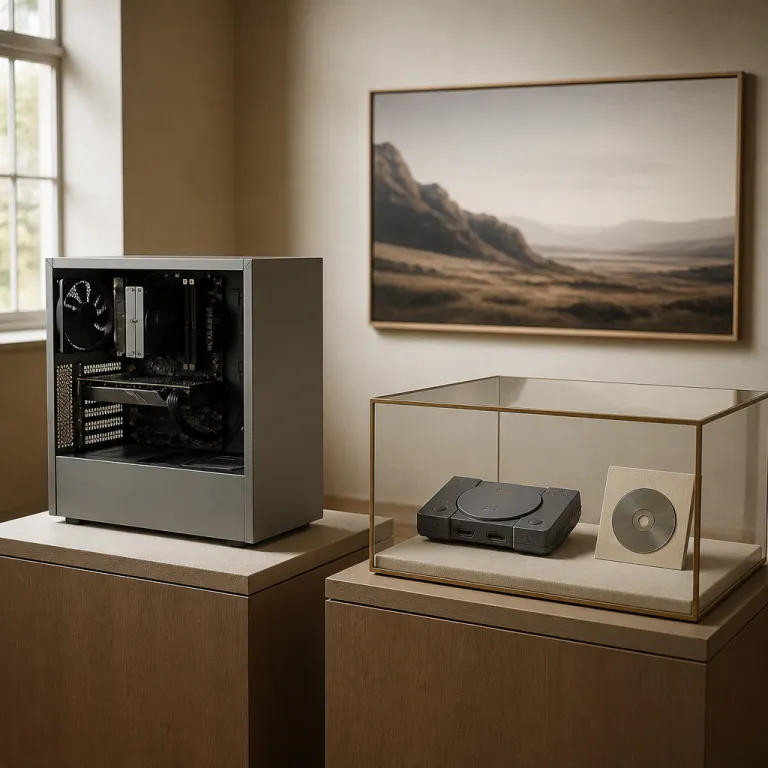
Why players still ask for a Twilight Princess PC port
The demand for a Twilight Princess PC port comes from players who want sharper visuals, modern controls, and flexible settings on contemporary hardware. Many fans of the princess and the twilight setting feel that the original Nintendo releases on GameCube and Wii now look soft on large 4K screens, while a carefully engineered PC adaptation could refresh the game without changing its core identity. For people who mainly play games on computers, the idea of having one of the most atmospheric Zelda adventures as a native PC experience is especially appealing.
When players talk about a Twilight Princess PC port, they usually imagine higher resolution rendering, improved texture pack options, and stable frame pacing that respects the original timing. They also want all the content from the original game preserved, because the legend of the wolf transformation, the twilit realm, and the princess’s courage still defines how they remember this chapter of The Legend of Zelda saga. In that sense, the game is not just another entry in a long list of re-releases, but a landmark adventure that shaped how Nintendo approached darker fantasy worlds.
For Nintendo, the question of a Twilight Princess PC port touches brand identity and platform strategy. The company traditionally keeps Zelda titles and other flagship games tightly bound to its own consoles, using exclusive releases and native console ports to drive hardware sales and maintain control over quality. Any official move toward PC would therefore signal a major shift in policy, with legal, technical, and commercial implications that go far beyond a single princess-focused port.
Legal and ethical limits around unofficial ports and decompilation
Whenever fans mention a Twilight Princess PC port, legal questions appear almost immediately. Players sometimes hear about a decompilation project or an open source initiative and assume that a fully playable PC version of the game is just around the corner, but the reality is more complex and heavily constrained by copyright law. Nintendo has historically defended its intellectual property aggressively, especially when complete games or near-commercial ports start circulating online.
There is an important distinction between a decompilation project that studies game code for educational purposes and a full unofficial port that distributes copyrighted content. Reverse engineering techniques can help researchers understand how a game engine works, yet sharing compiled binaries or original assets from Twilight Princess crosses a clear legal boundary. A concrete example is Nintendo’s long-running litigation against the ROM site operator behind RomUniverse, which resulted in a multi-million dollar judgment for large-scale distribution of copyrighted games. Anyone hoping to play games from the Zelda series on PC must therefore separate the idea of technical feasibility from the legal right to distribute or download those builds.
Ethical considerations go beyond strict legal rules and touch respect for the original creators of the legend. Many fans who admire the darker twilight tone still choose to support Nintendo by buying official releases, even while they follow news about experimental native ports. As one preservation-focused developer put it in a conference panel, “If you love a game enough to rebuild it, you should love it enough to keep the creators paid and credited.” For readers evaluating any unofficial Twilight Princess PC port, the safest path is to verify whether the project requires original game discs, avoids sharing copyrighted content, and clearly states how it complies with legal frameworks that protect both the game and its creators.
How fan projects, GitHub culture, and open source tools shape expectations
Modern expectations for a Twilight Princess PC port are heavily influenced by fan communities that share tools and code on platforms such as GitHub. When players see open source engines, texture pack editors, and mod loaders for other games, they naturally imagine similar support for the twilight-themed adventures of Link and the princess. This culture of collaboration has created a generation of users who understand that a technically polished port is possible, even if it remains unofficial.
On GitHub, you can already find decompilation project repositories for classic titles like Jak & Daxter, where community developers reconstruct original behavior without distributing copyrighted content. Projects such as the open-source “re3” and “reVC” efforts for Grand Theft Auto III and Vice City showed how native ports can emerge from careful analysis of game logic, while still requiring users to provide their own legally obtained copies of the game. The same approach could, in theory, underpin a Twilight Princess PC port, with dedicated contributors focusing on engine recreation and leaving all original content extraction to the end user.
Open source tools also raise the bar for visual expectations, because players now anticipate advanced texture pack support and flexible graphics settings as standard features. A hypothetical PC-native version of Twilight Princess would likely be judged on how well it handles high resolution assets, controller remapping, and ultrawide displays, not just on whether it runs. In that environment, any princess port that fails to match the sophistication of other community-driven native ports would quickly lose momentum, no matter how strong the nostalgia for Zelda’s twilight world remains.
Steam Deck, portable PCs, and the changing role of Nintendo exclusives
The rise of the Steam Deck and other portable PCs has changed how players think about a Twilight Princess PC port. Many people who once bought every Nintendo console now carry a single handheld deck that runs a vast library of PC games, and they naturally wonder why their favorite Zelda adventures cannot join that ecosystem. When a player can already play games like Jak & Daxter through community native ports, the absence of an official twilight-themed Zelda on such hardware feels increasingly noticeable.
From a technical standpoint, the Steam Deck is powerful enough to handle a well optimized native port of Twilight Princess at comfortable frame rates and resolutions. Valve’s hardware supports modern APIs, flexible control schemes, and robust pack support for community mods, which would make it an ideal home for a carefully tuned twilight experience. Readers comparing portable options often consult analyses of devices such as the ROG Ally X versus the Steam Deck OLED, and articles that evaluate which portable actually fits your commute highlight how central PC based handhelds have become to everyday gaming.
For Nintendo, however, allowing a Twilight Princess PC port on Steam or any competing platform would weaken the strategic value of its own hardware. The company relies on exclusive games to differentiate its consoles, and the legend of Zelda Twilight remains one of its strongest assets. As long as that strategy holds, any dream of launching the game as a native port on Steam Deck will remain speculative, even if the hardware and the audience are clearly ready for such ports.
Technical realities behind a high quality PC adaptation
When analysts discuss a Twilight Princess PC port, they often underestimate the engineering effort required. The original game was built for Nintendo architectures with very specific memory layouts and controller assumptions, so translating that code into a stable PC build is far more complex than simply recompiling it. A serious project must handle rendering, input, audio, and timing with great care to preserve the feel of the legend while meeting modern expectations.
Engineers working on any decompilation project or engine recreation need to reconstruct low level systems before they can even think about advanced features like texture pack injection. They must ensure that every dungeon, every twilight sequence, and every moment of the princess’s courage behaves exactly as in the original game, while also adding options for higher resolutions and variable refresh rates. Only after that foundation is stable can they consider optional content enhancements, such as improved lighting in dusk areas or refined animations for key character models.
Support for different PC configurations adds another layer of complexity, because a Twilight Princess PC port would need to run on a wide range of CPUs and GPUs. Developers must design scalable graphics settings, robust error handling, and clear diagnostics so that players can troubleshoot issues without digging into raw code. In practice, that means any serious port effort requires an experienced, well-organized development team, not just a few hobbyists, if it aims to match the polish of commercial games while respecting legal boundaries.
How to enjoy Twilight Princess today while respecting legal boundaries
For readers who want the feel of a Twilight Princess PC port but also want to stay firmly on the right side of the law, the most straightforward path remains Nintendo’s official releases. Playing the game on original hardware or on later Nintendo systems that offer backward compatibility ensures that every copy sold continues to support the creators behind this chapter of the legend. It also guarantees that the content you experience, from the opening dusk village to the final battle, reflects the studio’s intended balance and pacing.
Some players enhance their experience with higher quality displays, capture cards, or upscaling hardware that can make the twilight aesthetic look cleaner without altering the underlying game. Others explore community discussions about legal modding, where texture pack experiments and controller remapping are performed only on legitimately owned copies, with no redistribution of copyrighted content. In every case, the guiding principle is simple; any attempt to share full game files, unauthorized ports, or cracked executables undermines both the legal framework and the long term health of the Zelda ecosystem.
Looking ahead, the strongest signal that fans can send in favor of a potential Twilight Princess PC port is continued support for official Zelda releases and respectful engagement with community projects. When Nintendo sees that players value both innovation and legality, it becomes easier for the company to consider new ways of bringing the legend to different platforms. Until then, the courage reborn theme that runs through the story can also guide how we act as a community, balancing our desire to play games in new formats with a clear respect for the princess, the twilight world, and the people who created them.
Key statistics about Zelda, PC gaming, and player behavior
- According to Nintendo’s consolidated sales data for the fiscal year ending March 31, 2024, The Legend of Zelda franchise has sold well over 150 million copies worldwide across all games, showing how central the series is to Nintendo’s long term strategy.
- Recent Newzoo market reports have estimated global PC gaming revenue in the tens of billions of US dollars annually, underlining why discussions about a Twilight Princess PC port attract so much attention from both players and analysts.
- Valve has publicly stated in interviews and blog updates that it has shipped several million Steam Deck units, which confirms that portable PC devices are now a mainstream way to play games that were once limited to desktop setups.
- Surveys from organizations such as the Entertainment Software Association regularly indicate that a majority of players use multiple platforms, suggesting that many Nintendo fans would welcome official native ports of classic titles on PC.
- Legal actions taken by Nintendo against unauthorized game distributions, including high profile cases that resulted in multi-million dollar judgments and settlements against ROM sites and piracy groups, illustrate the serious risks associated with downloading or sharing illegal ports.
FAQ about a potential Twilight Princess PC port
Is there an official Twilight Princess PC port available today ?
There is currently no official Twilight Princess PC port released by Nintendo, and the game remains exclusive to Nintendo platforms. Any website claiming to offer a full legal PC version of the game outside those ecosystems should be treated with extreme caution. To stay safe, rely only on official Nintendo channels and avoid downloading unverified executables or ports.
Are fan made ports or decompilation projects legal to use ?
Fan made decompilation projects that share only tools or reconstructed code without copyrighted assets can sometimes operate within legal boundaries, but distributing full game files is almost always illegal. If a project requires you to provide your own legally purchased copy of the game and does not share original content, the legal risk is lower but not entirely absent. When in doubt, consult local copyright law and prioritize official ways to play games from the Zelda series.
Can the Steam Deck run a hypothetical Twilight Princess PC port well ?
From a hardware perspective, the Steam Deck is powerful enough to run a well optimized native port of Twilight Princess at good frame rates and resolutions. Its controls, display, and operating system are designed to handle complex 3D games, including other community driven native ports. The real barrier is not performance but the absence of an official release from Nintendo on Steam or similar platforms.
Why does Nintendo resist bringing Zelda games to PC ?
Nintendo uses exclusive games such as Twilight Princess and other Legend Zelda titles to differentiate its consoles and drive hardware sales. Releasing a Twilight Princess PC port would weaken that exclusivity and could reduce the incentive for players to buy Nintendo systems. As long as this strategy remains effective, the company has little commercial reason to offer native ports of its flagship games on competing platforms.
How can fans support the chances of future official ports ?
Fans can strengthen the case for future official ports by purchasing legitimate copies of Zelda games, engaging respectfully with community projects, and avoiding illegal downloads. Strong sales of remasters and re releases show Nintendo that there is sustained demand for classic adventures on modern hardware. This combination of financial support and legal behavior sends a clear message that players value both the games and the creators behind them.
